
Why Most Apps Fail to Keep Users Coming Back
The average mobile app loses 77% of its daily active users within the first three days after install (Adjust, 2023). That number should stop every product and growth team in their tracks. You can spend millions acquiring users, but without a deliberate app engagement strategy, you are essentially filling a leaking bucket. This post will walk you through exactly how to build, measure, and scale an engagement strategy that keeps users returning, converts free users to paying customers, and drives sustainable long-term retention for your mobile app in the US market.
To see how your numbers compare against your category, check our retention benchmarks by category.
Key Takeaways
- Apps that send personalized push notifications see up to 4x higher open rates than generic broadcasts (AppsFlyer, 2023).
- Day-30 retention averages just 6% across all app categories, making early engagement moments critical (Adjust, 2023).
- In-app messaging drives 3.5x higher retention compared to apps that rely solely on push notifications (AppsFlyer, 2023).
- Apps with a structured onboarding flow achieve 50% better 7-day retention than those without one (Sensor Tower, 2024).
What Exactly Is an App Engagement Strategy and Why Does It Matter?
An app engagement strategy is a structured, repeatable system for motivating users to take meaningful actions inside your app repeatedly over time. It matters because acquisition cost is rising while organic installs are declining, meaning every dollar of retained value is worth more than any new install you can buy.
Engagement is not a single metric. It spans a continuum from first open, through habit formation, to advocacy. The smartest mobile teams define engagement in tiers: shallow engagement (opening the app), medium engagement (completing a core action), and deep engagement (returning three or more times in a week and inviting others). Each tier demands different tactics and different measurement frameworks.
The financial stakes are real. A 5% improvement in user retention can increase revenue by 25% to 95% (AppsFlyer, 2023). That asymmetric return is why companies like Duolingo, Spotify, and Robinhood invest heavily in behavioral nudges, streak mechanics, and personalized content surfaces rather than simply increasing ad spend.
Consider Duolingo as a concrete example. The language learning app engineered its entire product around daily engagement loops: streaks, leaderboards, and animated characters that send guilt-driven reminders. The result is a daily active user to monthly active user ratio above 23%, which is extraordinary for an education app. Duolingo did not achieve this through advertising alone. Every design decision, notification, and feature release was evaluated against one core question: does this bring the user back tomorrow?
For US mobile app companies, the competitive pressure is acute. There are over 2 million apps available on the Apple App Store (Statista, 2024), and the average smartphone user engages with only nine apps per day. Your app is competing not just with direct rivals but with every habit the user already has. A strong engagement strategy is your answer to that competition.
The foundation of any effective strategy includes three pillars: understanding your user's core job-to-be-done, designing frictionless paths to that job, and creating enough value loops that returning becomes the path of least resistance. Without all three, even beautifully designed apps struggle to hold attention past the first week.
How Do You Build an App Engagement Strategy That Actually Works?
Building a strategy that works requires moving from intuition to a structured, testable framework. The steps below reflect what the highest-retention apps in the US market consistently do, regardless of category.
Step 1: Define your engagement north star metric. Before you send a single push notification, agree on one metric that best captures whether users are getting value. For a fitness app, that might be workouts completed per week. For a finance app, it might be transactions reviewed. This metric should be specific, measurable, and causally linked to revenue. Everything else flows from it.
Step 2: Map your engagement funnel by cohort. Segment new users by acquisition channel, device type, and day-one behavior. Users who complete your onboarding flow on day one have dramatically different 30-day retention curves than those who skip it. Knowing this lets you intervene at the right moment with the right message rather than blasting everyone the same re-engagement campaign.
Step 3: Design a progressive onboarding sequence. Onboarding is the highest-leverage moment in your entire user lifecycle. Introduce one core feature at a time, use contextual tooltips rather than exhaustive tutorials, and gate the aha moment as early as possible. If your aha moment requires five steps, cut it to three. If it requires three, find a way to get it to two.
Step 4: Build a multi-channel notification stack. Push notifications, in-app messages, email, and SMS serve different moments in the engagement lifecycle. Push is best for time-sensitive re-engagement. In-app messaging is best for upsells and feature discovery mid-session. Email handles longer-form re-engagement for users who have gone dormant. Coordinate these channels so they complement rather than compete with each other.
Step 5: A/B test relentlessly. Every assumption about what drives engagement should become a hypothesis and then an experiment. Test notification copy, timing, frequency, and creative. Test onboarding step order. Test feature placement. Build a culture where data overrides opinion.
If you want to see how these principles apply beyond mobile apps, our team at ApsteQ has documented similar frameworks in our app marketing resource hub, which includes channel-specific playbooks built from real campaign data.
Step 6: Create feedback loops users can feel. Progress indicators, achievement badges, personalized recaps, and social proof elements like follower counts or activity feeds all tell users that their actions inside your app matter. When users feel progress, they return. When they feel stagnation, they churn.
What the Data Says About Engagement Benchmarks Across App Categories
Data-driven teams do not guess at what good engagement looks like. They benchmark against category norms and then work to exceed them systematically.
Here is what the research tells us about the state of app engagement in the US market today. Day-1 retention across all app categories averages 25.3% (Adjust, 2023). By day 7, that figure drops to 10.8%. By day 30, it sits at roughly 6%. These are median figures. The top quartile of apps retains significantly more, and understanding the delta between median and top-quartile performance is where strategy opportunities live.
Category matters enormously. Finance apps tend to have stronger day-30 retention because they are tied to real money decisions users cannot ignore. Gaming apps show high day-1 retention but steep drop-off curves if the core loop is not compelling enough. Health and fitness apps peak in January and again in spring, creating seasonal engagement dynamics that smart teams plan around months in advance.
Key engagement levers supported by data include:
- Personalized push notifications outperform generic ones by up to 4x in open rate (AppsFlyer, 2023).
- In-app messaging campaigns generate 3.5x higher retention than push-only strategies (AppsFlyer, 2023).
- Apps with loyalty or rewards mechanics see 20% higher session frequency than those without (Sensor Tower, 2024).
- Users who engage with at least three features in their first session have a 40% higher likelihood of returning on day 7 (Adjust, 2023).
| App Category | Day-1 Retention (%) | Day-30 Retention (%) | Avg. Sessions/Week |
|---|---|---|---|
| Gaming | 32% | 5% | 6.2 |
| Finance | 28% | 11% | 4.1 |
| Health and Fitness | 24% | 7% | 3.8 |
| E-Commerce | 22% | 6% | 2.9 |
| Social and Messaging | 40% | 14% | 9.3 |
Source: Adjust 2023, Sensor Tower 2024. These benchmarks represent US market medians and should be used as directional guides, not absolute targets.
What Are the Most Common App Engagement Mistakes and How Do You Avoid Them?
Even well-funded teams make predictable, avoidable mistakes when building their engagement strategy. Understanding these failure modes is as important as knowing the best practices.
Mistake 1: Treating all users identically. Sending the same push notification to a brand new user and a 90-day power user is a waste of budget and a fast track to uninstalls. New users need orientation and value delivery. Power users need exclusivity and advanced features. Churned users need a compelling reason to return, not the same generic discount everyone else received. Segmentation is not optional. It is the baseline.
Mistake 2: Over-notifying and burning permission. Notification fatigue is real. Studies show that users who receive more than five push notifications per week from a single app are significantly more likely to disable notifications or uninstall. The irony is that teams increase notification frequency to drive engagement, but the result is the opposite. Frequency should be calibrated to user preference and behavioral signals, not to what the marketing calendar demands.
Mistake 3: Ignoring the onboarding drop-off. A surprising number of teams invest in sophisticated re-engagement campaigns for churned users while their onboarding funnel is hemorrhaging first-time users. If your day-1 retention is below 20%, no downstream tactic will compensate. Fix the leak before you try to add more water.
Mistake 4: Measuring the wrong metrics. Downloads are a vanity metric. Monthly active users can be gamed by aggressive re-engagement blasts that do not reflect genuine product love. The metrics that matter are session depth, feature adoption rate, and your north star engagement metric. Companies that optimize for downloads often discover their engagement numbers are collapsing at the same time.
Consider a real-world cautionary tale: a major US e-commerce app launched an aggressive push notification campaign that increased day-7 click-through rates by 30%. Excellent, right? Except their uninstall rate climbed 45% over the same period, and their net active user base shrank. They had optimized for the wrong outcome.
Mistake 5: Not closing the feedback loop with users. Engagement is a conversation. Apps that never ask for user feedback, never act on in-app reviews, and never communicate product updates to their most loyal users leave significant retention value on the table. Simple tactics like in-app surveys after key moments, personalized changelogs, and beta tester programs can transform passive users into active advocates.
If you are evaluating your full digital marketing stack alongside your app strategy, our team explores related growth patterns in our app marketing guides, which cover everything from paid acquisition to lifecycle marketing.
Where Is App Engagement Heading in 2026 and 2027?
The app engagement landscape is shifting fast, driven by advances in AI personalization, changes in platform policy, and evolving user expectations. Teams that plan now for these trends will have a structural advantage over those that react later.
AI-powered hyper-personalization will become table stakes. The next generation of engagement tools does not just segment users. It predicts individual user behavior at the session level and dynamically adjusts in-app experiences in real time. Recommendation engines, adaptive UI layouts, and predictive churn scores are moving from enterprise-only tools into mainstream mobile SDKs. Apps that deploy these capabilities will see materially better retention curves than those still relying on rule-based segmentation.
Privacy-first engagement will reshape channel strategy. Apple's App Tracking Transparency framework and Google's evolving privacy sandbox continue to reduce the signal available for behavioral targeting. This is accelerating investment in first-party data strategies: in-app behavioral data, preference centers, and zero-party data collection through surveys and quizzes. Over 60% of US app publishers now cite first-party data collection as a top strategic priority for 2025 and beyond (AppsFlyer, 2023).
Interactive and social engagement formats will grow. Live events, collaborative challenges, user-generated content mechanics, and real-time multiplayer experiences are expanding beyond gaming into fitness, finance, and education apps. These formats create social accountability that dramatically outperforms solo engagement loops.
Contextual AI assistants embedded in apps will shift how users discover features and get support, reducing friction at the moments most likely to cause churn. Apps that build conversational interfaces into their core experience will see longer average session lengths and higher feature adoption rates through 2027.
The apps that win in 2027 will be the ones that feel like they know the user personally, not the ones that simply have the most features or the biggest ad budget.
Frequently Asked Questions
What is the most important metric to track for app engagement?
The single most important metric depends on your app category, but most teams should anchor to a north star metric tied directly to core value delivery. For many apps, Day-7 retention is the most predictive early indicator of long-term health. Apps in the top quartile achieve Day-7 retention above 20%, compared to the median of 10.8% (Adjust, 2023).
How often should I send push notifications to maximize engagement?
Research consistently shows that 2 to 5 personalized push notifications per week is the sweet spot for most app categories. Exceeding this threshold significantly increases opt-out and uninstall rates. Frequency should always be calibrated to individual user behavior signals rather than a fixed schedule, and personalized messages outperform generic ones by up to 4x in open rate (AppsFlyer, 2023).
How does onboarding affect long-term app engagement?
Onboarding has an outsized impact on lifetime engagement. Users who complete a structured onboarding sequence show 50% better 7-day retention than those who skip or receive no guidance (Sensor Tower, 2024). The goal is to deliver the core value moment, often called the aha moment, within the first session. Every extra step between install and that moment increases your risk of permanent churn.
What role does personalization play in an app engagement strategy?
Personalization is one of the highest-leverage levers available to mobile teams. It applies to notification copy, content surfaces, feature recommendations, and even UI layout. Personalized in-app experiences drive 3.5x higher retention compared to one-size-fits-all approaches (AppsFlyer, 2023). For a deeper look at personalization within broader growth strategies, visit our app marketing resource hub for channel-specific frameworks.
What is a realistic Day-30 retention benchmark for a new app?
For most US app categories, a Day-30 retention rate between 6% and 14% is typical, with social and messaging apps at the high end and e-commerce apps at the lower end. If your Day-30 retention is below 5%, it signals a fundamental product-market fit or onboarding issue that no downstream re-engagement campaign will sustainably fix (Adjust, 2023).
Building Your App Engagement Strategy: Final Takeaways
App engagement is not a campaign you run once. It is a system you build, measure, and improve continuously. Here is what every mobile app company in the US should take away from this guide:
- Define a single engagement north star metric before deploying any tactic.
- Fix onboarding before investing in re-engagement. Day-1 retention is the foundation.
- Segment your users and personalize every channel touchpoint, push, in-app, and email.
- Benchmark against your category norms and aim for the top quartile, not the median.
- Plan now for AI personalization and first-party data strategies ahead of the 2026 to 2027 privacy shifts.
- Avoid the five common mistakes: uniform messaging, over-notification, ignoring onboarding, wrong metrics, and no feedback loops.
The gap between median and top-quartile retention is where revenue is made or lost. If you are ready to build a structured, data-driven engagement strategy tailored to your app and your market, our team at ApsteQ can help. Book a free strategy call and let us show you exactly where your engagement funnel is leaking and how to fix it.
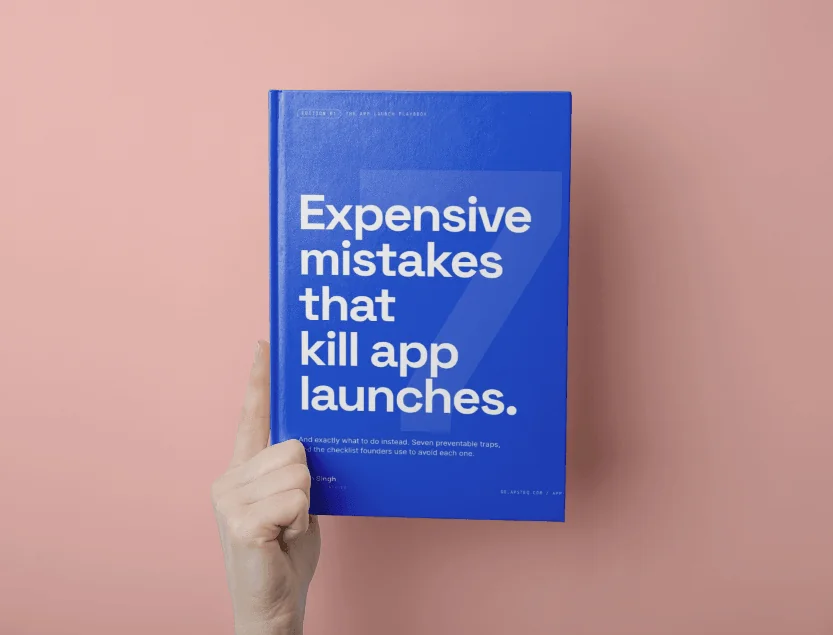
Free download
7 Expensive Mistakes That Kill App Launches
The launch errors we see most often across 300+ app engagements, and what to do instead.
Get the Free Ebook Browse all free guides