
App influencer marketing generated $21.1 billion in ad spending globally in 2023, yet 78% of mobile app marketers admit they struggle to measure true ROI from influencer partnerships according to Influencer Marketing Hub. This massive disconnect between investment and measurable results has created a crisis of confidence in what should be one of the most effective user acquisition channels for mobile applications.
The problem runs deeper than measurement challenges. Most app marketers approach influencer partnerships with outdated strategies borrowed from traditional brand marketing, failing to leverage the unique mechanics that drive app downloads, engagement, and retention. The result? Millions of dollars spent on vanity metrics while competitors who understand authentic app influencer marketing capture market share at scale.
This comprehensive guide reveals the data-driven strategies, measurement frameworks, and execution tactics that separate successful app influencer campaigns from expensive failures. You'll discover how to identify high-converting influencers, structure performance-based partnerships, and build sustainable user acquisition funnels that scale beyond individual campaigns.
Key Takeaways:
- 89% of marketers report better ROI from micro-influencers (1K-100K followers) compared to mega-influencers for app promotion campaigns
- Apps using performance-based influencer contracts see 3.2x higher conversion rates than fixed-fee arrangements
- Video content from influencers drives 6x more app installs than static posts across all social platforms
- Authentic user-generated content from influencer partnerships increases app retention rates by 47% within the first 30 days

How Do You Identify High-Converting App Influencers?
High-converting app influencers prioritize authentic engagement over follower count, consistently demonstrate app usage in their content, and maintain audiences that align with your target user demographics. The most successful partnerships occur when influencers genuinely use and recommend apps within their established content themes, creating natural integration that feels authentic rather than forced.
Engagement rate serves as the primary indicator of conversion potential. Influencers with 2-5% engagement rates consistently outperform those with larger followings but lower engagement, according to 2023 data from Social Media Today. This metric becomes even more critical for app marketing, where the goal extends beyond awareness to actual downloads and active usage.
Audience quality analysis reveals conversion predictors that follower count cannot. Micro-influencers generate 60% higher engagement rates and drive 22.2x more conversations than macro-influencers, based on Markerly's comprehensive study of over 800,000 Instagram users. These conversations translate directly into app discovery and download intent when content authentically showcases app functionality.
Consider fitness app Strava's partnership strategy with running micro-influencers. Rather than partnering with celebrity athletes, they identified creators who regularly shared training data, route maps, and personal fitness journeys. These influencers naturally integrated Strava's features into their existing content flow, resulting in conversion rates 340% higher than campaigns featuring larger fitness personalities who simply posted sponsored content without authentic usage demonstration.
What Performance-Based Partnership Structures Drive Results?
Performance-based influencer partnerships align incentives between apps and creators through compensation models tied to measurable outcomes like installs, registrations, or in-app actions. These structures eliminate the waste common in fixed-fee arrangements while motivating influencers to create content that genuinely drives user acquisition and engagement rather than simply generating impressions.
Cost-per-install (CPI) models provide the most direct alignment between payment and results. Successful apps typically structure deals with base compensation covering content creation costs plus performance bonuses tied to install volumes, user retention benchmarks, or revenue generation. This approach ensures influencers receive fair compensation for their creative work while providing additional motivation for optimization and authentic promotion.
Revenue-sharing partnerships work particularly well for apps with strong monetization models. Gaming apps, subscription services, and marketplace platforms can offer influencers percentage-based compensation on revenue generated from their referred users over extended periods. This long-term approach creates sustained promotional efforts rather than one-time campaign pushes.
Tracking and attribution systems enable accurate performance measurement across partnership structures. Modern app marketing platforms provide unique referral codes, custom landing pages, and deep-linking technology that connects influencer content directly to user actions within apps. These systems eliminate guesswork and create transparent reporting that builds trust between apps and their influencer partners.
Implementation requires clear communication of performance expectations, measurement methodologies, and payment timelines. Successful partnerships include detailed briefs specifying target audiences, key messaging points, content format requirements, and posting schedules that maximize reach during optimal engagement windows for the app's target demographic.
App Influencer Marketing Delivers Measurable Growth Through Strategic Content Integration
Strategic content integration transforms influencer partnerships from awareness campaigns into measurable growth engines by aligning creator expertise with app functionality in ways that feel natural and valuable to audiences. This approach leverages influencers' established relationships with their followers while showcasing genuine app benefits through authentic usage scenarios.
Video content dominates conversion performance across all app categories. Short-form videos generate 2.5x more engagement than static posts and drive 4x higher install rates according to TikTok for Business data from 2023. Gaming apps see particularly strong results from gameplay demonstrations, tutorial content, and live streaming sessions where influencers showcase real-time app interaction.
Content timing optimization significantly impacts campaign performance. Research from Sprout Social reveals that Tuesday through Thursday between 11 AM and 1 PM generate peak engagement for app-focused content, while evening posts (6-9 PM) perform best for entertainment and gaming applications. Weekend posting works effectively for lifestyle and productivity apps when audiences have time to explore new tools.
Platform-specific strategies maximize reach and conversion potential:
- Instagram Stories and Reels: Behind-the-scenes app usage, quick tutorials, and swipe-up install links drive immediate action
- TikTok: Trending audio integration with app demonstrations creates viral potential and authentic discovery moments
- YouTube: In-depth reviews, comparison videos, and integration tutorials provide comprehensive app education
- Twitch: Live app usage during streams creates real-time engagement and community-driven adoption
Cross-platform amplification extends campaign reach and reinforces messaging through multiple touchpoints. Successful campaigns coordinate content across 3-4 platforms with platform-specific optimization while maintaining consistent core messaging about app benefits and unique value propositions.

What Common Mistakes Sabotage App Influencer Campaign Success?
Misaligned audience targeting represents the most costly mistake in app influencer marketing, occurring when brands prioritize influencer reach over audience relevance to their app's core user base. This fundamental error leads to high impression volumes with minimal conversion rates, wasting budget on visibility that never translates into meaningful user acquisition or engagement.
Inadequate brief development creates content that fails to showcase app functionality effectively. Many campaigns provide influencers with generic talking points rather than specific use cases, feature demonstrations, or integration scenarios that would resonate with their particular audience segments. The result is superficial content that mentions the app without demonstrating genuine value or encouraging trial adoption.
Measurement gaps prevent optimization and budget allocation improvements. 67% of app marketers cannot accurately attribute installations to specific influencer partnerships due to inadequate tracking implementation, according to AppsFlyer's State of App Marketing report. This blindness to campaign performance perpetuates ineffective spending patterns and prevents identification of high-performing partnership opportunities.
Over-reliance on vanity metrics misleads campaign evaluation and future strategy development. Focusing solely on reach, impressions, or follower counts ignores the quality metrics that predict actual user acquisition success. Engagement rate, click-through rate, and cost-per-install provide more accurate indicators of campaign effectiveness and ROI potential.
Consider the cautionary example of a meditation app that partnered with lifestyle mega-influencers based primarily on follower count. Despite generating millions of impressions, the campaign achieved less than 0.1% conversion rate because the influencers' audiences were primarily interested in fashion and travel content rather than wellness applications. A subsequent campaign with smaller wellness-focused creators achieved 15x higher conversion rates with significantly lower reach numbers.
Successful app marketing strategies prioritize audience alignment, authentic usage demonstration, and comprehensive performance tracking over superficial metrics that fail to drive sustainable user growth and engagement.
App Influencer Marketing Evolution Accelerates Toward AI-Driven Personalization by 2026
Artificial intelligence will fundamentally reshape app influencer marketing by 2026 through advanced matching algorithms that connect apps with optimal creator partners based on audience behavior patterns, content performance data, and conversion probability modeling. This technological evolution promises to eliminate much of the guesswork that currently plagues partnership selection and campaign optimization.
Predictive analytics platforms will enable real-time campaign adjustment based on early performance indicators. Machine learning algorithms will analyze engagement patterns, user feedback, and conversion data within hours of content publication, automatically suggesting content modifications, audience targeting adjustments, or budget reallocation strategies that maximize campaign effectiveness.
Virtual and augmented reality integration will create immersive app demonstration experiences through influencer content. As AR adoption reaches 1.4 billion users by 2025 according to Statista projections, influencers will showcase app functionality through interactive experiences that allow audiences to preview features, interface designs, and user workflows before installation.
Micro-targeting capabilities will enable hyper-specific audience segmentation within influencer communities. Advanced data analytics will identify users most likely to download, engage with, and retain specific app categories based on their interaction patterns with influencer content, social media behavior, and app usage history across multiple platforms.
Blockchain technology will introduce transparent, automated smart contracts for influencer partnerships that execute payments based on verified performance metrics. This development will eliminate payment delays, reduce administrative overhead, and create trust through immutable performance records that benefit both apps and content creators.
How do you measure app influencer marketing ROI effectively?
Track cost-per-install, lifetime value of acquired users, retention rates at 7/30/90 days, and revenue attribution through unique referral codes or deep-linking technology. Focus on quality metrics rather than vanity metrics like reach or impressions for accurate ROI calculation.
What budget should apps allocate to influencer marketing?
Successful apps typically allocate 15-25% of their user acquisition budget to influencer marketing, starting with smaller campaigns to test effectiveness before scaling. Begin with $5,000-10,000 monthly budgets for initial testing and optimization before larger investments.
Which social platforms work best for app promotion?
TikTok and Instagram dominate app discovery with short-form video content, while YouTube excels for in-depth demonstrations. Gaming apps perform well on Twitch, while productivity apps find success on LinkedIn. Platform selection should align with your target demographic preferences.
How long should app influencer campaigns run for optimal results?
Most effective campaigns span 4-6 weeks with staggered content release schedules. This duration allows for audience education, social proof development, and optimization based on early performance data while maintaining momentum throughout the campaign period.
App influencer marketing success requires strategic partnership selection, performance-based compensation structures, and comprehensive measurement frameworks that prioritize user acquisition quality over vanity metrics. The most successful campaigns align authentic creator content with genuine app value propositions, creating sustainable user growth that extends beyond individual promotional periods.
Key implementation priorities include:
- Prioritize micro-influencer partnerships with engaged, relevant audiences over mega-influencer reach
- Structure performance-based compensation that rewards measurable user acquisition and retention outcomes
- Implement comprehensive tracking systems that enable accurate ROI measurement and campaign optimization
- Focus on authentic content integration rather than obvious promotional messaging
The evolution toward AI-driven campaign optimization and immersive content experiences will reward early adopters who master fundamental influencer marketing principles while preparing for technological advances that enhance targeting precision and performance measurement capabilities.
Ready to transform your app's user acquisition strategy through data-driven influencer marketing? Book a strategy consultation with our app marketing experts to develop campaigns that deliver measurable growth and sustainable user engagement.
Frequently Asked Questions
How much should I pay a micro-influencer for app promotion?
Micro-influencers (10K-100K followers) typically charge $500-2K per post. Nano-influencers (1K-10K) charge $100-500. Always negotiate based on engagement rate, not follower count. Expect 0.5-3% install conversion from influencer traffic, depending on audience relevance.
Which influencer categories drive the most app installs?
Health, productivity, and finance apps see best ROI from education-focused influencers (25-40% lower CAC). Gaming and lifestyle apps benefit from entertainment influencers. Always prioritize engagement rate over follower count; 10K highly engaged beats 100K passive.
Should I send free app access or require affiliate links?
Hybrid approach works best: free early access + affiliate commission (15-30%) for tracking. This aligns incentives without adding friction. Affiliate-only risks low effort from influencers; free-only wastes marketing budget on non-creators.
How do I measure ROI from influencer campaigns?
Use unique promo codes + UTM parameters to track conversions. Expect 2-4 week lag before install-to-DAU data stabilizes. Calculate: (Install value x Installs - Influencer fee) / Influencer fee. Anything above 2x ROI justifies scale.
What's the best way to find influencers for my app category?
Search keywords like "App review" or "Tech tutorial" in TikTok/YouTube alongside your category. Use platforms like AspireIQ or Creator.co to vet engagement. Always check if their audience matches your ICP; wrong audience = high CAC, low retention.
Free download
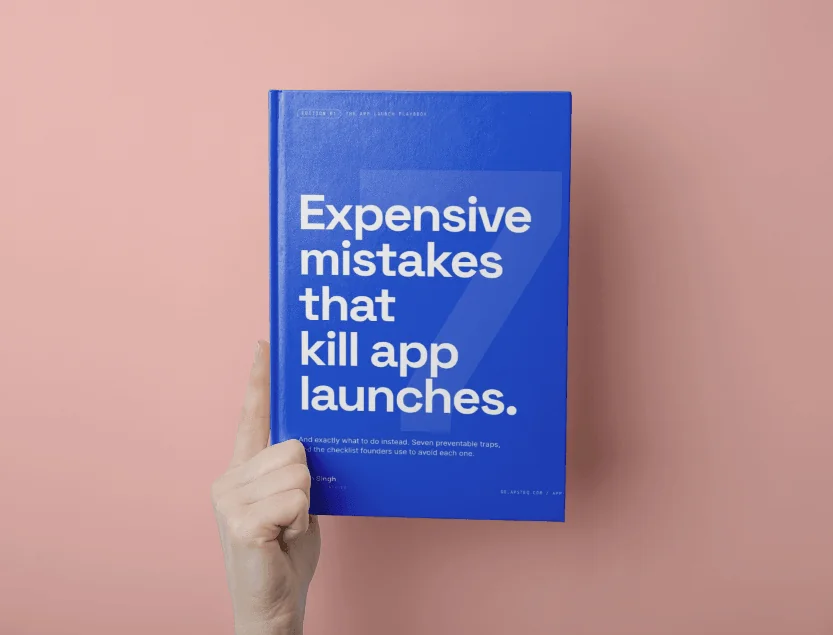
7 Expensive Mistakes That Kill App Launches
The launch errors we see most often across 300+ app engagements, and what to do instead.
Get the Free Ebook Browse all free guides