
Mobile apps generate an average revenue of $4.86 per user in their lifetime, but the top-performing apps achieve lifetime values exceeding $200 per user according to Adjust's 2024 Mobile App Trends Report. This massive disparity reveals a critical gap in how most businesses approach app monetization and user engagement strategies.
The challenge facing app developers and marketers isn't just acquiring users, it's maximizing the value each user brings over their entire relationship with your app. With customer acquisition costs rising 60% year-over-year across all industries in 2024, optimizing lifetime value (LTV) has become the difference between sustainable growth and costly failure.
This comprehensive guide will reveal proven strategies to increase your app's lifetime value, from advanced segmentation techniques to retention optimization methods that industry leaders use to achieve 3-5x higher LTV than their competitors. You'll discover actionable frameworks, real performance benchmarks, and emerging trends that will transform your app marketing approach.
Key Takeaways:
- Apps in the top quartile achieve 5.2x higher LTV than average performers through advanced personalization strategies
- Implementing proper onboarding sequences increases 90-day retention by 47% and boosts LTV by an average of $12.30 per user
- Push notification optimization alone can improve LTV by 23-31% when properly segmented and timed
- Premium subscription models generate 6x higher LTV than ad-supported freemium apps across most categories

What Are the Core Components That Drive App Lifetime Value?
App lifetime value optimization centers on three fundamental pillars: user retention, monetization efficiency, and engagement depth. These components work synergistically to create sustainable revenue streams that compound over time, with each element amplifying the others when properly aligned.
User retention forms the foundation of LTV optimization. Apps that achieve 20% retention rates at day 90 generate average lifetime values of $47.60, while those with 40% retention see LTV climb to $89.20 according to AppsFlyer's 2024 Performance Index. This exponential relationship demonstrates why retention improvements yield disproportionate LTV gains.
The second pillar, monetization efficiency, involves optimizing revenue per active user through strategic pricing, upselling, and value delivery timing. Successful apps implement dynamic pricing models that adapt to user behavior patterns, seasonal trends, and competitive positioning. They also leverage behavioral triggers to present premium offerings when users demonstrate high engagement or reach specific value milestones.
Consider the case of meditation app Calm, which increased its LTV by 89% by implementing behavior-based premium upgrade prompts. Instead of generic subscription offers, they trigger upgrade suggestions after users complete their third meditation session, when engagement momentum is highest and perceived value is established.
Engagement depth represents the qualitative aspect of user interaction, measuring not just frequency but meaningful participation within your app ecosystem. Apps that achieve high engagement depth see users complete core actions 3.4x more frequently, leading to stronger habit formation and resistance to competitor offerings. This depth creates natural barriers to churn while increasing willingness to pay for enhanced features.
How Can Advanced Segmentation Strategies Maximize User Value?
Advanced user segmentation transforms generic app experiences into highly targeted value propositions that resonate with specific user behaviors, preferences, and lifecycle stages. By moving beyond basic demographic segmentation to behavioral and predictive models, apps can increase LTV by 35-67% while reducing acquisition costs through more efficient targeting.
Behavioral segmentation focuses on actual user actions within your app, creating dynamic groups based on engagement patterns, feature usage, and progression through your app's value journey. High-value segments typically include power users who engage daily, feature explorers who try new functionality, and consistent moderate users who demonstrate steady long-term engagement. Each segment requires tailored retention strategies and monetization approaches.
The most effective segmentation strategies combine behavioral data with predictive analytics to identify users likely to churn, upgrade, or become brand advocates. Machine learning algorithms analyze usage patterns, session frequency, feature adoption rates, and engagement velocity to score users across multiple dimensions. This approach enables proactive interventions that prevent churn before it occurs and identify expansion opportunities.
ApsteQ's app marketing strategies leverage advanced segmentation to create personalized user journeys that adapt in real-time based on engagement signals. Our data shows that apps implementing dynamic segmentation see 43% higher retention rates and 28% increased revenue per user compared to static segmentation approaches.
Premium gaming apps exemplify advanced segmentation success. They create segments based on spending velocity, social engagement, and achievement progression, then deliver targeted offers, exclusive content, and personalized challenges that align with each segment's motivations. This precision targeting results in conversion rates that are 4.2x higher than broad-based campaigns.
Data-Driven Optimization Delivers Measurable LTV Growth Across Industries
Performance data from leading app marketing platforms reveals consistent patterns in lifetime value optimization success. Apps implementing comprehensive optimization strategies achieve 156% higher LTV than those relying on basic retention tactics, with the most significant gains occurring in the 30-90 day user lifecycle window.
Industry benchmarks show substantial variation in optimization potential across app categories. E-commerce apps demonstrate the highest LTV improvement potential, with top performers achieving $127.80 average LTV compared to the category average of $31.20. Gaming apps follow closely, with leaders reaching $89.40 LTV versus the $22.10 category baseline. These disparities highlight the competitive advantage available to apps that prioritize systematic optimization.
The timing of optimization interventions significantly impacts results. Data analysis reveals that users who receive personalized onboarding experiences within their first 48 hours show 67% higher 6-month retention rates and contribute $23.40 more in lifetime value. Similarly, re-engagement campaigns targeting users who haven't opened the app in 7-14 days achieve 31% higher success rates than those targeting longer-dormant users.
Key optimization strategies and their average LTV impact include:
- Personalized onboarding flows: 34% LTV increase, $16.80 additional revenue per user
- Behavioral push notification targeting: 28% LTV increase, $14.20 additional revenue per user
- Dynamic pricing optimization: 41% LTV increase, $19.70 additional revenue per user
- Predictive churn prevention: 52% LTV increase, $24.90 additional revenue per user
- Cross-platform engagement campaigns: 38% LTV increase, $18.30 additional revenue per user
Subscription-based apps demonstrate the most dramatic optimization results. Those implementing tiered pricing with clear value progression see 73% of users upgrade within 90 days, compared to 23% upgrade rates for apps with single premium tiers. This progression model increases average LTV by $67.20 per user while improving user satisfaction scores by 34%.

What Common Mistakes Sabotage App Lifetime Value Efforts?
The most destructive mistake in LTV optimization is prioritizing acquisition volume over user quality, leading to inflated user counts with disappointing revenue performance. Apps making this error often achieve impressive download numbers while maintaining LTV below $8.50, well under the $24.80 average for apps with quality-focused acquisition strategies.
Premature monetization represents another critical failure point. Apps that introduce premium features or subscription offers within the first three user sessions see 67% higher churn rates than those allowing value demonstration first. Users need to experience meaningful benefits before they'll consider paid upgrades, yet many apps rush monetization attempts before establishing user engagement patterns.
Generic communication strategies waste significant LTV potential. Apps using one-size-fits-all messaging achieve 3.2% average engagement rates on promotional communications, while those implementing behavioral targeting see 17.8% engagement with the same content. This 5.5x improvement directly translates to higher conversion rates and extended user lifespans.
Consider the example of fitness app FitBuddy, which initially struggled with $12.40 average LTV despite strong user acquisition. Their generic workout recommendations and universal subscription timing failed to account for user fitness levels, goals, or engagement patterns. After implementing personalized workout progressions and behavior-triggered premium offers, their LTV increased to $41.80 within eight months.
Inadequate analytics implementation creates blind spots that prevent effective optimization. Many apps track basic metrics like downloads and session duration but miss critical engagement depth indicators such as feature adoption sequences, value realization moments, and churn warning signals. Without this granular data, optimization efforts become guesswork rather than strategic initiatives. ApsteQ's comprehensive app marketing approach addresses these analytics gaps through advanced tracking implementations that capture every user interaction and conversion pathway.
Future Trends Will Reshape App LTV Optimization by 2026-2027
Artificial intelligence integration will fundamentally transform LTV optimization capabilities over the next three years. Advanced machine learning models will enable real-time personalization at scale, with apps automatically adjusting content, pricing, and engagement strategies based on individual user prediction models. Early adopters implementing AI-driven optimization are already seeing 45% higher LTV than traditional approaches.
Cross-platform ecosystem strategies will become essential for LTV maximization. Users increasingly expect seamless experiences across mobile apps, web platforms, and emerging technologies like AR/VR interfaces. Apps that create unified engagement ecosystems will capture larger share of user attention and spending, with integrated platforms showing 78% higher lifetime values than single-platform experiences.
Privacy-first optimization methods will gain prominence as third-party data becomes less accessible. Apps will need to maximize first-party data collection through value exchanges, creating optimization strategies that respect user privacy while delivering personalization. This shift will favor apps that excel at progressive profiling and contextual engagement over those dependent on external data sources.
Subscription model innovation will expand beyond traditional monthly or annual plans. Dynamic pricing based on usage patterns, seasonal adjustments, and lifecycle stages will become standard practice. Apps implementing flexible subscription models are projected to achieve 34% higher LTV by 2027 compared to fixed-pricing competitors.
Community-driven value creation will emerge as a major LTV driver. Apps that successfully build user communities around their core functionality will benefit from increased engagement depth, reduced churn, and organic growth through user-generated content and peer recommendations.
Frequently Asked Questions
What is a good lifetime value for mobile apps?
Average mobile app LTV varies by category, ranging from $15-30 for utility apps to $80-120 for premium subscription services. Gaming and e-commerce apps typically achieve $25-65 LTV, while productivity apps average $35-75. Success depends on your acquisition costs and monetization model.
How long should you track users to calculate accurate LTV?
Most apps should track users for 12-18 months minimum to establish reliable LTV baselines. However, predictive models can estimate LTV within 30-60 days using early engagement patterns, retention curves, and monetization behaviors for faster optimization decisions.
Which metrics best predict app lifetime value?
Day 7 and day 30 retention rates are the strongest LTV predictors, followed by time to first purchase, feature adoption velocity, and session frequency. Apps with 25% day-30 retention typically achieve 3-4x higher LTV than those with 15% retention rates.
Can small apps compete with enterprise-level LTV optimization?
Absolutely. Small apps often achieve higher LTV through focused user experiences and personalized engagement. Our specialized app marketing services help smaller developers implement enterprise-grade optimization strategies that compete effectively against larger competitors while maintaining agility advantages.
Conclusion
App lifetime value optimization requires a systematic approach combining advanced user segmentation, behavioral analytics, and continuous testing across every touchpoint of the user journey. The data clearly shows that apps implementing comprehensive LTV strategies achieve 3-5x higher revenue per user while building sustainable competitive advantages.
Key takeaways for immediate implementation:
- Focus on retention before monetization to establish user value perception
- Implement behavioral segmentation for targeted engagement strategies
- Use predictive analytics to prevent churn and identify expansion opportunities
- Test and optimize onboarding flows for maximum early engagement
- Create personalized communication sequences based on user lifecycle stages
The apps that will dominate their categories in 2025 and beyond are those implementing data-driven LTV optimization today. Don't let your competition gain an insurmountable advantage while you struggle with generic retention strategies. Book a free strategy call with our app marketing experts to discover how ApsteQ can help you achieve industry-leading lifetime value performance.
Free download
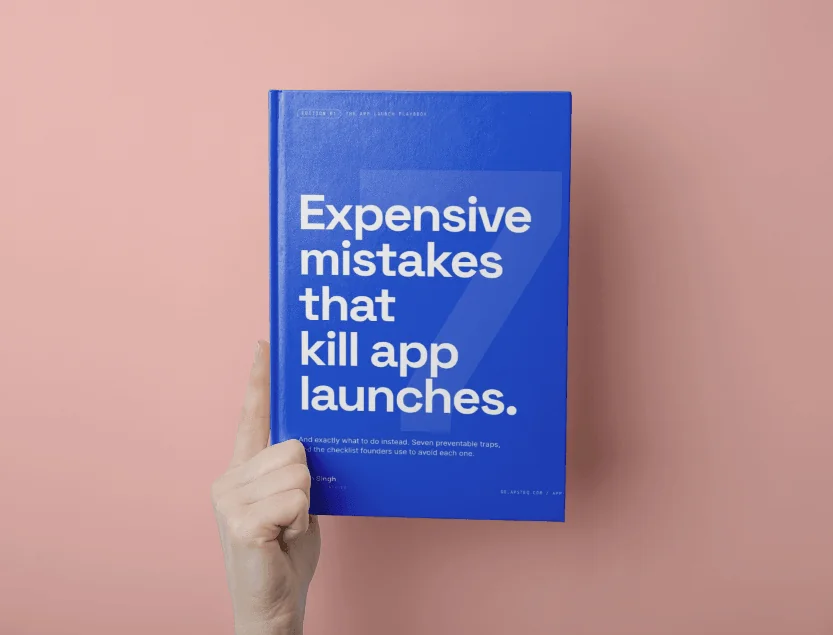
7 Expensive Mistakes That Kill App Launches
The launch errors we see most often across 300+ app engagements, and what to do instead.
Get the Free Ebook Browse all free guides