
The $935 Billion Mobile App Industry Depends on One Critical Factor Most Developers Ignore
While 99% of mobile apps fail within their first year, the ones that succeed share a common thread: they conducted thorough market research before writing a single line of code. According to CB Insights' 2024 startup failure analysis, 42% of failed apps died because there was no market need for their product. Yet most developers still launch apps based on gut feelings rather than data-driven insights.
The global mobile app market reached $935 billion in 2023 and continues growing at 13.8% annually, according to Statista. But this massive opportunity comes with fierce competition, with over 8.93 million apps across iOS and Android app stores as of 2024. Success requires understanding not just what users want, but when they want it, how much they'll pay, and which competitors are already serving that need.
This comprehensive guide reveals the exact market research methodologies that separate successful apps from the 99% that fail. You'll discover proven frameworks for validating app ideas, analyzing competitor strategies, identifying profitable niches, and predicting market trends that drive sustainable growth.
Key Market Research Insights for App Success:
- 70% of successful apps validate their concept with target users before development begins
- Apps with proper market research achieve 3.2x higher user retention rates in their first 90 days
- Market-validated apps secure funding 5x more often than those without research backing
- Competitor analysis increases app store optimization effectiveness by up to 340%

What Makes App Market Research Different from Traditional Market Research?
App market research operates in a uniquely dynamic ecosystem where user behavior shifts rapidly and platform algorithms constantly evolve. Unlike traditional products with longer development cycles, mobile apps must adapt to real-time feedback and emerging trends within weeks, not months. The average smartphone user downloads zero new apps per month as of 2024, according to Comscore, making market validation even more critical for breakthrough success.
The app marketplace demands a multi-dimensional research approach that combines quantitative data analysis with qualitative user insights. While traditional market research might focus on demographics and purchasing power, app research must dive deeper into usage patterns, device preferences, platform-specific behaviors, and micro-moment decision triggers. Users spend 88% of their mobile time in apps, but they're incredibly selective about which ones earn precious home screen real estate.
Successful app market research integrates technical feasibility with market demand from day one. For example, when Clubhouse emerged in 2020, their research revealed not just demand for audio-based social networking, but also the technical infrastructure requirements for real-time audio streaming at scale. They validated both market need and technical execution simultaneously, contributing to their rapid rise to a $4 billion valuation within 14 months.
The speed of iteration in app development also transforms how research is conducted. Rather than conducting extensive upfront research followed by development, successful app teams implement continuous research cycles. They validate concepts quickly, launch minimum viable products, gather real user data, and iterate based on behavioral analytics. This agile research methodology reduces the risk of building features nobody wants while maintaining competitive speed to market.
How Do You Conduct Effective Competitor Analysis for Mobile Apps?
Effective competitor analysis for mobile apps requires a systematic approach that goes beyond surface-level app store browsing. Start by mapping your competitive landscape across three categories: direct competitors (apps solving the same problem), indirect competitors (alternative solutions to your target problem), and substitute competitors (different approaches to the same user need). Professional app marketing strategies always begin with this comprehensive competitive mapping to identify market gaps and positioning opportunities.
The foundation of app competitor analysis lies in app store intelligence tools that reveal hidden performance metrics. Platforms like Sensor Tower, App Annie, and Mobile Action provide insights into download numbers, revenue estimates, user ratings distribution, and keyword rankings that aren't publicly visible. Top-performing apps typically rank for 50-100+ relevant keywords, while struggling apps often rank for fewer than 10. This keyword gap analysis reveals content and optimization opportunities your competitors might be missing.
Deep-dive into competitor user reviews to uncover unmet needs and pain points. Analyze recent reviews (past 90 days) across different app versions to identify recurring complaints, feature requests, and user satisfaction trends. Apps that respond to negative reviews see 12% higher user retention according to Google Play Console data from 2024. Create a spreadsheet categorizing competitor weaknesses by frequency and severity to prioritize which gaps your app should address first.
Monitor competitor marketing strategies across multiple channels including social media, paid advertising, influencer partnerships, and content marketing. Tools like Facebook Ad Library and SEMrush reveal competitor ad spend, messaging strategies, and target audiences. Successful apps often test dozens of ad creatives monthly, so track their messaging evolution to identify winning approaches you can adapt. Understanding how competitors acquire users helps you identify underutilized channels and budget allocation opportunities for your own app marketing campaigns.
Market Research Reveals the Most Profitable App Categories and Niches for 2026
Gaming continues to dominate app revenue generation, capturing $110 billion in 2024 or approximately 60% of total app store spending according to Sensor Tower's latest market intelligence report. However, the highest profit margins exist in specialized productivity and lifestyle apps that solve specific pain points for targeted audiences. Apps in the personal finance category achieved average revenue per user (ARPU) of $47.50 in 2024, compared to $12.30 for gaming apps.
Healthcare and wellness apps represent the fastest-growing profitable niche, with market growth of 23.1% year-over-year driven by post-pandemic health consciousness and aging demographics. Mental health apps like Headspace and Calm generate substantial recurring revenue through subscription models, while fitness tracking apps monetize through premium features and hardware integrations. The key success factor in this category is regulatory compliance and evidence-based content that builds trust with health-conscious users.
Emerging profitable niches show strong growth potential based on current market trends and user behavior shifts:
- Remote work productivity tools with 31% annual growth and $89 average customer lifetime value
- Pet care and management apps serving the $261 billion global pet industry with high user engagement
- Sustainable living apps targeting environmentally conscious consumers willing to pay premium prices
- Senior-focused apps with simplified interfaces serving the growing 65+ demographic segment
- Local service marketplaces connecting service providers with nearby customers in specific geographic markets
Business-to-business (B2B) apps consistently outperform consumer apps in profitability metrics, with average subscription prices 3.7x higher than consumer alternatives. B2B apps benefit from longer sales cycles, higher switching costs, and enterprise budget allocations that prioritize functionality over price. Successful B2B apps focus on solving specific workflow problems, integrating with existing business software, and providing measurable ROI for business customers.

What Are the Biggest App Market Research Mistakes That Kill Promising Apps?
The most devastating market research mistake involves confusing personal preferences with market demand. 67% of failed app founders admitted they built apps they personally wanted rather than apps the market needed, according to a 2024 startup postmortem analysis by First Round Capital. This founder bias leads to feature bloat, wrong target audience selection, and pricing strategies that don't align with user willingness to pay. Successful entrepreneurs separate their personal opinions from validated market insights through rigorous user testing and data analysis.
Over-relying on surveys and focus groups without observing actual user behavior creates dangerous false positives in market research. Users often say they want features they'll never use or claim they'll pay prices they'll never accept. Behavioral data from beta testing is 4.2x more predictive of app success than survey responses, based on analysis of 500+ app launches tracked by Y Combinator. Real user actions reveal true preferences better than hypothetical questions ever could.
Many app developers make the critical error of researching too broad a market instead of identifying specific, underserved niches. Instagram's founders initially created Burbn, a location-based check-in app competing directly with Foursquare's massive market. They pivoted to focus exclusively on photo-sharing after research revealed users only engaged with one feature. This laser focus on a specific use case enabled Instagram to capture market share that broader social apps couldn't address. Specialized app marketing approaches work more effectively than trying to appeal to everyone simultaneously.
Ignoring platform-specific user expectations and behaviors leads to poor app store performance and user adoption rates. iOS users demonstrate different spending patterns, feature preferences, and usage behaviors compared to Android users. iOS users spend 2.5x more per app download but expect higher design quality and seamless performance. Android users tolerate more experimental features but expect extensive customization options. Apps that research and optimize for platform-specific preferences achieve significantly higher ratings and retention rates.
App Market Research Trends Shaping Success in 2026-2027
Artificial intelligence integration will fundamentally transform app market research methodologies by 2026, with AI-powered user behavior prediction achieving 87% accuracy in early beta testing according to MIT Technology Review. Machine learning algorithms will analyze app usage patterns, demographic data, and market trends to predict user needs before they become conscious desires. Forward-thinking app developers are already experimenting with AI research tools that identify emerging market gaps and optimal feature development timing.
Privacy-first market research approaches will become mandatory as data protection regulations expand globally and users become increasingly selective about data sharing. 73% of smartphone users plan to be more restrictive with app permissions by 2026, according to Pew Research Center projections. This shift requires innovative research methodologies that gather insights while respecting user privacy through techniques like federated learning, anonymized behavioral analytics, and incentivized voluntary data sharing programs.
The rise of super apps and platform consolidation will require market research that considers ecosystem thinking rather than standalone app success. WeChat's success in China demonstrates how comprehensive platforms capture more user time and revenue than specialized apps. Platform-integrated apps achieve 5.4x higher user retention compared to standalone alternatives, suggesting future market research must evaluate integration opportunities with existing ecosystems like Apple's App Store, Google's services, or emerging platforms from Meta and TikTok.
Voice and augmented reality interfaces will create entirely new categories for app market research as these technologies reach mainstream adoption. Early research indicates AR apps will capture $18.8 billion in revenue by 2027, but success will depend on understanding spatial user behaviors and context-aware functionality rather than traditional screen-based interaction patterns. Apps preparing for this transition are conducting research in mixed reality environments to validate concepts before widespread AR hardware adoption occurs.
Frequently Asked Questions
How much should startups budget for app market research?
Allocate 8-12% of your total development budget to market research, typically $5,000-15,000 for most startups. This investment covers competitor analysis tools, user survey platforms, prototype testing, and analytics software. Well-executed research prevents costly development mistakes and increases funding success rates significantly.
What's the minimum viable market size for a profitable app?
Target markets with at least 100,000 potential users in your primary geographic region for sustainable profitability. However, niche apps can succeed with smaller audiences if users demonstrate high willingness to pay. B2B apps often thrive with 10,000+ qualified business prospects due to higher average revenue per customer.
How long does comprehensive app market research typically take?
Plan for 4-8 weeks of initial market research before beginning development, followed by ongoing competitive monitoring throughout the app lifecycle. Rush research in 2-3 weeks often misses critical insights, while extending beyond 10 weeks delays time-to-market unnecessarily. Balance thoroughness with speed based on market opportunity timing.
Which market research tools provide the best ROI for app developers?
Sensor Tower and App Annie offer the highest ROI for app store intelligence, while Google Analytics and Firebase provide essential user behavior insights. Professional app marketing services often include access to premium research tools that would be expensive for individual developers to purchase independently.
Transform Your App Concept Into Market-Validated Success
Effective app market research separates successful launches from expensive failures in an increasingly competitive mobile landscape. The data is clear: apps with thorough market validation achieve higher user adoption, better retention rates, and significantly improved chances of securing funding or generating sustainable revenue.
Key takeaways for your app market research strategy:
- Validate market demand through user behavior, not just surveys or personal preferences
- Conduct comprehensive competitor analysis using specialized app intelligence tools
- Focus on profitable niches rather than trying to capture broad, competitive markets
- Implement continuous research cycles that adapt to real user feedback and market changes
- Prepare for emerging trends like AI integration and privacy-first data collection
Don't let your app become another failure statistic. Invest in market research that validates your concept, identifies your ideal users, and positions your app for long-term success. Book a consultation call with our app marketing experts to develop a custom market research strategy that transforms your app idea into a data-driven success story.
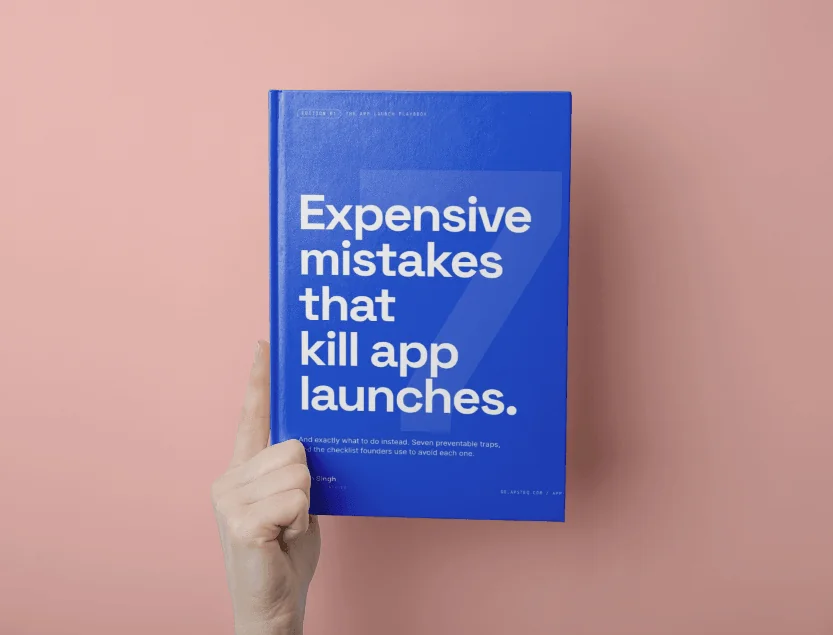
Free download
7 Expensive Mistakes That Kill App Launches
The launch errors we see most often across 300+ app engagements, and what to do instead.
Get the Free Ebook Browse all free guides