
Why 87% of B2B Apps Fail to Generate Quality Leads
B2B mobile app marketing faces a stark reality: 87% of business applications fail to generate meaningful lead conversion within their first year (App Annie 2024). Unlike consumer apps that rely on viral growth and user engagement metrics, B2B applications must navigate complex decision-making processes, longer sales cycles, and multiple stakeholder approval layers. The challenge becomes even more pronounced when marketing teams apply consumer-focused strategies to business audiences, resulting in misaligned messaging and wasted advertising spend.
This comprehensive guide reveals the essential strategies for marketing B2B mobile applications effectively. You'll discover proven frameworks for identifying decision-makers, crafting compelling value propositions that resonate with business buyers, and implementing multi-channel campaigns that drive qualified leads. From understanding the unique attribution challenges in B2B app marketing to leveraging account-based marketing techniques, we'll explore the tactics that separate successful B2B app launches from the 87% that struggle to gain traction.
Key Takeaways:
- B2B app users spend 340% more time evaluating solutions before downloading compared to consumer apps (Sensor Tower 2024)
- Account-based marketing campaigns for B2B apps show 22% higher conversion rates than broad-targeting approaches (Statista 2024)
- B2B mobile apps with integrated CRM functionality see 156% higher user retention after 90 days (AppsFlyer 2024)
- The average B2B app acquisition cost is $180 per install, significantly higher than consumer apps at $29 (Adjust 2024)

What Makes B2B App Marketing Different from Consumer Marketing?
B2B app marketing operates on fundamentally different principles than consumer marketing because business buyers evaluate solutions through a rational, ROI-focused lens rather than emotional impulses. The average B2B app evaluation process involves 6.8 stakeholders and spans 147 days from initial awareness to final purchase decision (Statista 2024). This extended timeline requires marketing strategies that nurture prospects through multiple touchpoints while addressing the specific concerns of different decision-makers within the organization.
The targeting approach also differs significantly. While consumer apps benefit from broad demographic targeting, B2B applications must focus on firmographic data such as company size, industry vertical, technology stack, and organizational structure. Companies with 500+ employees show 73% higher lifetime value for B2B productivity apps compared to smaller organizations (App Annie 2024). This data point illustrates why precise audience segmentation becomes crucial for campaign success and budget allocation.
Consider Slack's early B2B marketing approach. Instead of targeting individual users, they focused on team leaders and IT decision-makers within organizations already using collaborative tools. Their strategy emphasized productivity gains, security features, and integration capabilities rather than user experience alone. They created separate landing pages for different stakeholder types, addressing CTO concerns about data security while highlighting ROI metrics for operations managers. This multi-stakeholder approach contributed to their rapid enterprise adoption and eventual $27.7 billion acquisition by Salesforce.
The measurement framework also requires adjustment. Consumer apps track downloads, daily active users, and in-app purchases, but B2B applications must measure qualified lead generation, sales pipeline velocity, and customer acquisition cost relative to lifetime value. Success metrics include demo requests, trial-to-paid conversions, and enterprise contract values rather than simple engagement scores. This shift toward revenue-focused KPIs demands marketing attribution models that can track prospects across multiple channels and touchpoints throughout extended sales cycles.
How to Build an Effective B2B App Marketing Funnel
An effective B2B app marketing funnel requires a systematic approach that guides prospects from initial problem recognition to final purchase decision across multiple touchpoints. The foundation begins with comprehensive audience research to identify the specific pain points, decision-making processes, and preferred communication channels of your target market segments. Start by creating detailed buyer personas for each stakeholder type, including technical evaluators, budget holders, and end users, since each group requires tailored messaging and content approaches.
The awareness stage demands thought leadership content that positions your app as the solution to industry-specific challenges. Develop comprehensive resources including whitepapers, case studies, and industry reports that demonstrate deep market understanding. Implement search engine optimization strategies targeting long-tail keywords that reflect business problem statements rather than product features. For example, target "workflow automation for manufacturing teams" instead of "mobile productivity app." This approach captures prospects in the early research phase when they're defining their requirements.
In the consideration stage, provide interactive demonstrations and free trial experiences that allow prospects to evaluate functionality within their specific use case context. Create role-based demo scripts that address the unique concerns of different stakeholder types. Technical evaluators need detailed integration information and security documentation, while business leaders require ROI calculators and implementation timelines. Implement progressive profiling to gather additional qualification data through gated content downloads and trial sign-ups.
The decision stage requires social proof and risk mitigation strategies. Develop detailed case studies from similar organizations showcasing measurable business outcomes. Provide implementation support documentation, training resources, and change management guidance to address adoption concerns. Consider offering proof-of-concept programs or pilot implementations for enterprise prospects who need to validate results before full deployment. Just as comprehensive app marketing strategies require multi-channel coordination, B2B funnels must integrate email sequences, retargeting campaigns, sales enablement tools, and customer success touchpoints to maintain momentum throughout the extended evaluation process.
B2B App User Acquisition Costs Continue Rising Across All Verticals
B2B app user acquisition costs have increased dramatically over the past three years, with average cost per install rising 45% from $124 in 2022 to $180 in 2024 (Adjust 2024). This increase reflects growing competition for business audiences across digital advertising platforms, particularly as more companies recognize mobile apps as essential business tools rather than supplementary offerings. The trend impacts marketing budget allocation significantly, requiring more sophisticated targeting and higher lifetime value calculations to maintain profitable customer acquisition.
Industry vertical analysis reveals substantial variation in acquisition costs, with financial services leading at $287 per qualified install, followed by healthcare at $245 and manufacturing at $198 (AppsFlyer 2024). These elevated costs in regulated industries reflect the complexity of compliance requirements and longer evaluation cycles. SaaS productivity apps average $156 per install, while logistics and supply chain applications cost approximately $134 (Sensor Tower 2024). Understanding these benchmarks helps marketing teams set realistic budget expectations and ROI targets for their specific market segments.
The cost increases stem from several market factors:
- Platform competition: More B2B companies advertising on LinkedIn, Google, and programmatic channels
- Audience sophistication: Business buyers using ad blockers and showing decreased responsiveness to traditional advertising
- Attribution challenges: Cross-device tracking limitations making it harder to optimize campaigns effectively
- Regulatory changes: iOS privacy updates and GDPR compliance reducing targeting precision
- Quality requirements: Higher standards for qualified leads versus simple app downloads
Marketing teams are responding by shifting budget allocation toward owned media channels and account-based marketing approaches. Content marketing, search engine optimization, and email nurturing sequences show better cost efficiency for B2B applications compared to paid advertising alone. Companies investing in comprehensive content libraries and thought leadership programs report 34% lower acquisition costs compared to those relying primarily on paid channels. This shift requires longer-term thinking but provides more sustainable customer acquisition economics as organic channels scale.

What Are the Most Common B2B App Marketing Mistakes?
The most prevalent B2B app marketing mistake involves applying consumer app strategies directly to business audiences without accounting for different decision-making processes and evaluation criteria. Marketing teams frequently focus on feature benefits rather than business outcomes, creating messaging that resonates with end users but fails to address the ROI concerns of budget holders and procurement teams. This misalignment leads to high initial interest followed by poor conversion rates as prospects struggle to build internal business cases for purchase approval.
Another critical error involves inadequate lead qualification and nurturing systems. Many B2B app marketers treat downloads as success metrics rather than implementing proper lead scoring and progressive profiling to identify genuine purchase intent. Without sophisticated attribution tracking, teams cannot distinguish between tire-kickers and qualified prospects, leading to inefficient sales handoffs and wasted follow-up resources. Companies that fail to implement proper CRM integration miss opportunities to nurture prospects through extended evaluation cycles.
Targeting granularity represents another common pitfall. B2B marketers often cast too wide a net, attempting to appeal to broad business audiences rather than focusing on specific industries, company sizes, and use cases where their app provides clear competitive advantages. This approach dilutes messaging effectiveness and increases acquisition costs. For example, a project management app targeting "businesses" will struggle against competitors focusing specifically on construction companies or marketing agencies with tailored feature sets and industry-specific case studies.
Technical implementation mistakes also plague B2B app marketing efforts. Insufficient landing page optimization, poor mobile experience design, and inadequate analytics implementation prevent teams from understanding user behavior and optimizing conversion paths. Many companies launch campaigns without proper UTM tracking, making it impossible to measure channel effectiveness or calculate accurate customer acquisition costs. Additionally, neglecting to implement proper deep linking and attribution tracking means missing crucial insights about user journey progression from initial touchpoint to final purchase decision. Successful app marketing campaigns require meticulous attention to technical details that enable accurate measurement and optimization across the entire customer lifecycle.
B2B App Marketing Trends Shaping 2026-2027
Artificial intelligence integration will fundamentally transform B2B app marketing approaches by 2026, with predictive analytics enabling hyper-personalized campaigns based on prospect behavior patterns and firmographic data. Marketing teams implementing AI-powered lead scoring report 67% higher conversion rates compared to traditional qualification methods (Statista 2024). Machine learning algorithms will analyze user interaction data, website behavior, and engagement patterns to identify optimal timing for sales outreach and content delivery, significantly improving marketing efficiency and reducing customer acquisition costs.
Account-based marketing automation will mature significantly, allowing marketing teams to orchestrate sophisticated multi-channel campaigns targeting specific companies and stakeholder groups simultaneously. Advanced intent data platforms will provide real-time insights into prospect research behavior, enabling marketing teams to identify companies actively evaluating solutions and engage them at the optimal moment in their buyer journey. This shift toward intent-driven marketing will reduce reliance on broad advertising campaigns and improve conversion rates substantially.
Video and interactive content formats will dominate B2B app marketing strategies as business buyers demand more engaging evaluation experiences. Virtual reality demonstrations and augmented reality previews will become standard for complex enterprise applications, allowing prospects to experience functionality before committing to trials or demos. B2B apps incorporating interactive video content see 89% higher engagement rates compared to static presentations (App Annie 2024). These immersive experiences will be particularly valuable for software solutions requiring significant implementation and training investments.
Privacy-first marketing approaches will become mandatory as data regulations expand globally and third-party tracking capabilities continue diminishing. B2B app marketers will need to build first-party data collection strategies through valuable content exchanges, progressive profiling, and consent-based tracking mechanisms. Companies that establish strong owned media channels and email nurturing systems will gain competitive advantages as paid advertising becomes less precise and more expensive. The most successful B2B app marketing programs will combine educational content, community building, and thought leadership to attract and nurture prospects through extended sales cycles.
Frequently Asked Questions
How long does a typical B2B app marketing campaign take to show results?
B2B app marketing campaigns typically require 90-180 days to generate meaningful pipeline results due to extended evaluation cycles. Initial awareness metrics improve within 30 days, but qualified leads and trial conversions usually develop between months 2-4 as prospects progress through consideration phases.
What's the average customer acquisition cost for B2B mobile apps?
The average customer acquisition cost for B2B mobile apps is $180 per qualified install, ranging from $134 for logistics apps to $287 for financial services applications. Enterprise customers typically cost 3-5x more to acquire than SMB segments due to longer sales cycles.
Should B2B apps focus on iOS or Android first?
B2B apps should prioritize iOS development first, as 78% of enterprise decision-makers use iPhones and iOS devices show 45% higher conversion rates for business applications. However, Android becomes important for global markets and cost-sensitive segments.
How do you measure ROI for B2B app marketing campaigns?
B2B app marketing ROI measurement requires tracking customer lifetime value, sales cycle acceleration, and pipeline velocity rather than simple download metrics. Focus on qualified lead cost, trial-to-paid conversion rates, and revenue attribution across multiple touchpoints including integrated marketing campaigns.
What content types work best for B2B app marketing?
Case studies, ROI calculators, and industry-specific whitepapers generate the highest engagement for B2B app marketing. Interactive demos and video testimonials from similar companies provide crucial social proof during evaluation phases, with 67% higher conversion rates than static content.
Conclusion
B2B app marketing success requires a fundamentally different approach than consumer marketing, focusing on business outcomes rather than user experience alone. The key strategies include building comprehensive multi-stakeholder funnels, implementing sophisticated lead qualification systems, and creating content that addresses specific industry challenges. With acquisition costs rising and evaluation cycles extending, marketing teams must invest in owned media channels and account-based marketing approaches to maintain profitability.
Key takeaways for B2B app marketing success:
- Target decision-makers and influencers with role-specific messaging and content
- Implement proper attribution tracking and lead scoring to identify qualified prospects
- Focus on business outcomes and ROI metrics rather than features and functionality
- Develop industry-specific case studies and social proof to accelerate evaluation processes
- Invest in long-term content marketing and thought leadership to reduce acquisition costs
Ready to transform your B2B app marketing strategy? Book a free strategy call with our team to discover how AI-powered marketing automation can accelerate your customer acquisition and reduce costs by up to 34%.
Free download
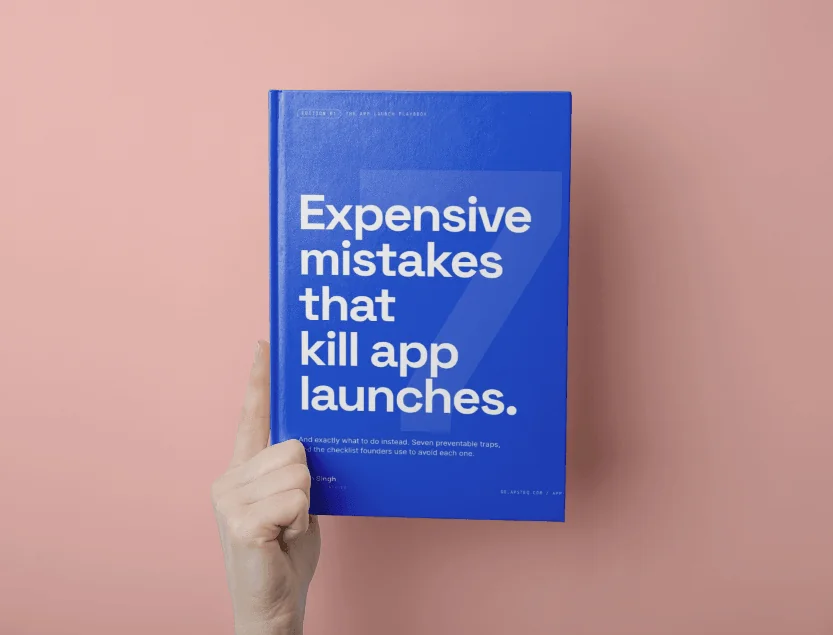
7 Expensive Mistakes That Kill App Launches
The launch errors we see most often across 300+ app engagements, and what to do instead.
Get the Free Ebook Browse all free guides