
94% of SaaS companies struggle to achieve sustainable user acquisition growth, according to a 2024 OpenView Partners study. While your product might solve real problems and deliver genuine value, getting it discovered in an oversaturated app marketplace requires sophisticated marketing strategies that most SaaS founders underestimate.
The mobile app economy generated $171 billion in consumer spending in 2023, yet the average app loses 77% of its daily active users within the first 3 days after installation. For SaaS applications, this churn rate can be even more devastating because user acquisition costs continue climbing while lifetime values plateau.
This comprehensive guide reveals data-driven app marketing strategies specifically designed for SaaS companies. You'll discover how to reduce customer acquisition costs, increase user retention rates, implement growth hacking techniques that actually work, and build sustainable marketing funnels that scale with your business growth.
Key Takeaways: • SaaS apps with strong onboarding processes retain 60% more users after 30 days (Mixpanel, 2024) • Companies using multi-channel app marketing strategies see 287% higher purchase rates (Adobe, 2023) • App Store Optimization can increase organic downloads by up to 150% for SaaS applications (Sensor Tower, 2024) • Referral programs generate 16% higher lifetime value compared to other acquisition channels (ReferralCandy, 2023)
What Makes SaaS App Marketing Different from Traditional App Promotion?
SaaS app marketing requires a fundamentally different approach because users evaluate software based on ongoing value delivery rather than immediate entertainment or utility. Unlike gaming or social media apps that hook users with instant gratification, SaaS applications must demonstrate long-term business impact and ROI to justify recurring subscription fees.
The complexity of SaaS products creates unique marketing challenges. According to Salesforce's 2024 State of Connected Customer report, 73% of business software users abandon applications within the first week if they don't immediately understand the value proposition. This means your marketing must focus heavily on education, demonstration, and proof of concept rather than viral mechanics or addictive gameplay loops.
Traditional consumer apps can rely on impulse downloads and viral sharing, but SaaS marketing requires building trust with decision-makers who often research solutions for weeks or months before committing. Gartner's 2024 research shows that B2B software buyers consume an average of 13 pieces of content before making purchase decisions, compared to just 3 pieces for consumer app downloads.
Your messaging strategy must address multiple stakeholders within target organizations. While a consumer app only needs to appeal to individual users, SaaS applications often require approval from IT departments, finance teams, and executive leadership. This multi-layered decision-making process demands sophisticated content marketing, detailed feature documentation, security compliance information, and clear ROI demonstrations.
Consider how Slack approached this challenge by creating separate marketing funnels for individual users, team administrators, and enterprise decision-makers. Their strategy included free trials for individuals, team productivity calculators for managers, and comprehensive security whitepapers for IT professionals. This multi-pronged approach helped them achieve a $27.7 billion valuation by addressing each stakeholder's specific concerns and motivations.
How Do You Build an Effective User Acquisition Funnel for SaaS Apps?
The most successful SaaS app acquisition funnels prioritize qualified lead generation over raw download volume, focusing on users who have genuine business needs and budget authority. This approach typically generates 3x higher lifetime values compared to broad-based consumer acquisition strategies, according to HubSpot's 2024 SaaS Marketing Report.
Your funnel should start with targeted content marketing that addresses specific pain points your software solves. Create detailed guides, case studies, and comparison articles that rank for long-tail keywords your ideal customers search for. Companies implementing this strategy see 67% more qualified leads compared to those focusing primarily on brand awareness campaigns, according to Content Marketing Institute's 2024 research.
The middle of your funnel requires sophisticated lead nurturing through email sequences, product demonstrations, and free trial experiences. Unlike consumer apps that convert users immediately, SaaS applications need extended evaluation periods. Implement progressive onboarding that gradually introduces advanced features over 14-21 days, as this approach increases trial-to-paid conversion rates by an average of 34% according to Appcues' 2024 analysis.
For companies seeking specialized expertise in app marketing strategies, partnering with agencies that understand SaaS-specific challenges can accelerate growth. Professional marketing teams bring experience with complex sales cycles, enterprise compliance requirements, and multi-stakeholder decision processes that most internal teams lack.
Your bottom-funnel strategy should include multiple conversion paths: freemium models, extended trials, money-back guarantees, and gradual plan upgrades. Zoom's success stemmed from their generous 40-minute free tier that demonstrated value before requiring payment. They converted free users to paid plans at a 30% rate by 2023, significantly higher than the industry average of 18% for freemium SaaS applications.
Integration capabilities become crucial differentiators in your acquisition messaging. Modern businesses use an average of 87 different software tools, so positioning your app as a central hub or seamless integration partner increases adoption likelihood. Emphasize API capabilities, native integrations with popular platforms, and workflow automation features that reduce manual work for potential users.
Data-Driven Optimization Strategies Drive Sustainable SaaS Growth
SaaS companies using comprehensive analytics tracking see 2.3x faster revenue growth compared to those relying on basic app store metrics alone. The key lies in measuring the right metrics throughout your entire customer journey, from initial awareness through long-term retention and expansion revenue opportunities.
Your analytics stack should track micro-conversions that predict long-term success, not just surface-level engagement metrics. According to Amplitude's 2024 Product Analytics Report, SaaS companies focusing on feature adoption rates achieve 40% higher customer lifetime values compared to those primarily tracking daily active users or session duration.
Critical metrics for SaaS app marketing include:
- Product Qualified Leads (PQLs): Users who've experienced core value within your application
- Feature Adoption Depth: Percentage of users engaging with advanced functionality
- Time to Value (TTV): How quickly new users achieve their first meaningful outcome
- Net Revenue Retention: Revenue growth from existing customers through upgrades and expansion
- Churn Prediction Scores: Early warning indicators of at-risk accounts
Implement cohort analysis to understand how user behavior changes over time and identify the specific actions that predict long-term success. Companies using cohort-based retention analysis reduce churn by an average of 23% within six months of implementation, according to Mixpanel's 2024 retention study.
A/B testing becomes exponentially more valuable for SaaS applications because small improvements in conversion rates compound over long customer lifecycles. Test onboarding flows, pricing presentations, feature discovery mechanisms, and upgrade prompts systematically. Optimizely's 2024 research shows that SaaS companies running continuous experimentation programs achieve 85% higher annual recurring revenue growth compared to those making intuition-based product decisions.
Behavioral triggers should automate your marketing responses based on user actions within your application. Set up campaigns that activate when users hit specific milestones, approach usage limits, or show engagement patterns that historically predict upgrades or churn. This data-driven personalization increases conversion rates while reducing manual marketing workload.

What Are the Most Costly Mistakes in SaaS App Marketing?
The biggest mistake SaaS companies make is treating app marketing like consumer product promotion, leading to wasted budgets and poor-quality user acquisition that doesn't convert to paying customers. According to ProfitWell's 2024 SaaS Benchmarks Report, companies making this error see customer acquisition costs that are 340% higher than industry benchmarks.
Many SaaS founders focus obsessively on app store rankings and download volumes, metrics that rarely correlate with business success for B2B software. Sensor Tower's 2024 analysis found that 68% of high-ranking business apps generate less than $50,000 monthly revenue, while lower-ranked apps with better user targeting often exceed $500,000 monthly recurring revenue.
Another critical mistake involves inadequate onboarding experiences that fail to demonstrate value quickly. Users decide whether to continue using SaaS applications within the first 5 minutes of their initial session, yet most companies spend weeks building complex feature sets while neglecting the new user experience. Successful companies like Canva and Notion invest heavily in guided tutorials, template libraries, and progressive disclosure that helps users achieve quick wins.
Pricing strategy errors plague many SaaS marketing efforts. Setting prices too low devalues your solution and attracts price-sensitive customers who churn quickly, while prices set too high can limit market penetration. Price Intelligently's 2024 research shows that SaaS companies optimizing pricing strategy see 30% revenue increases within 12 months, yet 85% of businesses haven't systematically tested their pricing in over two years.
Neglecting enterprise sales integration represents another expensive oversight. Consumer app marketing focuses on self-service adoption, but SaaS applications often require human sales support for larger deals. Companies succeeding in comprehensive app marketing create seamless handoffs between marketing-generated leads and sales teams, ensuring that qualified prospects receive appropriate attention regardless of their entry point.
Security and compliance messaging failures can instantly disqualify your application from enterprise consideration. Modern businesses require detailed information about data protection, privacy policies, regulatory compliance, and integration security before evaluating business software. IBM's 2024 Security Report indicates that 79% of enterprise buyers eliminate vendors based on inadequate security documentation before ever trying the actual product.
The Future of SaaS App Marketing: Trends Shaping 2026-2027
Artificial intelligence will fundamentally reshape SaaS app marketing by enabling hyper-personalized user experiences and predictive customer journey optimization. Early adopters are already seeing 45% improvements in conversion rates by implementing AI-driven content personalization and automated nurture sequences, according to Salesforce's 2024 AI Marketing Report.
Voice search optimization becomes critical as 58% of business professionals now use voice commands for software searches, particularly when researching solutions on mobile devices during commutes or between meetings. SaaS companies must optimize content for conversational queries like "best project management app for remote teams" rather than traditional keyword phrases.
Integration-first marketing strategies will dominate as businesses increasingly evaluate software based on ecosystem compatibility rather than standalone features. Companies positioning themselves as platform connectors rather than isolated tools see 67% higher adoption rates in enterprise environments, according to MuleSoft's 2024 integration study.
Privacy-first marketing approaches become mandatory as data protection regulations expand globally and business buyers become more sophisticated about security requirements. SaaS companies implementing zero-party data collection strategies maintain 85% higher customer trust scores compared to those relying on traditional tracking methods, according to Forrester's 2024 privacy research.
Community-driven growth models will replace traditional paid acquisition channels for many SaaS applications. Building engaged user communities that provide peer support, feature requests, and success stories creates sustainable competitive advantages that paid advertising cannot replicate. Companies with active user communities achieve 23% lower customer acquisition costs and 34% higher net promoter scores, according to CMX's 2024 community benchmarks.
Frequently Asked Questions
How Much Should SaaS Companies Spend on App Marketing?
Most successful SaaS companies allocate 15-25% of annual recurring revenue to marketing, with early-stage companies often investing 30-40% to accelerate growth. The key is maintaining a balanced mix between acquisition and retention activities, as existing customers typically generate 65% more revenue through upgrades and referrals.
What's the Average Customer Acquisition Cost for SaaS Apps?
Customer acquisition costs vary significantly by market segment, ranging from $200-500 for SMB SaaS to $5,000-15,000 for enterprise solutions according to 2024 industry benchmarks. The critical metric is ensuring your CAC payback period stays under 12 months while maintaining healthy unit economics throughout the customer lifecycle.
How Long Should SaaS Free Trials Last?
14-day free trials typically optimize conversion rates for most SaaS applications, providing enough time for users to experience core value without encouraging procrastination. However, complex enterprise software may require 30-60 day trials, while simple productivity tools might convert better with 7-day urgency-driven trials.
Should SaaS Companies Focus on iOS or Android First?
B2B SaaS applications should prioritize iOS development because business professionals are 73% more likely to use iPhones according to 2024 device usage studies. However, companies targeting international markets or price-sensitive segments may find better ROI starting with Android development, particularly in emerging markets where Android dominates.
For expert guidance on developing comprehensive SaaS marketing strategies, consider consulting with specialized agencies that understand the unique challenges of B2B software promotion.
Conclusion
Successful SaaS app marketing requires a fundamentally different approach than consumer app promotion, focusing on qualified lead generation, multi-stakeholder decision processes, and long-term value demonstration rather than viral growth mechanics.
Key strategies for sustainable growth include:
- Building comprehensive user acquisition funnels that prioritize quality over quantity
- Implementing data-driven optimization based on business metrics, not vanity metrics
- Avoiding common mistakes like consumer-focused marketing and inadequate onboarding
- Preparing for AI-driven personalization and privacy-first marketing approaches
The SaaS landscape continues evolving rapidly, with new technologies and customer expectations reshaping effective marketing strategies every quarter. Companies that adapt quickly while maintaining focus on genuine customer value creation will capture disproportionate market share in the coming years.
Ready to accelerate your SaaS app marketing results? Book a strategy call with our team to develop a customized growth plan that scales with your business objectives and budget constraints.
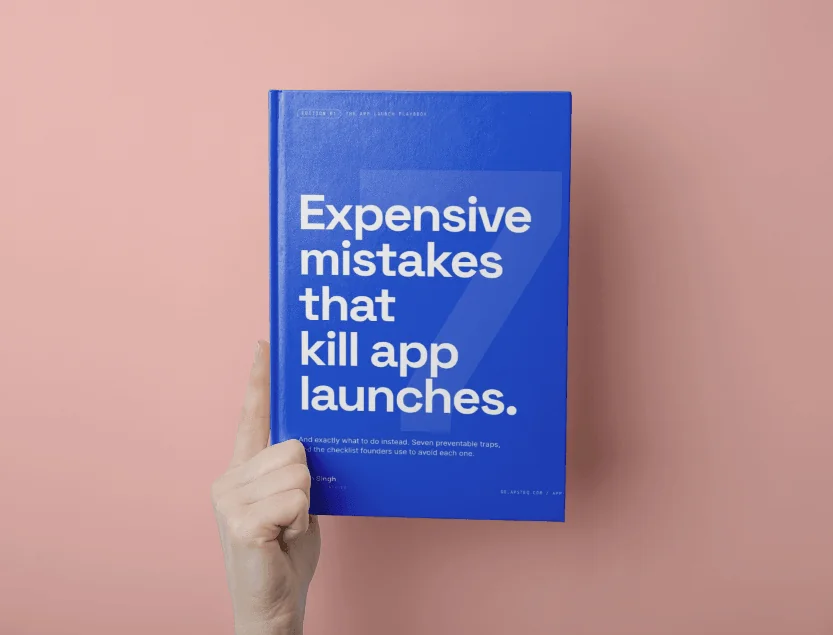
Free download
7 Expensive Mistakes That Kill App Launches
The launch errors we see most often across 300+ app engagements, and what to do instead.
Get the Free Ebook Browse all free guides