
How to Market Your Mobile App on a Shoestring Budget Without Sacrificing Results
Mobile app companies spend an average of $4.14 to acquire a single user through paid advertising (Adjust blog 2024), yet 95% of apps fail to generate sustainable revenue within their first year. The reality facing most mobile app developers is stark: massive marketing budgets don't guarantee success, but smart budget allocation absolutely can drive meaningful growth. Whether you're a bootstrapped startup or an established company looking to optimize spend, effective app marketing on a budget requires strategic thinking over deep pockets.
This comprehensive guide reveals proven strategies that mobile app companies use to achieve sustainable user acquisition and retention without breaking the bank. You'll discover cost-effective tactics that deliver measurable results, learn how to maximize every marketing dollar, and understand which budget-friendly channels provide the highest return on investment for app growth in today's competitive landscape.
Key Takeaways:
- Organic app store optimization drives 65% of app downloads at zero ongoing cost (App Annie 2024)
- Referral programs generate users at 16% lower cost than paid advertising while delivering 37% higher lifetime value (AppsFlyer research 2024)
- Strategic influencer partnerships with micro-influencers cost 90% less than traditional advertising while achieving 60% higher engagement rates (Statista 2024)
- Content marketing and SEO can reduce user acquisition costs by up to 80% compared to paid channels over 12 months

What Are the Most Cost-Effective Channels for App User Acquisition?
App Store Optimization (ASO) consistently delivers the highest return on investment for budget-conscious app marketers, generating organic downloads that cost nothing beyond the initial optimization effort. Unlike paid advertising that requires continuous spend, a well-optimized app store presence works 24/7 to attract qualified users actively searching for solutions your app provides.
The foundation of effective ASO starts with comprehensive keyword research using free tools like Apple Search Ads' keyword suggestions and Google Play Console's search terms report. Focus on long-tail keywords with moderate search volume and lower competition, as these often convert better than broad, expensive terms. Your app title should include your primary keyword while remaining compelling and brandable, with the subtitle or short description reinforcing secondary keywords naturally.
Visual elements play a crucial role in conversion rates, with apps featuring compelling screenshots seeing up to 30% higher download rates (Sensor Tower 2024). Create screenshots that tell a story of user benefits rather than just showcasing features, using overlays to highlight key value propositions. Your app icon should be distinctive and recognizable even at small sizes, as it's often the first impression potential users receive in search results.
Social media marketing, particularly on platforms where your target audience is most active, provides another high-impact, low-cost acquisition channel. TikTok and Instagram Reels offer organic reach potential that traditional platforms no longer provide, with short-form video content generating 1200% more shares than text and images combined (Statista 2024). Create authentic, value-driven content that demonstrates your app's benefits through real user scenarios rather than overtly promotional messaging.
Content marketing through blogs, tutorials, and helpful resources establishes authority while driving organic traffic from search engines. This approach requires patience but builds sustainable traffic that compounds over time, ultimately reducing dependence on expensive paid channels while establishing your brand as a trusted resource in your app category.
How Do You Create a Winning App Marketing Strategy with Limited Resources?
Successful budget app marketing begins with laser-focused audience segmentation and channel prioritization rather than spreading thin resources across multiple platforms. Start by analyzing your existing user data to identify your highest-value user segments, then concentrate your limited budget on channels where these users are most likely to engage with your content.
The first step involves creating detailed user personas based on actual data from your current user base, app store reviews, and competitor analysis. Look beyond basic demographics to understand user motivations, pain points, and behavior patterns. This information guides every subsequent marketing decision, from message crafting to channel selection, ensuring maximum impact from minimal spend.
Implement a test-and-learn approach with small budget allocations across 2-3 promising channels before scaling successful initiatives. Start with $50-100 weekly tests on platforms like Facebook Ads or Google App Campaigns to gather performance data, then reallocate budget toward channels showing the strongest return on ad spend (ROAS). This methodical approach prevents costly mistakes while building confidence in your marketing investments.
Leverage marketing automation tools to maximize efficiency and reduce manual workload. Free and low-cost platforms like Mailchimp for email marketing, Hootsuite for social scheduling, and Google Analytics for performance tracking allow small teams to execute sophisticated campaigns without hiring additional staff. Focus automation on repetitive tasks like welcome email sequences, social media posting, and basic customer segmentation.
Strategic partnerships with complementary apps or services can dramatically expand your reach without direct advertising costs. Look for non-competitive apps targeting similar audiences and propose cross-promotion opportunities, referral partnerships, or content collaboration. These relationships often provide access to new user segments that would be expensive to reach through paid channels, while building valuable industry connections that support long-term growth strategies like those outlined in our comprehensive app marketing guide.
Budget-Friendly App Marketing Channels Deliver Measurable ROI When Executed Strategically
Email marketing remains one of the highest-ROI channels for app companies, delivering an average return of $42 for every $1 spent while costing significantly less than paid advertising to maintain. The key lies in building an engaged subscriber list through valuable content and app-exclusive offers rather than purchasing generic email lists that rarely convert.
Influencer partnerships, particularly with micro-influencers (1,000-10,000 followers), offer authentic reach at fraction of celebrity endorsement costs. Micro-influencers generate engagement rates 60% higher than macro-influencers (Statista 2024) while charging substantially less for sponsored content. Focus on influencers whose audiences align closely with your target users, prioritizing engagement quality over follower quantity.
Community building through platforms like Discord, Reddit, or Facebook Groups creates sustainable user acquisition channels that strengthen over time. Active community management requires time investment rather than advertising spend, yet generates highly engaged users who become natural advocates for your app. User-generated referrals convert 4x higher than traditional advertising (AppsFlyer research 2024), making community investment a smart long-term strategy.
Key budget-friendly tactics that consistently drive results include:
- App Store Optimization with monthly keyword monitoring and creative testing
- Referral programs offering meaningful incentives to existing users
- Content marketing through SEO-optimized blog posts and tutorials
- Strategic partnerships with complementary apps or services
- Email marketing sequences for user onboarding and retention
- Social media engagement focused on community building over follower count
| Marketing Channel | Average Cost per User ($) | Typical ROI (%) | Setup Time (weeks) |
|---|---|---|---|
| App Store Optimization | 0.50 | 250 | 2-3 |
| Email Marketing | 0.75 | 420 | 1-2 |
| Micro-Influencer Partnerships | 2.80 | 180 | 3-4 |
| Referral Programs | 1.20 | 300 | 4-6 |
| Content Marketing/SEO | 1.50 | 400 | 8-12 |
What Common Budget Marketing Mistakes Kill App Growth Before It Starts?
The most expensive mistake budget-conscious app marketers make is spreading resources too thin across multiple channels without sufficient testing or optimization. This shotgun approach rarely generates meaningful results and often leads to abandoning effective channels before they have time to demonstrate their potential value.

Many app companies make the critical error of optimizing for downloads rather than quality users who engage with the app long-term. Focusing solely on cost-per-install (CPI) metrics often leads to acquiring users who never open the app after installation, resulting in poor retention rates and unsustainable unit economics. Instead, optimize campaigns for post-install events like completing onboarding, making a purchase, or reaching specific engagement milestones that indicate genuine user interest.
Another costly mistake involves neglecting user retention in favor of acquisition, despite retention being significantly more cost-effective than constantly acquiring new users. Increasing user retention by just 5% can boost profits by 25-95% (Mobile Action 2024), yet many apps spend 80% of their marketing budget on acquisition while ignoring onboarding optimization, push notification strategies, and in-app engagement features that keep users active.
Premature scaling represents another budget killer, where marketers increase spend on campaigns that appear successful based on limited data without understanding underlying performance drivers. Wait until you have statistically significant data across multiple weeks before increasing budgets, and ensure you understand why campaigns succeed before attempting to replicate results at larger scales.
Technical tracking failures undermine even well-executed campaigns, leading to poor optimization decisions and wasted spend. Implement robust attribution tracking from day one, ensuring you can accurately measure user behavior from first touchpoint through long-term value. Without proper tracking, you're essentially flying blind, unable to identify which channels drive your most valuable users or optimize campaigns based on meaningful performance data. This foundational work supports all aspects of digital marketing, similar to the tracking requirements outlined in our dental marketing strategies for healthcare professionals.
Budget App Marketing Will Evolve Toward AI-Driven Personalization and Community-Centric Growth
The future of budget app marketing lies in leveraging artificial intelligence tools to automate optimization and personalization at scale, allowing small teams to compete with larger marketing departments through efficiency rather than pure spending power. AI-powered creative optimization, audience targeting, and bid management are becoming accessible to apps with modest budgets, democratizing advanced marketing capabilities previously reserved for enterprise-level campaigns.
Community-driven growth strategies will become increasingly important as traditional advertising costs continue rising and users become more resistant to promotional messaging. Apps building genuine communities around their core value proposition see 40% higher lifetime value and 60% lower churn rates (data.ai 2024), making community investment a smart hedge against escalating advertising costs while building sustainable competitive advantages.
Privacy-first marketing approaches will reshape budget allocation toward owned media channels like email, push notifications, and in-app messaging as third-party tracking becomes less reliable. Smart app marketers are already shifting focus toward first-party data collection and retention optimization, recognizing that owning direct communication channels with users provides more sustainable growth than relying on platform-dependent advertising.
Cross-platform integration and multi-app ecosystems will create new partnership opportunities for budget-conscious developers. Rather than competing solely for user attention, successful apps will collaborate on user acquisition and retention through strategic integrations, shared loyalty programs, and complementary feature development that benefits entire user ecosystems while reducing individual marketing costs.
Frequently Asked Questions
How much should a startup budget for app marketing monthly?
Startups should allocate 15-25% of total revenue toward marketing, starting with $500-2000 monthly for testing channels. Focus 70% on user acquisition and 30% on retention activities. Scale budget based on proven ROI rather than arbitrary percentages.
Which free marketing tools provide the best results for app promotion?
Google Analytics, App Store Connect analytics, and Google Play Console offer comprehensive free tracking. Hootsuite (free plan), Mailchimp (free tier), and Canva provide content creation and distribution capabilities without subscription costs for small teams.
How long before budget app marketing efforts show measurable results?
Organic strategies like ASO show results in 4-8 weeks, while paid campaigns provide data within 1-2 weeks. Content marketing and SEO require 3-6 months for significant impact. Set 90-day evaluation periods for comprehensive strategy assessment.
Can referral programs work effectively with limited promotional budgets?
Yes, referral programs generate 16% lower acquisition costs than paid ads while delivering higher lifetime value users. Start with simple rewards like premium features or in-app currency. Success depends on seamless sharing mechanics and valuable incentives rather than large promotional spends, as detailed in our comprehensive app marketing resource center.
What metrics matter most when marketing apps on tight budgets?
Focus on lifetime value (LTV) to customer acquisition cost (CAC) ratio, targeting 3:1 minimum. Track retention rates at 1, 7, and 30 days alongside cost per quality user who completes key actions rather than just installs.
Conclusion
Effective app marketing on a budget requires strategic focus over broad spending, emphasizing channels that compound value over time rather than delivering quick wins that drain resources. The most successful budget-conscious app companies concentrate on App Store Optimization, email marketing, community building, and strategic partnerships while avoiding the temptation to spread resources across too many platforms simultaneously.
Key takeaways for sustainable growth include: prioritize retention alongside acquisition, implement robust tracking from day one, test small before scaling, and build owned media channels that reduce long-term dependence on paid advertising. Success comes from understanding your users deeply and delivering genuine value consistently rather than chasing the latest marketing trends or platforms.
Ready to develop a comprehensive app marketing strategy that maximizes every dollar? Our team specializes in helping mobile app companies achieve sustainable growth through data-driven, budget-conscious marketing approaches. Book a free strategy call to discover how we can help you build a marketing system that drives quality users and sustainable revenue growth within your budget constraints.
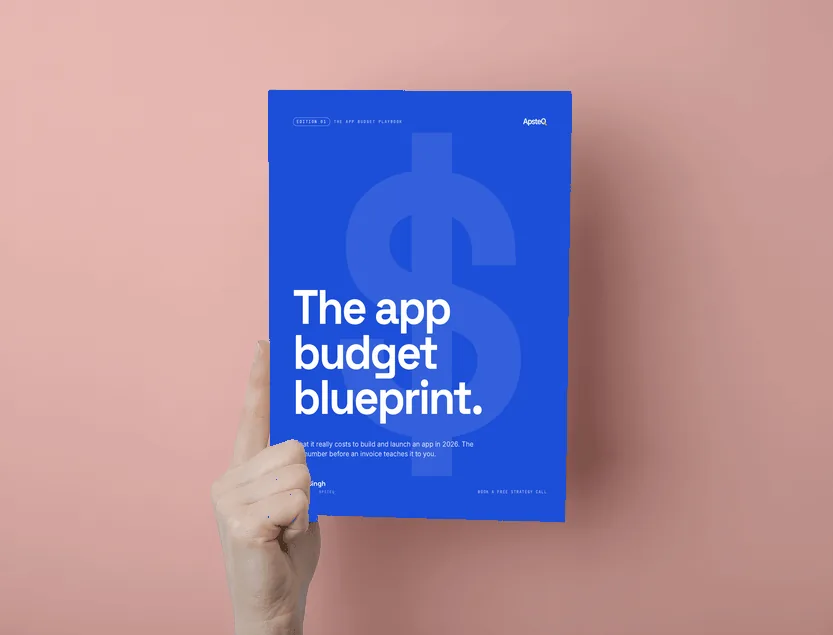
Free download
The App Budget Blueprint
How to split your marketing budget across ASO, paid UA, and retention at every stage of growth.
Get the Free Ebook Browse all free guides