
Despite mobile apps generating over $613 billion in revenue globally in 2023, according to Sensor Tower, most app developers struggle with a shocking reality: 95% of mobile apps fail to achieve profitability within their first year. The gap between app success stories and harsh market realities has never been wider, leaving countless developers wondering where their marketing investments are actually going.
The problem isn't just about building great apps anymore. It's about understanding and optimizing your app marketing return on investment (ROI) in an increasingly competitive landscape where user acquisition costs continue to skyrocket. Whether you're launching your first app or scaling an existing one, measuring and improving your marketing ROI can mean the difference between sustainable growth and burning through your budget with nothing to show for it.
In this comprehensive guide, you'll discover proven strategies to calculate, track, and optimize your app marketing ROI. We'll explore real-world data, common pitfalls that drain marketing budgets, and emerging trends that will shape app marketing profitability through 2027.
Key Takeaways:
- Average app marketing ROI is 3:1, but top-performing apps achieve 5:1 or higher according to AppsFlyer's 2023 Performance Index
- User acquisition costs increased 60% between 2020-2023, making ROI optimization critical for survival
- Apps with strong retention strategies see 3x higher lifetime value, directly improving long-term ROI
- AI-powered marketing automation can improve ROI by up to 40% through better targeting and personalization

How Do You Calculate App Marketing ROI Effectively?
App marketing ROI calculation goes far beyond simple revenue divided by advertising spend. True app marketing ROI requires tracking the complete customer journey from initial acquisition through long-term retention and monetization. The most successful app marketers focus on lifetime value (LTV) to customer acquisition cost (CAC) ratios rather than short-term conversion metrics.
The fundamental formula starts with ROI = (LTV - CAC) / CAC × 100, but this basic calculation misses crucial elements. According to Adjust's Mobile App Trends 2023 report, apps that track post-install events see 2.3x higher ROI than those focusing solely on install metrics. This means incorporating in-app purchases, subscription renewals, ad revenue, and user engagement metrics into your ROI calculations.
Consider a fitness app that spends $50 to acquire a user through paid social campaigns. If that user generates $25 in the first month through premium subscriptions but churns afterward, the immediate ROI appears negative at -50%. However, if the same user remains active for six months, generates $180 in subscription revenue, and refers two additional users, the actual ROI jumps to 260%. This demonstrates why cohort analysis and extended tracking windows are essential for accurate ROI measurement.
Advanced ROI tracking requires implementing proper attribution models that account for multi-touch customer journeys. Users often interact with multiple marketing touchpoints before converting, making first-click or last-click attribution models inadequate. Data-driven attribution models, used by 73% of high-performing apps according to Branch's Mobile Growth Report 2023, provide more accurate ROI insights by weighing each touchpoint's contribution to the final conversion.
What Are the Most Effective App Marketing Strategies for Maximizing ROI?
The highest-ROI app marketing strategies in 2024 combine precision targeting with retention-focused campaigns rather than prioritizing volume-based user acquisition. Performance-driven app marketers achieve 40% higher ROI by focusing on quality users who demonstrate strong engagement patterns within the first 7 days, according to Liftoff's Mobile App Marketing Insights 2023.
App Store Optimization (ASO) consistently delivers the strongest ROI among organic marketing channels, with properly optimized apps seeing 3-5x more organic downloads compared to non-optimized competitors. This strategy involves strategic keyword research, compelling app store creatives, and continuous A/B testing of app store elements. Unlike paid advertising, ASO improvements compound over time, making it a foundational element of profitable app marketing strategies similar to how dental marketing relies on strong local SEO foundations.
Retention marketing campaigns show remarkable ROI improvements when implemented correctly. Push notification campaigns targeting specific user segments generate average ROI of 4:1 according to Airship's 2023 Mobile Consumer Behavior Report, significantly higher than broad acquisition campaigns. Successful retention strategies include onboarding sequence optimization, personalized re-engagement campaigns, and win-back offers for churned users.
Cross-platform marketing integration amplifies individual channel performance through synergistic effects. Apps using coordinated campaigns across social media, search, and programmatic advertising see 23% higher overall ROI than single-channel approaches. This integrated strategy requires sophisticated attribution tracking but delivers compounding returns as users encounter consistent messaging across multiple touchpoints, similar to comprehensive app marketing strategies that leverage multiple acquisition channels simultaneously.
App Marketing ROI Benchmarks Reveal Industry Performance Standards
Understanding industry benchmarks provides crucial context for evaluating your app's marketing performance and identifying optimization opportunities. The median app marketing ROI across all categories stands at 2.8:1 in 2023, but this figure masks significant variations between app categories, user acquisition channels, and geographic markets according to AppsFlyer's Performance Index XIII.
Gaming apps typically achieve the highest marketing ROI, with top performers reaching 5-7:1 ratios due to strong monetization through in-app purchases and advertising revenue. E-commerce and marketplace apps follow closely with average ROI of 4.2:1, while productivity and utility apps often struggle with lower ratios around 2.1:1. Social and dating apps show the highest variance, with successful apps achieving 6:1+ ROI while unsuccessful ones often fail to reach positive returns.
Geographic performance reveals significant ROI disparities that impact global marketing strategies:
- North American users generate 3.2x higher LTV compared to emerging markets, despite 4x higher acquisition costs
- European markets show the most consistent ROI at 3.4:1 average, with lower volatility than other regions
- Asian markets demonstrate rapid ROI improvement, with year-over-year increases of 28% in 2023
- Latin American markets offer the highest ROI growth potential due to increasing smartphone penetration and lower competition
Channel-specific performance data shows that organic social media campaigns achieve 4.1:1 average ROI, significantly outperforming paid social at 2.6:1. However, organic channels typically require 3-6 months to scale meaningfully, while paid channels can drive immediate results. Search app install campaigns maintain steady performance at 3.3:1 ROI, making them reliable baseline channels for most app categories. Influencer marketing shows the highest variance, with successful campaigns reaching 8:1 ROI while poorly targeted campaigns often fail to achieve positive returns.

What Common App Marketing ROI Mistakes Are Draining Your Budget?
The most costly app marketing mistake involves optimizing for vanity metrics rather than revenue-driving behaviors. Apps that prioritize install volume over user quality see 40% lower long-term ROI because they attract users who quickly churn without generating meaningful revenue, according to Singular's 2023 Marketing Intelligence Report. This approach creates a false sense of success while burning marketing budgets on users who never convert to paying customers.
Attribution window misalignment represents another critical error that skews ROI calculations and optimization decisions. 60% of app marketers use attribution windows that are too short to capture true user value, leading to premature campaign optimizations and budget reallocations. For subscription apps, 7-day attribution windows miss the majority of conversions that occur during free trial periods, while gaming apps need extended windows to capture users who make purchases after extended engagement periods.
Inadequate post-install event tracking creates blind spots that prevent effective optimization. A fitness app case study revealed that campaigns generating users with high session frequency but low subscription rates were being incorrectly identified as high-performing due to focusing solely on engagement metrics. After implementing proper revenue tracking, the marketing team discovered that these users rarely converted to premium subscriptions, leading to a complete reallocation of marketing spend and a 35% improvement in overall ROI.
Cross-channel optimization failures compound ROI problems by creating inefficient budget distribution across marketing channels. Apps that don't implement unified measurement frameworks often over-invest in channels that appear to perform well in isolation but actually cannibalize more effective channels. This requires sophisticated marketing attribution solutions, similar to how comprehensive app marketing strategies must coordinate multiple acquisition channels to avoid internal competition and maximize overall performance.
App Marketing ROI Evolution Points Toward AI-Powered Optimization
The future of app marketing ROI optimization will be fundamentally shaped by artificial intelligence and machine learning technologies that enable real-time campaign adjustments and predictive user value modeling. By 2027, AI-powered marketing automation is projected to improve app marketing ROI by an average of 55% through advanced user segmentation, dynamic creative optimization, and predictive lifetime value calculations according to McKinsey's 2023 AI Marketing Report.
Privacy-first marketing approaches will become essential for maintaining ROI as third-party data becomes increasingly restricted. Apps that successfully implement first-party data strategies are expected to achieve 2.3x higher ROI than those relying on traditional targeting methods by 2026. This shift requires investing in owned media channels, building direct customer relationships, and creating value exchanges that encourage users to share data voluntarily.
Cross-platform user journey optimization will emerge as a critical ROI driver as consumers increasingly use multiple devices throughout their app discovery and engagement process. Advanced attribution models that track users across mobile, web, and connected TV environments will become standard practice, enabling more accurate ROI measurement and budget allocation decisions. Early adopters of unified cross-platform measurement are already seeing 30% improvements in marketing efficiency.
Frequently Asked Questions
What is a good ROI for app marketing campaigns?
A good app marketing ROI typically ranges from 3:1 to 5:1, meaning every dollar spent generates $3-$5 in revenue. However, this varies significantly by app category, with gaming apps often achieving higher ratios due to stronger monetization models while utility apps may target lower but more sustainable returns.
How long should I track ROI for mobile app marketing?
Track app marketing ROI for at least 90 days to capture true user value, with many successful apps extending tracking to 365 days. Subscription apps particularly benefit from longer tracking windows since users often convert after extended free trial periods, and lifetime value calculations require sufficient time to establish patterns.
Which marketing channels provide the best app ROI?
Organic channels like ASO and content marketing typically provide the highest long-term ROI at 4-6:1, while paid channels average 2.5-3.5:1 but scale faster. The optimal mix depends on your app's growth stage, with early-stage apps benefiting from paid acquisition speed and mature apps focusing on organic channel development.
How do I improve my app marketing ROI quickly?
Focus on retention optimization and post-install engagement rather than increasing acquisition volume. Improving Day 1 retention by just 5% can increase overall ROI by 20-25%. Consider partnering with specialized agencies that understand app marketing nuances to implement proven optimization strategies quickly and effectively.
Conclusion
Mastering app marketing ROI requires moving beyond surface-level metrics to focus on sustainable, long-term user value creation. The most successful apps in 2024 combine data-driven attribution with retention-focused strategies, achieving ROI ratios that significantly outperform industry averages through strategic optimization rather than increased spending.
Key takeaways for maximizing your app marketing ROI:
- Implement comprehensive tracking that measures lifetime value, not just initial conversions
- Focus on user quality and retention metrics rather than vanity metrics like install volume
- Leverage AI-powered optimization tools to stay competitive in the evolving privacy landscape
- Maintain longer attribution windows to capture true user value across extended engagement periods
Ready to transform your app marketing ROI? Book a free strategy call with our app marketing experts to discover personalized optimization opportunities that can double your marketing efficiency within 90 days.
Free download
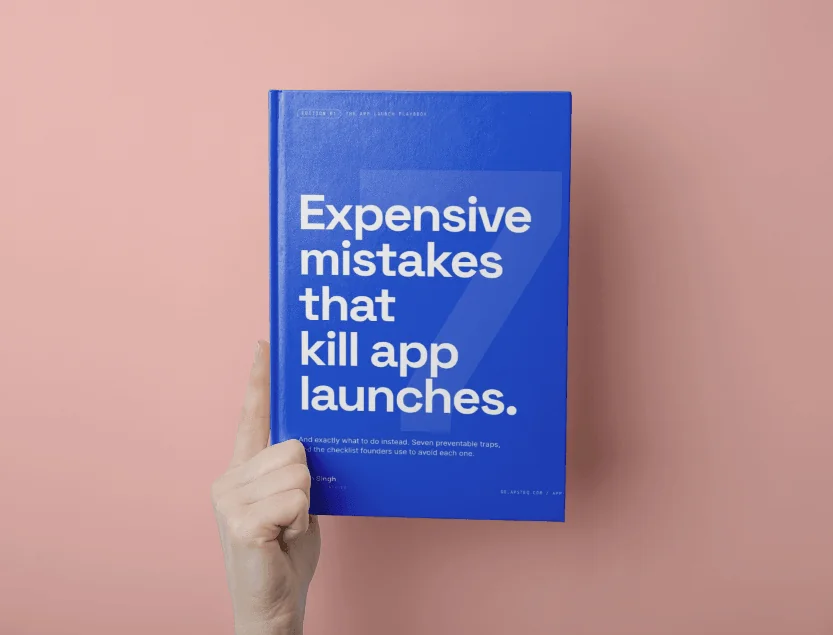
7 Expensive Mistakes That Kill App Launches
The launch errors we see most often across 300+ app engagements, and what to do instead.
Get the Free Ebook Browse all free guides