Why Most Apps Fail Before They Even Launch
Over 65% of apps lose more than half their users within the first 30 days of launch, a reality that traces back not to the product itself but to the absence of a deliberate pre-launch marketing strategy (Adjust 2024). Most mobile app companies pour resources into development, then scramble to build awareness at the last minute. The result is a launch that lands quietly, gains little organic traction, and burns through acquisition budgets unnecessarily fast.
This post changes that. You will learn exactly how to structure an app pre-launch marketing campaign that builds a warm audience, drives early installs, and signals quality to app store algorithms from day one. We will cover strategy frameworks, channel selection, common mistakes that sink launches, and what the data says about what actually works in 2025 and beyond.
Key Takeaways
- Apps that run structured pre-launch campaigns see up to 3x higher Day-30 retention compared to apps that launch without a waitlist or community (Adjust 2024).
- 62% of app installs in the U.S. come from app store search, making pre-launch App Store Optimization (ASO) a non-negotiable foundation (Sensor Tower 2024).
- The average cost per install (CPI) in the U.S. across categories is $3.91 for iOS and $1.72 for Android, numbers you can dramatically reduce with pre-launch demand generation (AppsFlyer 2024).
- Apps with a pre-registered user base of 10,000 or more before launch consistently outperform peers on first-week chart rankings (data.ai 2024).
What Is App Pre-Launch Marketing and Why Does It Matter So Much?
App pre-launch marketing is the collection of strategies a mobile app company executes before its product goes live in the App Store or Google Play, with the explicit goal of building an engaged audience, validating product-market fit, and generating demand that converts immediately at launch. In plain terms, it is the work that turns launch day from a gamble into a calculated ignition.
The stakes are real. The average app loses 77% of its daily active users within the first three days after install (Adjust 2024). That number is brutal, and it almost always reflects a mismatch between user expectations and product reality. Pre-launch marketing closes that gap by attracting the right users and priming them with accurate context about what the app does and who it serves.
Consider how Duolingo handled its early growth. Before scaling paid acquisition, the team spent months building an email list, running beta access programs, and collecting qualitative feedback from early adopters. That foundation meant their launch cohorts retained at dramatically higher rates than apps that simply went live cold. The lesson is not that you need Duolingo's brand, it is that the mechanics of building anticipation, setting expectations, and cultivating community are available to any app company willing to execute them systematically.
From an algorithm perspective, app stores are velocity-sensitive. Google Play's early install velocity directly influences organic ranking position, meaning a burst of installs in the first 72 hours can compound into weeks of free organic visibility (Google Play Console documentation, 2024). Pre-launch marketing is how you manufacture that velocity instead of hoping it happens organically.
Pre-launch activity also informs product decisions at zero cost. Surveying your waitlist, running paid creative tests on landing pages before the app exists, and measuring which value propositions drive signups all generate insights that would otherwise require expensive post-launch A/B testing with real users. Smart teams treat pre-launch as a continuous feedback loop, not a countdown clock.
The timeline matters too. Research from AppsFlyer consistently shows that campaigns with at least eight to twelve weeks of pre-launch runway produce significantly better launch-day metrics than those compressed into two to four weeks. That window allows for creative testing, influencer partnership lead times, press outreach, and App Store Connect optimization, all of which compound when executed together.
How Do You Build an Effective App Pre-Launch Marketing Strategy?
An effective app pre-launch marketing strategy is built on four sequential pillars: audience building, channel activation, creative validation, and App Store Optimization. Each pillar feeds the next, and skipping any one of them creates a structural weakness that shows up in launch-week data.
Step 1: Define and Segment Your Target Audience
Before you spend a dollar on ads or write a single piece of content, document who your ideal user is with specificity. Build personas around behavioral attributes, not just demographics. What other apps does this person use? What problem are they actively Googling? What subreddits, TikTok communities, or LinkedIn groups do they inhabit? This research shapes every downstream decision, from your landing page headline to your influencer shortlist.
Step 2: Build a Waitlist Landing Page with a Referral Loop
Your landing page is your pre-launch growth engine. Use a headline that states the core benefit in plain language, a single email capture field, and a referral mechanic that rewards users for inviting peers. Tools like Viral Loops or ReferralHero make the mechanics trivial to implement. Aim to convert at least 25% of landing page visitors into waitlist signups. If your conversion rate is lower, your value proposition needs refinement before you scale traffic.
Step 3: Activate Content and Community Channels
Organic content channels require lead time. Start a short-form video series on TikTok or Instagram Reels documenting the build process. Launch a subreddit thread in your app's niche. Contribute genuine value in communities where your target users already spend time. This approach builds authentic brand affinity that paid channels simply cannot replicate at the same cost. Working with an experienced app marketing partner can accelerate this phase significantly, particularly for teams without in-house content resources.
Step 4: Run Paid Creative Tests Against Your Landing Page
Run modest Meta or TikTok Ads campaigns driving traffic to your waitlist page. The goal at this stage is not volume, it is learning. Test three to five distinct creative angles to identify which messaging drives the lowest cost per signup. The winning creative from this phase becomes your launch-day ad foundation, saving you weeks of in-market testing after launch when acquisition costs are higher and stakes are steeper.
Step 5: Optimize Your App Store Listing Before Day One
Complete your App Store Connect or Google Play Console listing fully before launch. This includes keyword-optimized title and subtitle fields, a compelling short description, screenshots that tell a visual story, and a preview video. Google Play's Pre-Registration feature lets users opt in before your app is live, a direct signal of demand that influences ranking at launch.
The Data Behind Successful App Pre-Launch Campaigns
The evidence for structured pre-launch investment is not anecdotal. The numbers consistently show that apps with deliberate pre-launch activity outperform cold launches across every key performance indicator that matters to growth teams.
Sensor Tower's 2024 market analysis found that 62% of all app installs in the U.S. originate from App Store or Google Play search, making ASO the highest-leverage organic channel available (Sensor Tower 2024). Apps that complete their store listing optimization before launch capture this traffic from day one. Apps that optimize after the fact spend weeks or months climbing back to where they could have started.
On the paid side, the average U.S. cost per install across all categories sits at $3.91 for iOS and $1.72 for Android (AppsFlyer 2024). These averages mask enormous category-level variance, but the key insight is directional: apps that arrive at launch with a warm audience and strong organic signals need to buy far fewer installs to hit ranking thresholds, compressing blended CPI dramatically.
The retention data is equally compelling. According to Adjust's 2024 mobile benchmarks, apps that onboard users through community or waitlist channels retain at roughly three times the rate of users acquired through broad paid campaigns in the same post-launch window (Adjust 2024). This makes intuitive sense: a user who followed your build journey for eight weeks is genuinely invested in your product's success.
Key pre-launch metrics that predict launch-week performance include:
- Waitlist size relative to total addressable market: Even capturing 0.1% of your TAM before launch creates meaningful velocity.
- Email open rates on waitlist nurture sequences: Rates above 30% indicate strong product-market fit signals from a qualified audience.
- Landing page conversion rate: Below 15% suggests the value proposition needs work; above 30% suggests you are ready to scale traffic.
- Creative cost per signup on paid channels: This number directly predicts your post-launch cost per install from similar audiences.
- Pre-registration or TestFlight enrollment numbers: Data.ai research shows apps crossing 10,000 pre-registrations consistently achieve top-100 category rankings within the first week of launch (data.ai 2024).
What Mistakes Kill App Pre-Launch Campaigns Before Launch Day?
The most damaging mistakes in app pre-launch marketing share a common thread: they prioritize activity over strategy. Teams get busy building things that feel productive but do not compound toward a stronger launch-day position. Understanding these failure patterns protects your timeline and budget.
Mistake 1: Starting Too Late
The single most common error is compressing pre-launch activity into the final two to four weeks before go-live. Press contacts need four to six weeks of lead time. Influencer partnerships require negotiation, content creation, and approval cycles that routinely take six to eight weeks. App store review processes can take one to two weeks and sometimes longer. Starting at week ten instead of week two cuts the compounding runway that makes pre-launch work pay off.
Mistake 2: Building a Broad Audience Instead of the Right Audience
Ten thousand generic email signups perform worse on launch day than two thousand highly targeted ones. A gaming app that accumulates waitlist signups by running giveaways attracts prize-seekers, not players. Validate your audience quality by measuring engagement metrics on your nurture emails, not just list size. If open rates drop below 20%, your audience acquisition channels are attracting the wrong people.
Mistake 3: Ignoring App Store Optimization Until Post-Launch
ASO is not a post-launch fix, it is pre-launch infrastructure. Apps that complete keyword research, competitor analysis, and metadata optimization before going live capture ranking signals from the very first install. Those that treat ASO as an afterthought spend months earning organic visibility that could have started accumulating on day one.
Mistake 4: Failing to Test Creative Messaging Before Launch
Many teams write their launch ad creative based on internal assumptions about what users want, then discover post-launch that a different angle resonates far better. Running small paid tests against your landing page during pre-launch costs a few hundred dollars and generates data worth many times that in avoided post-launch waste. Working with an app marketing specialist during this phase ensures your creative testing methodology is structured to yield statistically useful signals rather than directional guesses.
Mistake 5: No Post-Signup Nurture Sequence
Collecting ten thousand emails and then going silent for eight weeks destroys the conversion rate you would otherwise achieve on launch day. Users need consistent, value-adding touchpoints between signup and launch. A weekly email sharing product updates, behind-the-scenes development progress, or early feature previews keeps your audience warm and converts them from passive signups to active advocates ready to install and review on day one.
App Pre-Launch Marketing Trends Shaping 2026 and 2027
The app marketing landscape is evolving quickly, and teams that understand where pre-launch strategy is heading will build sustainable competitive advantages over those reacting to changes after the fact.
AI-Powered Creative Testing at Scale
Generative AI tools are collapsing the cost and time required to test creative variants during pre-launch. Teams that previously tested three to five ad concepts can now test fifty with similar budgets. This compresses the learning curve before launch, producing higher-confidence creative foundations. Statista projects the global AI in marketing market will reach $107.5 billion by 2028 (Statista 2024), and app marketing is absorbing a disproportionate share of that investment as teams automate creative iteration cycles.
Short-Form Video as the Primary Pre-Launch Awareness Channel
TikTok, Instagram Reels, and YouTube Shorts are displacing traditional content formats for app awareness generation. The build-in-public trend, where founders document product development in short, authentic videos, is producing unusually high-quality waitlist audiences because viewers self-select based on genuine interest in the product category. Mobile-first content formats align naturally with mobile-first products, creating an organic resonance that longer content formats struggle to match.
Pre-Launch Community Building as a Retention Strategy
Discord servers, Slack communities, and dedicated subreddits built before launch are becoming standard components of pre-launch strategy rather than nice-to-haves. These communities serve a dual purpose: they provide qualitative feedback during development and they create a day-one user base with unusually high engagement and retention rates. Apps with pre-launch communities consistently report lower churn in the critical first 30-day window, directly improving the organic ranking signals that drive long-term growth.
Frequently Asked Questions
How far in advance should app pre-launch marketing begin?
Most successful app launches begin pre-launch marketing 8 to 12 weeks before the target go-live date. This window allows time for ASO research, waitlist building, influencer outreach, press relationship development, and paid creative testing. Compressing pre-launch activity into fewer than 4 weeks significantly limits the compounding effect of each channel and reduces launch-day install velocity.
What is the most important pre-launch marketing channel for mobile apps?
App Store Optimization is the single highest-leverage pre-launch channel because 62% of U.S. app installs originate from store search (Sensor Tower 2024). Completing keyword research, metadata optimization, and screenshot design before launch means your app captures organic search traffic from the very first install rather than spending weeks earning ranking position from a cold start.
How large should a waitlist be before launching an app?
Data.ai research indicates that apps with pre-registrations exceeding 10,000 users consistently achieve top-100 category rankings in their first week. However, quality matters more than raw size. A waitlist of 3,000 highly engaged users who have opened every nurture email will outperform a list of 15,000 people who signed up for a giveaway and have not engaged since.
How much should a mobile app company budget for pre-launch marketing?
A practical starting budget for pre-launch is 15 to 20 percent of your total launch quarter marketing spend. For most U.S.-focused apps, this means $5,000 to $25,000 depending on category competitiveness and target audience size. Allocate roughly 40% to paid creative testing against your landing page, 30% to content production, and 30% to tools and platform costs for email and community management.
Can a marketing agency help with app pre-launch strategy?
Yes, and the ROI is typically strongest in the pre-launch phase where early decisions compound over the entire product lifecycle. Specialized app marketing agencies bring benchmarks, creative testing infrastructure, and channel relationships that most in-house teams take 6 to 12 months to build independently. Engaging an agency 10 to 12 weeks before launch gives them enough runway to contribute meaningfully to Day-1 install and retention performance.
Build the Audience Before You Build the Buzz
App pre-launch marketing is not a box to check before the real work begins. It is the foundation that determines whether your launch generates compounding organic growth or quietly disappears into a category of thousands of forgotten apps. The data is consistent across every source: structured pre-launch activity produces better installs, stronger retention, and lower acquisition costs.
To summarize what you have learned:
- Start pre-launch marketing 8 to 12 weeks before your target launch date.
- Build a waitlist with a referral loop and nurture it with weekly, value-adding email sequences.
- Complete ASO before launch day, not after, to capture organic search traffic from install one.
- Test creative messaging on paid channels against your landing page to build a proven foundation for post-launch ads.
- Avoid the five critical mistakes: starting late, building broad audiences, skipping ASO, untested creative, and no nurture sequence.
Your app deserves a launch strategy as strong as the product you built. The team at ApsteQ helps mobile app companies turn pre-launch planning into measurable launch-day performance. Book a free strategy call and let us build your pre-launch roadmap together.
Free download
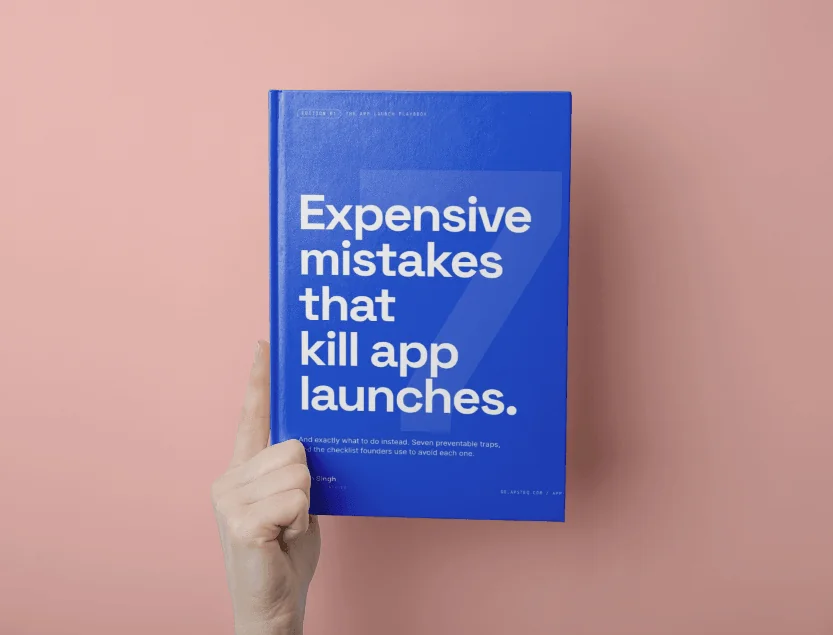
7 Expensive Mistakes That Kill App Launches
The launch errors we see most often across 300+ app engagements, and what to do instead.
Get the Free Ebook Browse all free guides