Most Apps Are Invisible: Why App Store Optimization Techniques Are Your Biggest Growth Lever
Here is a number that should stop you cold: 65% of all app downloads begin with a direct App Store search (Apple Developer documentation, 2024). Yet most mobile app companies spend the majority of their marketing budgets on paid user acquisition while leaving their store listings largely untouched. The result is a leaky funnel where even well-funded campaigns drive traffic to pages that convert poorly, rank inconsistently, and lose ground to competitors every single week.
If your app is not showing up when people search for exactly what you offer, you are not just losing organic installs. You are paying more per install across every paid channel because your store page is not doing its job. This post breaks down the most effective app store optimization techniques available today, what the data actually says about each one, and how to build a repeatable ASO process that compounds over time.
Key Takeaways Before You Dive In
- 65% of app downloads start with a store search, making keyword optimization the single highest-leverage ASO activity (Apple Developer documentation, 2024).
- Apps with optimized screenshots and preview videos see conversion rate lifts of 25-35% compared to those using default or unoptimized creative assets (Storemaven / AppsFlyer research, 2023).
- Responding to user reviews within 24 hours correlates with a 0.7-star average rating improvement over 90 days (Adjust blog, 2023).
- Localization into just 5 languages can expand your addressable audience by up to 60% of the global app market (Sensor Tower, 2024).
What Are App Store Optimization Techniques and Why Do They Matter More Than Ever?
App store optimization techniques are the structured, repeatable practices used to improve an app's visibility, click-through rate, and conversion rate inside the Apple App Store and Google Play Store. Think of ASO as SEO for your app listing, except the stakes are arguably higher because the store is also the final purchase or download decision point.
The market has never been more competitive. There are currently over 1.8 million apps on the Apple App Store alone (Statista, 2024), and Google Play hosts a similar volume. Discoverability is not a nice-to-have. It is the difference between growth and stagnation. Developers who treat their store listing as a living, optimized asset consistently outperform those who publish once and move on.
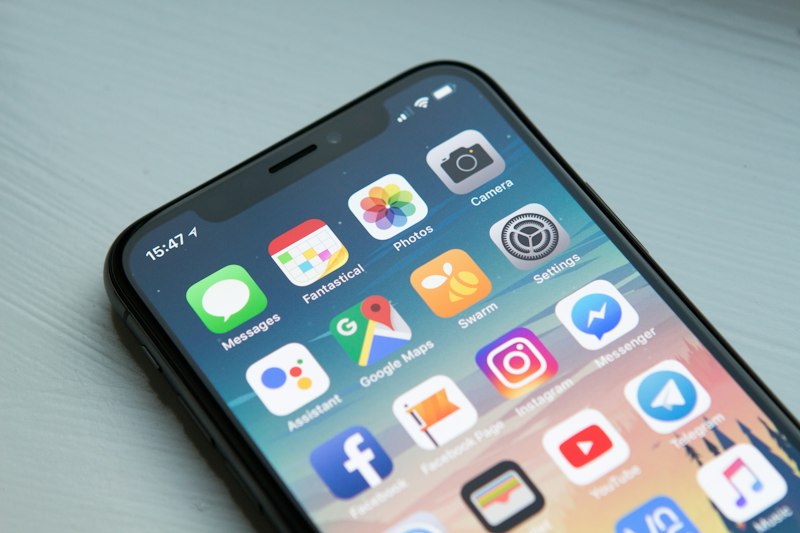
ASO operates across two distinct layers. The first is indexability, which determines whether the App Store algorithm surfaces your app for a given search query. This layer is shaped by your app title, subtitle, keyword field (iOS), and long-form description (Android). The second layer is conversion, which determines whether a searcher who finds your listing actually taps Install. This layer is shaped by your icon, screenshots, preview video, rating, and review content.
Most teams make the mistake of optimizing only one layer. A beautifully designed icon paired with poor keyword coverage means nobody finds your app in the first place. Conversely, strong keyword rankings mean nothing if your screenshots look outdated or your average rating sits below 3.5 stars.
Consider the trajectory of a productivity app that dominated its category through 2022 but lost 40% of organic installs by mid-2024, not because the product degraded, but because competitors iterated their store listings monthly while the original developer treated ASO as a one-time task. The algorithm rewards freshness and relevance signals just as Google's algorithm does for web content.
A modern ASO strategy treats the store listing as a growth channel with its own analytics loop: keyword research, metadata updates, creative testing, rating management, and competitive monitoring all running in parallel. When those systems work together, organic installs become a compounding asset rather than a static number.
How Do You Build an Effective ASO Keyword Strategy Step by Step?
Keyword strategy is the engine of your ASO program. Getting this right requires a disciplined, iterative process rather than a single research sprint. Here is how to build one that actually moves rankings.
Step 1: Seed keyword research. Start with the 10-15 terms that most directly describe your app's core function. Do not brainstorm in a vacuum. Use tools like Mobile Action or Sensor Tower to pull real search volume data for each term. High-volume terms are tempting, but they are also the most contested. Your first goal is finding the intersection of relevance, volume, and realistic competitiveness.
Step 2: Expand with competitor analysis. Identify your top 5 competitors in the store and run their titles, subtitles, and descriptions through an ASO tool to extract the keywords they rank for. You will almost always find 20-30 high-intent terms you had not considered. Note which competitors rank in the top 5 positions for those terms. If they are much larger apps with significantly more ratings, competing head-to-head is less efficient than targeting adjacent, lower-competition variants.
Step 3: Assign keywords to metadata fields strategically. On iOS, the App Store indexes your app title, subtitle, and a 100-character keyword field. The title carries the most weight, so your single most important keyword phrase belongs there alongside your brand name. The subtitle should reinforce a secondary value proposition using your second-priority term. The keyword field should contain comma-separated terms without spaces, avoiding repetition of anything already in your title or subtitle.
Step 4: Optimize your Google Play long-form description. Unlike iOS, Google Play indexes the full description text. This is your opportunity to naturally incorporate 8-12 target keywords across a 4,000-character canvas. Write for humans first, but make sure your primary terms appear in the first 167 characters of the short description, which is what users see before tapping "Read More."
Step 5: Establish a 30-day iteration cycle. Keyword rankings shift continuously. Set a calendar reminder to review your keyword performance monthly, rotate underperforming terms, and test new candidates. This is the discipline that separates apps that sustain top-10 rankings from those that spike briefly and fade.
If you are scaling across multiple app verticals or need expert guidance on performance marketing alongside organic growth, explore our app marketing services for a full-funnel approach that pairs ASO with paid acquisition.
Creative Asset Optimization Drives More Installs Than Most Teams Realize
The data on creative asset impact is unambiguous: your screenshots, icon, and preview video are conversion levers that most app teams systematically underinvest in. Getting this right is not about making things look pretty. It is about structured testing grounded in user psychology and behavioral data.
Apps with optimized screenshots and preview videos see conversion rate lifts of 25-35% compared to those using default or unoptimized creative assets (AppsFlyer research, 2023). For an app driving 10,000 store visitors per month, a 30% improvement in conversion rate is 3,000 additional installs with zero additional ad spend. That is the economics of creative ASO.
Key creative optimization principles backed by performance data include:
- Icon differentiation: Your icon appears in search results before a user ever taps your listing. A/B test icon variants using Google Play's built-in store listing experiments or third-party tools. Simple, bold designs with strong color contrast consistently outperform complex, detail-heavy icons at small display sizes (Sensor Tower, 2024).
- Screenshot narrative flow: The first two screenshots are the most viewed because many users never scroll further. Lead with your single most compelling value proposition in screenshot one. Use a visual hierarchy that moves from benefit statement to feature demonstration across screenshots two through five.
- Preview video placement: On iOS, a preview video auto-plays silently when a user views search results. This means the first three seconds of your video must communicate value without audio dependency. Apps that add captions and motion graphics to their preview videos see measurably higher engagement than those relying on narration alone.
- Ratings threshold awareness: 79% of users check ratings before downloading an app (Statista, 2023). Falling below a 4.0-star average causes a measurable drop in conversion rate at most traffic volumes. Proactively prompt satisfied users for reviews using Apple's SKStoreReviewRequest API or Google Play's in-app review API at high-satisfaction moments, such as immediately after a user completes a goal inside your app.
- Localized creative assets: Screenshots with localized text and culturally relevant imagery consistently outperform translated-only variants in non-English markets. This is a significant incremental effort but one that Sensor Tower data shows drives disproportionate returns in markets like Japan, Germany, and Brazil (Sensor Tower, 2024).
What ASO Mistakes Are Costing Mobile App Companies the Most Installs?
Understanding what not to do is just as important as knowing what works. The most damaging ASO mistakes are not obvious errors. They are subtle, systemic blind spots that quietly drain organic performance over months.
Mistake 1: Keyword stuffing in the title. A common early mistake is cramming as many keywords as possible into the app title, resulting in something like "Budget Tracker, Expense Manager, Money Planner, Finance App." This approach fails on two fronts. First, it damages brand recognition because the title becomes unreadable. Second, Apple and Google's algorithms have become sophisticated enough to penalize obvious stuffing, much as Google's web search algorithm does. Keep your title under 30 characters with one primary keyword phrase alongside your brand name.
Mistake 2: Treating ASO as a launch activity, not an ongoing program. A fitness app that launched in January 2023 with solid keyword research found that by December of the same year, its primary keyword rankings had dropped from positions 3-5 to positions 18-25. The product had not changed. Competitors had simply iterated their metadata more aggressively. ASO requires monthly maintenance at minimum, and quarterly comprehensive audits.
Mistake 3: Ignoring the Google Play description as a keyword field. Many iOS-first teams port their Apple keyword strategy to Google Play without adapting for the fact that Google indexes the full description. Leaving a thin, generic description is the equivalent of publishing a webpage with no body content and expecting it to rank. Write a full, naturally keyword-integrated description for every Google Play listing.
Mistake 4: Not responding to negative reviews. Unanswered negative reviews signal to potential users that the development team is unresponsive, and they signal to the algorithm that engagement quality is low. Responding to reviews, positive and negative, within 24-48 hours correlates with improved ratings over time and is a documented best practice in both Apple and Google developer guidelines (Apple Developer documentation, 2024).
Mistake 5: Misaligning ASO with paid acquisition targeting. When your paid campaigns drive traffic for keywords that your store listing does not reinforce, conversion rates suffer. Your metadata, creative assets, and paid creative should all tell a coherent story. If your ads promise "the fastest expense tracker," your screenshots and title need to confirm that promise immediately. Teams that align these channels consistently outperform those that manage paid and organic in silos.
Avoiding these mistakes requires a systematic audit process. Our app marketing team conducts full ASO audits as part of every engagement, identifying exactly where your store listing is leaking conversions and how to fix it.
Where Is App Store Optimization Heading in 2026 and 2027?
The ASO landscape is evolving faster than at any point in the past decade. Two forces are reshaping the discipline simultaneously: the integration of artificial intelligence into store algorithms, and the growing importance of off-store signals in determining search rankings.
AI-powered search discovery. Both Apple and Google are actively incorporating large language model capabilities into their search and discovery systems. This means the App Store is beginning to understand semantic intent, not just exact keyword matches. A user searching for "help me save money without thinking about it" will increasingly surface apps optimized around the concept of automated savings, even if those exact words never appear in the app's metadata. Teams that write metadata around user intent and outcomes rather than feature lists will have a significant advantage as this shift accelerates through 2026 and 2027.
Off-store signals gaining weight. Google has confirmed that web presence, including backlinks to an app's website and Google Play listing, influences Play Store search rankings. Apple has not made an equivalent public statement, but SEO practitioners have observed correlations between Apple Search Ads performance and organic rankings, suggesting a complex relationship between paid and organic signals. Building web authority around your app's topic area is becoming a meaningful ASO lever (Google Play Console docs, 2024).
Increased emphasis on user engagement signals. Retention rate, session length, and uninstall rate are increasingly believed to influence rankings in both stores. An app with strong keyword placement but poor retention will be outranked over time by a slightly less optimized competitor with genuinely engaged users. This means that ASO in 2026 is inseparable from product quality and onboarding experience. The best metadata in the world cannot sustain rankings for an app that users abandon after one session.
The teams that invest now in building robust ASO systems, combining keyword rigor with creative testing, rating management, and product engagement loops, will be structurally advantaged as these algorithmic changes accelerate.
Frequently Asked Questions
How long does it take to see results from app store optimization techniques?
Most apps begin seeing measurable keyword ranking changes within 7-14 days of a metadata update on iOS, and within 2-4 weeks on Google Play. Conversion rate improvements from creative asset updates can appear within 48 hours when using built-in store experiments. Full compounding impact from a comprehensive ASO program typically becomes visible at the 60-90 day mark.
What is the most important ranking factor in the Apple App Store?
Your app title carries the highest indexing weight on iOS according to Apple Developer documentation, 2024. A keyword placed in the title ranks approximately 2-3 times more effectively than the same keyword placed in the subtitle or keyword field. However, conversion rate and ratings also influence rankings, so title optimization alone is insufficient without strong creative assets and review management.
How many keywords should I target in my ASO strategy?
On iOS, you have a 100-character keyword field plus your title and subtitle, accommodating roughly 15-25 unique keyword terms at any given time. On Google Play, your description can naturally incorporate 40-60 keyword phrases across 4,000 characters. Start with 15-20 high-priority terms and expand through monthly iteration as you identify ranking opportunities based on actual performance data from tools like Sensor Tower or Mobile Action.
Does responding to app store reviews actually improve my rankings?
Yes. Responding to reviews signals active developer engagement to both algorithms and prospective users. Adjust blog research from 2023 found that consistent review responses correlate with a 0.7-star average rating improvement over 90 days. Higher ratings directly improve conversion rates, and conversion rate is a confirmed ranking signal in both the Apple App Store and Google Play Store ecosystems.
How does ASO work alongside paid app marketing campaigns?
ASO and paid acquisition are most powerful when aligned, not treated as separate programs. A strong store listing improves the conversion rate of paid traffic, lowering your effective cost per install across all paid channels. Our app marketing services integrate ASO with Apple Search Ads and Google UAC campaigns, creating a unified acquisition strategy where organic and paid reinforce each other rather than operating in silos.
Conclusion: Build Your ASO System Before Your Competitors Do
App store optimization is not a one-time task. It is a compounding growth program that rewards consistency, curiosity, and data-driven iteration. The techniques covered in this post form a complete system when applied together.
- Build a keyword strategy grounded in real search volume data and competitive gap analysis
- Test creative assets systematically, prioritizing the first two screenshots and your icon
- Manage ratings and reviews actively, not reactively
- Avoid the most common metadata and structural mistakes that quietly erode rankings
- Prepare now for AI-driven discovery changes arriving through 2026 and 2027
If your app is not growing organically at the rate your product deserves, a structured ASO audit is the fastest way to identify where conversions are being lost. The ApsteQ team works with mobile app companies at every stage to build ASO programs that drive compounding, measurable results. Book a free strategy call and we will show you exactly where your current store listing is leaving installs on the table.
Free download
The 47-Point ASO Audit Checklist
The exact checklist we run before touching any app store listing. Find the gaps costing you organic installs.
Get the Free Ebook Browse all free guides