
Most Dental Practices Are Leaving Money on the Table With Google Ads
Here is a number that should stop you mid-scroll: dental practices that actively manage their PPC campaigns see an average cost-per-click of $2 to $9 for general dentistry terms, yet poorly optimized accounts regularly waste 40-60% of their ad budget on irrelevant clicks (Software Advice 2024). That means if you are spending $3,000 per month on Google Ads without a clear dental PPC management strategy, you could be burning $1,200 to $1,800 every single month on people who will never book an appointment. The difference between a profitable dental PPC campaign and an expensive disappointment almost always comes down to management quality, not budget size. In this guide, you will learn how dental PPC management works, what separates high-performing campaigns from wasteful ones, which mistakes to avoid, and what trends will shape paid search for dental practices in 2026 and beyond.
For the tracking setup behind these numbers, see our guide to dental marketing analytics.
Key Takeaways
- Patient acquisition costs in dental average $250 to $450 per new patient (Software Advice 2024), making PPC one of the most measurable channels available.
- Google Ads delivers a 200% average return on ad spend for healthcare providers who follow best practices (Statista 2024).
- Dental practices using call tracking alongside PPC see 30% higher conversion rates compared to those using ads alone (Dental Economics 2023).
- Nearly 77% of patients search online before booking a dental appointment, making search ads a direct line to high-intent patients (ADA 2024 benchmark report).
What Is Dental PPC Management and Why Does It Matter for Your Practice?
Dental PPC management is the ongoing process of planning, launching, optimizing, and analyzing paid search campaigns specifically designed to attract new dental patients. It is not a set-it-and-forget-it task. Effective management involves continuous keyword research, bid adjustments, ad copy testing, landing page optimization, and conversion tracking, all calibrated to the unique dynamics of your local dental market.
The reason this matters so much comes down to intent. When someone searches "emergency dentist near me" or "Invisalign consultation in Austin," they are not browsing casually. They are ready to act. Nearly 77% of patients search online before booking a dental appointment (ADA 2024 benchmark report), and a well-placed Google Ad puts your practice directly in front of that high-intent audience at exactly the right moment.
Compare that to social media advertising, where you are interrupting someone's feed with a message they may not be ready to receive. PPC captures demand that already exists. That is a fundamentally different and often more efficient marketing channel for dental practices.
Consider a real-world example. A multi-location dental group in suburban Atlanta was running Google Ads in-house with a $5,000 monthly budget. They were generating leads, but their cost per new patient was hovering around $620. After engaging a dental PPC management specialist who restructured the campaign into tighter ad groups, added 80 negative keywords, and rewrote the landing page copy to include a clear call-to-action with a limited-time new patient offer, their cost per new patient dropped to $310 within 90 days. Same budget, roughly double the patients.
That outcome is not magic. It reflects the compounding effect of small, deliberate optimizations done consistently over time.
Patient acquisition costs in dental average $250 to $450 per new patient (Software Advice 2024). Practices that manage PPC well land at the lower end of that range. Practices that run campaigns without strategic oversight often exceed it significantly.
Dental PPC management also encompasses Google Local Services Ads, which display above standard search results with a "Google Screened" badge. These pay-per-lead ads have become increasingly important for dental practices because they carry a trust signal that standard text ads do not. Managing both campaign types together, standard search and Local Services Ads, is now considered best practice for practices serious about dominating search real estate in their local market.
The bottom line is simple. Without active, informed management, your PPC budget becomes a donation to Google rather than an investment in practice growth.
How Do You Build a High-Performing Dental PPC Campaign Step by Step?
Building a high-performing dental PPC campaign requires a structured approach that begins before you spend a single dollar on clicks. The framework below reflects what consistently works for dental practices across different market sizes and specialties.
Step 1: Define your campaign objectives with specificity. "Get more patients" is not a goal. "Generate 25 new patient consultations per month for implants at a cost per lead under $120" is a goal. Your campaign structure, bidding strategy, and success metrics all depend on this clarity.
Step 2: Conduct layered keyword research. Start with high-intent transactional terms like "dentist accepting new patients [city]," "teeth whitening near me," and "same-day dental appointment." Layer in procedure-specific keywords for your highest-revenue services, typically dental implants, Invisalign, veneers, and sleep apnea treatment. Then build a robust negative keyword list to exclude terms like "dental school," "free dental care," "dental jobs," and any irrelevant geographic modifiers.
Step 3: Create tightly themed ad groups. Each ad group should contain 10 to 20 closely related keywords and map to a dedicated landing page. An ad group for dental implants should lead to an implant-specific landing page, not your homepage. This improves your Quality Score, which directly lowers your cost per click.
Step 4: Write compelling ad copy that earns the click. Your headlines should include the keyword, a patient benefit, and a differentiator. "Top-Rated Implant Dentist in Denver | Same-Week Consultations Available" outperforms generic copy every time. Use all available ad extensions, callout extensions, sitelinks, call extensions, and location extensions to maximize your ad's visual footprint.
Step 5: Build conversion-focused landing pages. Your landing page needs one goal: get the visitor to call or submit a form. Remove navigation menus that create exit opportunities. Include a clear headline matching the ad, social proof in the form of patient reviews, a visible phone number, and a simple form with no more than three fields.
Step 6: Implement call tracking and conversion attribution. Dental practices book most appointments over the phone. Without call tracking software, you are flying blind on which keywords and ads are actually driving patients. Dental practices using call tracking alongside PPC see 30% higher conversion rates compared to those without it (Dental Economics 2023).
Step 7: Optimize weekly, not monthly. Review search term reports every week to add new negative keywords. Pause underperforming ads. Adjust bids by device, time of day, and geographic radius based on actual conversion data.
If this process sounds intensive, that is because it is. A dedicated dental marketing partner can manage this entire system on your behalf, freeing you to focus on patient care while campaigns compound in performance over time.
The Numbers Behind Dental PPC Performance Benchmarks You Should Know
Data-driven decision making separates thriving dental PPC campaigns from expensive experiments. Understanding industry benchmarks gives you a baseline to measure your own campaign performance and identify where improvements will have the greatest impact.
Here are the core metrics every dental practice running PPC should monitor closely:
- Average cost per click (CPC): General dentistry terms range from $2 to $9. Specialty terms like dental implants and full-mouth reconstruction regularly reach $15 to $30 per click in competitive urban markets (Software Advice 2024).
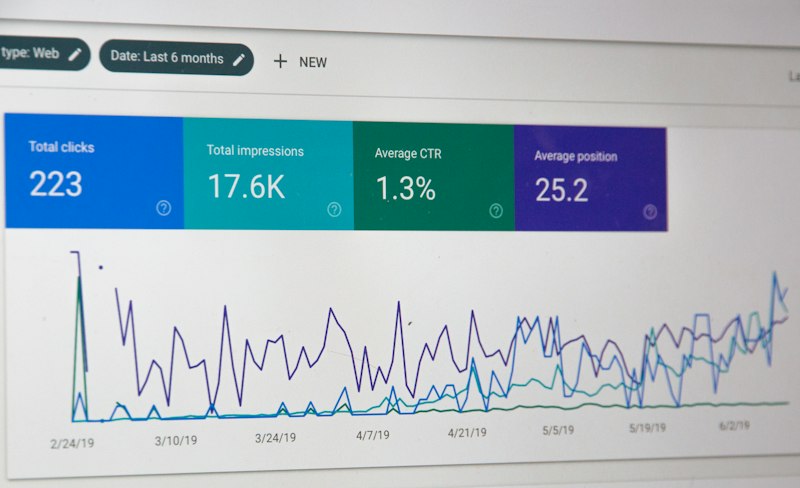
- Click-through rate (CTR): A well-managed dental search campaign typically achieves a 5% to 10% CTR. Anything below 3% signals that your ad copy is not resonating with the search query.
- Conversion rate: Industry benchmarks place dental landing page conversion rates at 4% to 8% for general dentistry. High-value procedure campaigns targeting implants or cosmetic dentistry typically see lower conversion rates, around 2% to 4%, but higher revenue per conversion.
- Cost per lead: Expect $50 to $150 for general dentistry leads. Implant and cosmetic dentistry leads commonly run $100 to $300 given the higher competition and cost per click in those categories.
- Return on ad spend (ROAS): Google Ads delivers a 200% average return on ad spend for healthcare providers following best practices (Statista 2024). Dental practices with strong case acceptance processes and high-value procedure mixes often exceed this significantly.
Beyond these metrics, geographic competition plays a major role in your results. A dental practice in a mid-size city of 150,000 people faces dramatically different auction dynamics than one in Manhattan or downtown Chicago. Urban practices often need larger budgets to compete effectively, and bid strategies like Target CPA (cost per acquisition) bidding become essential when managing higher-volume campaigns.
Seasonality also matters more than most practices realize. January consistently shows the highest search volume for dental services as deductibles reset and patients act on New Year's resolutions. Back-to-school months in July and August drive significant pediatric dentistry searches. The holiday period from Thanksgiving through New Year's Day typically sees a 20 to 30% drop in dental search volume (Patterson Dental research 2023).
Aligning your budget allocation with these seasonal patterns, spending more aggressively in January and August while reducing spend in November and December, is one of the most straightforward optimizations that many practices overlook entirely. Reviewing these benchmarks quarterly against your own campaign data tells you whether your dental PPC management efforts are generating returns that justify the investment or whether a strategic overhaul is overdue.
What Are the Most Costly Dental PPC Mistakes Practices Make?
Even well-intentioned dental PPC campaigns fail consistently due to a predictable set of mistakes. Recognizing these patterns is often the fastest way to improve campaign performance without increasing your budget.
Mistake 1: Sending all traffic to the homepage. This is the single most common error in dental PPC management. Your homepage is designed for multiple audiences with multiple goals. A patient clicking an ad for "dental implants in Phoenix" expects to land on a page about dental implants in Phoenix, not a generic introduction to your practice. Sending implant ad traffic to your homepage can cut conversion rates by 50% or more compared to a dedicated landing page.
Mistake 2: Ignoring negative keywords. Without a negative keyword list, your ads appear for searches like "how to pull your own tooth," "dental hygienist salary," and "free dental clinics near me." These clicks cost real money and produce zero patients. Building and maintaining a negative keyword list with 100 to 200 terms is non-negotiable for efficient dental PPC management.
Mistake 3: Running broad match keywords without controls. Broad match keywords give Google significant latitude to show your ads for loosely related searches. Without a strong negative keyword list and careful monitoring of search term reports, broad match campaigns can spend 40% or more of a budget on completely irrelevant queries. Use exact match and phrase match keywords as your primary targeting strategy, especially when budgets are under $5,000 per month.
Mistake 4: Neglecting ad scheduling. Most dental practices want calls during business hours. Yet many campaigns run 24/7, spending budget late at night and on weekends when nobody answers the phone. A caller who reaches voicemail at 11 PM on a Sunday rarely calls back. Scheduling ads to run during your staffed hours, with reduced bids during evenings rather than complete shutoff, is a straightforward optimization that meaningfully improves lead quality.
Mistake 5: Measuring clicks instead of patients. Click volume is a vanity metric for dental practices. What matters is cost per booked appointment and ultimately cost per patient who accepts treatment. This requires connecting your Google Ads account to a call tracking system and, ideally, your practice management software. Without that connection, you are optimizing for clicks rather than revenue.
A family dental practice in Houston spent 18 months running PPC campaigns that looked impressive on paper, with thousands of clicks and a low average CPC. But when they finally implemented call tracking and traced leads back to scheduled appointments, they discovered that over 60% of their budget was going to keywords producing zero booked appointments. After restructuring the campaign around conversion data rather than click data, their actual patient bookings from PPC tripled within four months.
If your current campaigns feel like a black box where money goes in and patients may or may not come out, explore how ApsteQ approaches dental PPC management with full-funnel attribution built in from day one.
Where Is Dental PPC Management Heading in 2026 and 2027?
The landscape for dental paid search is evolving faster than most practice owners realize, and the changes coming in 2026 and 2027 will reward practices that adapt early while penalizing those still relying on outdated campaign structures.
AI-driven bidding will become more dominant, not less. Google's smart bidding algorithms already handle bid adjustments at a granularity no human manager can match, evaluating hundreds of signals per auction including device, location, time of day, search history, and audience membership. By 2026, campaigns that resist AI bidding strategies in favor of manual CPC will consistently underperform in competitive dental markets. The shift is not about trusting Google blindly. It is about feeding the algorithm the right conversion signals so it optimizes toward actual patients rather than clicks.
Voice search and conversational queries will reshape keyword strategy. Patients are increasingly searching via voice with natural language queries like "find me a dentist near me accepting my insurance who does implants." These long-form conversational searches require a different keyword approach, one built around intent matching and audience signals rather than exact keyword strings. Dental practices that begin adapting their keyword architecture now will have a significant head start.
First-party data will become a competitive differentiator. As third-party cookies phase out, dental practices that have built clean patient email lists and implemented server-side conversion tracking will be able to create customer match audiences and lookalike segments that outperform cold targeting. Healthcare digital ad spending in the United States is projected to reach $18.5 billion by 2027 (Statista 2024), meaning competition for dental search real estate will intensify. First-party data will separate efficient campaigns from expensive ones.
Performance Max campaigns will require dental-specific management expertise. Google's Performance Max format, which runs ads across Search, Display, YouTube, Gmail, and Maps from a single campaign, is increasingly being pushed as the default campaign type. For dental practices, Performance Max requires careful asset group segmentation and strong negative keyword lists to avoid wasted spend on non-dental audiences. Practices without experienced management often see Performance Max campaigns consume budget with little measurable patient return.
Frequently Asked Questions
How much should a dental practice spend on PPC advertising per month?
Most dental practices see meaningful results starting at $2,000 to $3,000 per month in ad spend for general dentistry, with specialty-focused campaigns often requiring $5,000 or more to compete effectively. Budget should be based on your local market competition, target patient volume, and the revenue value of the services you are promoting. High-value procedures like implants justify higher per-lead costs given their treatment value.
How long does it take to see results from dental PPC campaigns?
Most dental PPC campaigns begin generating leads within the first 2 to 4 weeks of launch, but meaningful performance data for optimization takes 60 to 90 days to accumulate. Campaigns typically reach peak efficiency at the 3 to 6 month mark when there is enough conversion data for Google's smart bidding algorithms to optimize effectively. Expect an iterative improvement curve, not overnight results.
What is a good cost per lead for dental PPC campaigns?
A competitive cost per lead for general dentistry PPC ranges from $50 to $120. Specialty procedures like dental implants, Invisalign, and cosmetic dentistry typically run $100 to $300 per lead due to higher click costs and longer patient decision timelines. These higher costs are justified when the lifetime value of a cosmetic or implant patient frequently exceeds $5,000 to $15,000 in treatment revenue.
Should dental practices manage PPC in-house or hire an agency?
Practices with dedicated marketing staff who have Google Ads certifications and 10 or more hours per week available for campaign management can succeed in-house. However, most practices benefit from working with a dental-specific marketing agency that understands HIPAA compliance considerations, dental seasonality, procedure-level bidding strategy, and call tracking integration. The ROI difference between expert management and amateur management often exceeds the agency fee within the first quarter.
Do Google Local Services Ads replace traditional dental PPC search ads?
No. Google Local Services Ads and traditional search ads serve complementary roles and should run simultaneously for maximum search coverage. Local Services Ads appear above standard results with a "Google Screened" badge and charge per lead rather than per click, making them excellent for general dentistry inquiries. Traditional search ads offer greater control over keywords, ad copy, and landing pages, making them essential for specialty procedures and targeted patient acquisition.
The Path Forward for Your Practice
Dental PPC management is one of the highest-leverage marketing investments available to dental practices, but only when campaigns are built strategically, monitored consistently, and optimized based on real patient data rather than surface-level click metrics. Here is what the evidence says to keep in mind:
- Define goals in terms of patients and revenue, not clicks and impressions.
- Build tightly structured campaigns with dedicated landing pages for each key service.
- Implement call tracking from day one to connect ad spend to actual bookings.
- Study your benchmark metrics quarterly and compare against your own historical data.
- Avoid the common mistakes that waste budget including broad match without controls, homepage traffic, and neglected negative keyword lists.
- Prepare for the 2026 to 2027 shift toward AI bidding, conversational search, and first-party data strategies.
If you are ready to build a dental PPC system that consistently fills your schedule with high-value patients, the next step is a conversation. Book a free strategy call with the ApsteQ team today and discover exactly where your current ad spend is leaking and how to turn it into predictable, measurable practice growth.
Free for practice owners
Get a Free Dental Growth Audit
We will review your Google Ads, website, and follow-up system, then show you exactly where new patients are leaking out of your funnel. No commitment.
Take the Free Audit Free dental marketing guides