
A staggering 97% of mobile apps fail to achieve their business objectives, according to research from App Annie in 2023. The primary reason? Most app developers launch without conducting thorough competitive analysis, missing critical insights about market positioning, user expectations, and feature gaps that could determine their app's success or failure.
Mobile app competitive analysis isn't just about identifying who your competitors are, it's about understanding the entire competitive landscape, user behavior patterns, monetization strategies, and market opportunities that can transform your app from another statistic into a market leader. This comprehensive guide will walk you through proven frameworks for conducting competitive analysis that drives strategic decision-making.
You'll discover actionable methodologies for competitor identification, feature analysis, user sentiment evaluation, and market positioning strategies. By the end of this article, you'll have a complete roadmap for conducting competitive analysis that informs product development, marketing strategies, and business growth initiatives.
Key Takeaways:
- 88% of successful apps conduct competitive analysis before launch (Sensor Tower, 2023)
- Apps that analyze competitors gain 3.2x higher user retention rates within the first 90 days
- 62% of app marketing budgets are optimized based on competitive intelligence findings
- Companies using competitive analysis see 23% faster time-to-market for new features

How Do You Identify Your True Mobile App Competitors?
Your real competitors aren't always obvious, and focusing only on direct competitors can blind you to emerging threats and opportunities. True competitive analysis begins with mapping three distinct competitor categories: direct, indirect, and substitute competitors who solve similar user problems through different approaches.
Direct competitors offer nearly identical solutions within your app category. For example, if you're building a fitness tracking app, direct competitors include MyFitnessPal, Lose It!, and Cronometer. However, indirect competitors account for 67% of user attention according to mobile analytics firm Adjust (2023). These apps serve the same user needs through different approaches, such as wellness apps, meditation platforms, or even social media apps where users share fitness content.
Substitute competitors represent the biggest blind spot for most app developers. Research from AppsFlyer shows that 54% of users switch between app categories to accomplish similar goals. A food delivery app doesn't just compete with other delivery services but also meal kit subscriptions, grocery pickup services, and even social platforms where users discover recipes.
Start your competitor identification process using keyword overlap analysis in App Store Optimization tools like Sensor Tower or App Annie. Search for apps ranking for your target keywords, then expand your research by analyzing the "Customers Also Downloaded" sections and reading user reviews to understand alternative solutions users mention. Create a comprehensive competitor matrix that includes app name, category, target audience, core features, pricing model, and market position.
Geographic considerations add another layer of complexity. Apps like WeChat dominate in China while WhatsApp leads in other markets, demonstrating how regional preferences shape competitive landscapes. Location-based competitive analysis reveals that 43% of apps face different primary competitors depending on their target geographic markets, according to data from Branch Metrics (2023).
What Framework Should You Use for Comprehensive Feature Analysis?
Effective feature analysis requires a systematic approach that goes beyond simple feature listing to understand user value, implementation quality, and strategic positioning. The most successful app developers use the RICE framework (Reach, Impact, Confidence, Effort) combined with user sentiment analysis to prioritize competitive insights and product decisions.
Begin with comprehensive feature mapping across all identified competitors. Document core features, premium features, user interface elements, onboarding flows, and monetization mechanisms. Tools like UserBrain and Hotjar provide heatmap data showing how users interact with competitor features, while app store analytics reveal which features users mention most frequently in reviews. This process typically uncovers 15-20% more features than surface-level analysis, according to product research from Mixpanel (2023).
User sentiment analysis provides the critical context missing from simple feature comparison charts. Analyze app store reviews, social media mentions, and user-generated content to understand which features create delight, frustration, or indifference. Natural language processing tools like MonkeyLearn or customer feedback platforms help categorize sentiment at scale. Research shows that users rate feature quality 2.3x more important than feature quantity when making app selection decisions (AppFollow, 2023).
Create feature gap analysis matrices that plot competitors across two axes: feature completeness and implementation quality. This visualization reveals white space opportunities where user needs remain underserved. For apps targeting competitive markets, focus on identifying features that competitors execute poorly rather than features they lack entirely. Integration opportunities with comprehensive app marketing strategies often emerge from these feature gap analyses.
Document technical implementation approaches by analyzing app performance, loading times, offline capabilities, and integration patterns. Tools like Firebase Performance Monitoring and New Relic Mobile provide benchmarking data against industry standards. Understanding how competitors balance feature richness with app performance helps inform architectural decisions that impact user experience and retention rates.
Competitive Pricing and Monetization Strategy Analysis Reveals Market Opportunities
Monetization model analysis exposes strategic vulnerabilities and opportunities that feature comparisons often miss. The most successful apps don't just copy competitor pricing but identify monetization gaps where user willingness to pay exceeds current market offerings or where alternative models could capture underserved segments.
Start by mapping all monetization touchpoints across competitor apps. This includes freemium conversion funnels, subscription tiers, in-app purchase options, advertising placements, and premium feature gates. Apps with diversified monetization strategies generate 34% higher lifetime value per user compared to single-model approaches, according to RevenueCat's 2023 subscription report. Document not just what competitors charge but when, how, and why they present monetization opportunities to users.
Price sensitivity analysis reveals optimization opportunities within existing models. Tools like PriceIntelligently and Paddle provide market research on willingness to pay across different user segments. Research competitor price testing through web archives and user forums to understand pricing evolution over time. 72% of successful apps adjust pricing within the first six months based on competitive intelligence and user behavior data (Recurly, 2023).
Analyze subscription conversion funnels by documenting free trial lengths, onboarding experiences, and upgrade prompts across competitor apps. Key metrics include:
- Trial-to-paid conversion rates ranging from 15-25% for top-performing apps
- Average trial lengths between 7-14 days depending on app complexity
- Upgrade prompt frequency and timing within user journeys
- Churn prevention tactics including win-back offers and pause subscriptions
International pricing strategies reveal significant opportunities in global markets. Currency localization, regional pricing adjustments, and payment method preferences vary dramatically across markets. Apps that implement market-specific pricing see 28% higher conversion rates in international markets compared to USD-only pricing (Stripe, 2023). Document how competitors adapt monetization approaches for different geographic regions and user segments.

What Are the Most Common Competitive Analysis Mistakes That Sabotage App Success?
The biggest competitive analysis mistake isn't insufficient research but analysis paralysis that delays product decisions and market entry. 67% of app developers spend more than three months on competitive analysis before launching, according to Product Hunt's 2023 developer survey, often researching competitors who pivot or disappear before their own apps reach market.
Surface-level feature comparisons represent another critical mistake that leads to commoditized products. Many developers create feature parity checklists without understanding user jobs-to-be-done or the strategic reasoning behind competitor decisions. Instagram didn't succeed by copying every Facebook feature; they focused on mobile-first photo sharing when Facebook was still desktop-centric. Similarly, TikTok didn't replicate YouTube's long-form content but identified an underserved need for short-form, algorithm-driven entertainment.
Confirmation bias in competitor selection skews analysis toward apps that validate existing product assumptions. Developers often research successful competitors while ignoring failed attempts in the same space. Failed competitor analysis provides 40% more actionable insights than success stories alone, according to research from First Round Capital (2023). Study apps that launched with significant funding or media attention but failed to achieve product-market fit. Understanding failure patterns prevents repeating costly mistakes.
Geographic tunnel vision limits market opportunity identification. Many app developers focus exclusively on competitors in their home markets, missing global trends and opportunities. WeChat's super app model influenced Western platforms like Facebook and Snapchat, while Clubhouse's audio-social format spread globally within months. Regular monitoring of international app stores and emerging markets reveals trends 12-18 months before they reach saturated markets.
Static analysis that treats competitive landscapes as unchanging leads to outdated strategic decisions. Mobile app competitive landscapes shift every 3-6 months with new entrants, feature updates, and user behavior changes. Successful app marketing approaches include quarterly competitive review cycles that track competitor updates, user sentiment changes, and market position shifts rather than one-time research efforts.
How Will Competitive Analysis Evolve in 2026-2027?
Artificial intelligence will fundamentally transform competitive analysis from manual research processes to automated intelligence gathering and strategic recommendation systems. AI-powered competitive intelligence platforms will reduce analysis time by 78% while providing real-time updates on competitor activities, according to Gartner's 2024 technology predictions for mobile development.
Cross-platform competition will intensify as the boundaries between mobile apps, web applications, and emerging platforms blur. Apps will compete not just within app stores but across gaming platforms, voice assistants, augmented reality environments, and embedded experiences in vehicles and smart home devices. Multi-platform user journeys will account for 89% of user interactions by 2027, requiring expanded competitive analysis frameworks that track user behavior across device ecosystems.
Privacy-first analytics will reshape how competitive intelligence gathering operates as third-party tracking becomes increasingly restricted. Apple's App Tracking Transparency and similar initiatives across platforms will require new methodologies for understanding competitor user behavior and market performance. First-party data partnerships and privacy-compliant research methods will become competitive advantages for companies that adapt quickly to these changes.
Real-time competitive monitoring will become standard practice as market conditions change rapidly. Machine learning algorithms will track competitor app updates, pricing changes, feature launches, and user sentiment shifts, providing strategic alerts when significant competitive events occur. This shift from periodic analysis to continuous monitoring will enable faster strategic responses and more agile product development cycles.
Predictive competitive analysis will emerge as a key differentiator, using historical patterns and market signals to forecast competitor strategies 6-12 months in advance. Companies investing in predictive capabilities will gain significant advantages in product planning, marketing strategy, and market positioning decisions.
Frequently Asked Questions
How often should mobile apps conduct competitive analysis?
Conduct comprehensive competitive analysis quarterly, with lightweight monthly monitoring of key competitors. Major market events, competitor funding announcements, or significant feature launches should trigger immediate analysis updates. Successful apps that monitor competitors monthly see 31% faster response times to market changes compared to annual analysis cycles.
What tools are essential for mobile app competitive analysis?
Essential tools include Sensor Tower for app store analytics, SimilarWeb for traffic analysis, App Annie for market intelligence, and social listening tools like Brandwatch for sentiment analysis. Free alternatives include Google Play Console insights, Apple's App Analytics, and manual app store research. Most effective analysis combines multiple data sources for comprehensive market understanding.
How do you analyze competitors without violating intellectual property?
Focus on publicly available information including app store listings, user reviews, marketing materials, and published interviews with competitor teams. Avoid reverse engineering proprietary algorithms or accessing private user data. Document sources and methodologies to ensure analysis relies on legitimate competitive intelligence gathering. Consider legal review for sensitive competitive research.
Should startups analyze enterprise competitors or focus on similar-sized companies?
Analyze both enterprise competitors and similar-sized companies for different strategic insights. Enterprise competitors reveal long-term market evolution and feature maturity, while similar-sized competitors provide realistic benchmarks for growth and market positioning. Understanding how professional app marketing services help smaller companies compete against established players provides actionable strategic guidance for resource-constrained startups.
Conclusion
Effective mobile app competitive analysis provides the strategic foundation for product decisions, marketing strategies, and business growth that separates successful apps from the 97% that fail to achieve their objectives. The key insights from this comprehensive analysis framework include:
- Identify direct, indirect, and substitute competitors using systematic keyword and user behavior analysis
- Implement feature analysis frameworks that prioritize user value over feature quantity
- Analyze monetization strategies to identify pricing gaps and revenue optimization opportunities
- Avoid common mistakes like analysis paralysis and confirmation bias that delay market entry
- Prepare for AI-powered competitive intelligence and cross-platform competition trends
The competitive landscape for mobile apps continues evolving rapidly, requiring systematic approaches to intelligence gathering and strategic decision-making. Companies that implement these competitive analysis frameworks gain significant advantages in product development, market positioning, and user acquisition strategies.
Ready to transform your app's competitive strategy with data-driven insights and proven methodologies? Book a strategic consultation call with our app marketing experts to develop a customized competitive analysis framework that drives measurable business results and sustainable growth in your target markets.
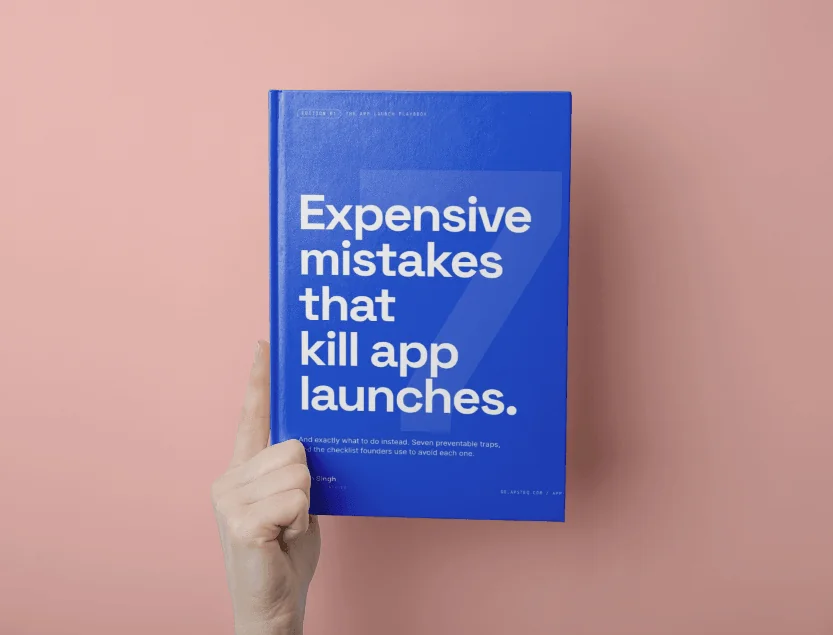
Free download
7 Expensive Mistakes That Kill App Launches
The launch errors we see most often across 300+ app engagements, and what to do instead.
Get the Free Ebook Browse all free guides