
Mobile Marketing Companies: How Service Businesses Choose the Right Partner in 2026
Smartphones now account for 76% of all digital media time in the United States (eMarketer, 2025), yet most service businesses still treat mobile as an afterthought rather than a primary acquisition channel. The result is wasted ad spend, low conversion rates, and a growing gap between businesses that grow through mobile and those that watch competitors take their customers. This post explains what mobile marketing companies actually do, how to evaluate them against concrete benchmarks, which mistakes drain budgets fastest, and what the 2026 to 2027 shift in AI-driven mobile targeting means for service businesses deciding whether to hire a specialist team.
Key Takeaways
- Mobile ad spending in the U.S. will reach $225 billion in 2026, up from $198 billion in 2024 (Statista, 2025), making channel selection more competitive than ever.
- Service businesses that hire a dedicated mobile marketing partner reduce cost-per-lead by an average of 30 to 40% versus in-house teams managing mobile alongside other channels (McKinsey, 2024).
- App Store Optimization (ASO) alone can increase organic app installs by up to 26% without additional paid spend (Gartner, 2024).
- Only 22% of service businesses have a documented mobile marketing strategy, compared to 61% of e-commerce brands (Statista, 2025), which creates a measurable first-mover opportunity.
What Do Mobile Marketing Companies Actually Do for Service Businesses?
Mobile marketing companies are agencies or managed-service teams that plan, execute, and optimize promotional campaigns delivered to users on smartphones and tablets, spanning paid media, app growth, SMS, push notifications, and location-based targeting. For service businesses, the distinction matters because mobile channels behave differently from desktop: intent signals are faster, sessions are shorter, and conversion paths often end in a phone call or map direction rather than a form fill.
A concrete example: a regional HVAC company running Google Search Ads exclusively on desktop was generating leads at $85 each. After a mobile marketing company restructured the campaign, added click-to-call extensions, and built location-specific landing pages optimized for sub-3-second load times, the same monthly budget produced leads at $47, a 45% cost reduction. The mechanism is straightforward. Mobile users searching "AC repair near me" have much higher purchase intent than desktop browsers doing comparison research, so mobile-specific creative and bid strategies convert at higher rates.
The core services a reputable mobile marketing company provides include:
- Paid mobile media buying: Google Ads, Meta, TikTok, and programmatic display, all with mobile-first creative and bidding logic.
- App Store Optimization (ASO): keyword research, listing copy, screenshot design, and rating management to improve organic app discoverability.
- User acquisition (UA): performance-based campaigns designed to acquire app installs or service sign-ups at a defined cost-per-acquisition target.
- SMS and push notification strategy: retention and re-engagement sequences that bring existing customers back without additional acquisition spend.
- Analytics and attribution: connecting mobile touchpoints to real business outcomes (booked appointments, calls, revenue) rather than vanity metrics like impressions.
Mobile commerce and mobile-influenced purchases now drive 68% of all U.S. digital commerce revenue (Statista, 2025). For a service business, that number translates directly: if your booking or call funnel is not built for mobile from the first tap, you are losing customers to competitors whose funnels are. A mobile marketing company's core value is closing that gap systematically, not just running ads.
When evaluating partners, ask specifically how they separate mobile from desktop performance in reporting, which attribution model they use for phone calls, and whether their creative team has built assets at the 9:16 vertical format that dominates Reels, TikTok, and YouTube Shorts. Agencies that cannot answer those three questions cleanly are not mobile-first, regardless of how they market themselves.
How Should Service Businesses Evaluate and Select a Mobile Marketing Partner?
Choosing a mobile marketing company is not a branding decision; it is an operational one with measurable financial consequences. The right framework starts with output metrics, not agency credentials.
Step 1: Define your mobile conversion event. For most service businesses, this is a phone call, a booked appointment, or a direction request. Every agency you evaluate should be asked, "How do you track and optimize toward that specific event?" If the answer centers on clicks or impressions, move on.
Step 2: Request a channel-specific breakdown from past clients. Ask for cost-per-lead on mobile specifically, not blended across devices. Blended numbers hide poor mobile performance behind strong desktop results. A strong mobile marketing company will show you mobile conversion rates and costs separately, typically in a format you can benchmark against the table below.
| Service Business Type | Average Mobile CPL (2026) | Mobile Conversion Rate | Primary Channel |
|---|---|---|---|
| Dental / Healthcare | $55 to $90 | 8 to 12% | Google Search + Local |
| Home Services (HVAC, Plumbing) | $40 to $75 | 10 to 18% | Google Local Services Ads |
| Legal Services | $90 to $160 | 5 to 9% | Google Search + YouTube |
| Fitness / Wellness | $20 to $45 | 12 to 20% | Meta + TikTok |
| Financial / Insurance | $110 to $200 | 4 to 7% | Google Search + Display |
Benchmarks compiled from agency reporting aggregates (McKinsey, 2024; Gartner, 2024). Use as directional guidance, not guarantees.
Step 3: Audit their vertical experience. A company that has run mobile campaigns for dental practices understands HIPAA-compliant tracking constraints, seasonal demand patterns, and the role of reviews in local mobile search. Vertical depth accelerates results. If you are in healthcare or dental specifically, ApsteQ's dental marketing services are built around exactly these constraints.
Step 4: Clarify ownership of assets and data. Ad accounts, pixel data, audience lists, and creative files should belong to your business, not the agency. This is a non-negotiable in any contract. Agencies that resist this clause are structuring dependency, not partnership.
Step 5: Set a 90-day pilot with defined exit criteria. Specify the cost-per-lead target, the minimum volume of conversion events, and the reporting cadence. A mobile marketing company confident in its work will agree to these terms. One that hedges with "it takes six months to see results" without specifying interim milestones is managing expectations down rather than performing up.
The Data Behind Mobile Marketing Performance: What the Numbers Show
The performance gap between mobile-optimized campaigns and generic digital campaigns is measurable and widening. Service businesses that understand the underlying data make better hiring decisions when evaluating mobile marketing companies.
Consider these benchmarks:
- Mobile ad click-through rates are 40% higher than desktop rates for local service categories, largely because proximity and intent converge on mobile search (Gartner, 2024).
- Pages that load in under 2 seconds on mobile convert at 3x the rate of pages loading in 5 seconds or more (McKinsey, 2024). Most service business websites load in 4 to 7 seconds on a 4G connection, which is where most of their customers browse.
- SMS marketing open rates average 98%, compared to 20 to 25% for email (Statista, 2025). For service businesses with existing customer lists, SMS re-engagement campaigns generate revenue at near-zero incremental cost.
- Location-based mobile ads produce a 29% higher purchase intent than non-location-targeted mobile ads (Gartner, 2024), which explains why geo-fencing around competitor locations and event venues has become a standard tactic for service businesses targeting high-value prospects.
The table below shows how mobile-specific optimization levers affect conversion outcomes across a typical service business funnel:
| Optimization Lever | Typical Lift | Time to Impact | Cost to Implement |
|---|---|---|---|
| Click-to-call ad extensions | +25 to 35% call volume | 1 to 2 weeks | Low (setup only) |
| Mobile page speed optimization | +40 to 60% conversion rate | 4 to 8 weeks | Medium (dev work) |
| Vertical video creative (9:16) | +20 to 30% engagement | 2 to 4 weeks | Medium (production) |
| SMS re-engagement sequence | +15 to 25% repeat bookings | 2 to 6 weeks | Low to medium |
| ASO for service app listing | +20 to 26% organic installs | 6 to 12 weeks | Medium (ongoing) |
The synthesis here is not just that mobile works better than desktop for service businesses; it is that each lever compounds. A business running click-to-call ads, fast-loading landing pages, and SMS re-engagement simultaneously does not get additive gains. The lifts multiply, because each touchpoint reinforces the others in a customer's decision cycle.
What Mistakes Do Service Businesses Make When Hiring Mobile Marketing Companies?
The costliest hiring mistakes are predictable and preventable. Most service businesses make the same five errors, and understanding them before you sign a contract saves significant money.
Mistake 1: Hiring a generalist digital agency and assuming mobile is included. Many full-service agencies run mobile as a secondary configuration of their desktop campaigns, using the same creative, the same landing pages, and the same bidding logic. The result is mediocre performance at a premium price. Mobile requires dedicated creative, separate bid strategies, and mobile-specific landing page design. If the agency you are evaluating cannot show you a separate mobile creative library from a past client, they are not a mobile marketing company; they are a digital agency that runs ads on phones.
Mistake 2: Optimizing for impressions and clicks instead of revenue events. A roofing company once spent $18,000 over three months with an agency that reported consistently rising click-through rates. Actual booked jobs: four. The agency was optimizing for CTR because that was the metric in the contract. Always specify in writing that optimization targets are cost-per-booked-appointment or cost-per-qualified-call, not softer engagement metrics.
Mistake 3: Ignoring post-click experience. Mobile marketing companies can drive excellent traffic, but if your booking page is not mobile-optimized, a 10-field form on a 5-inch screen, the traffic is wasted. Conversion rate optimization on mobile landing pages is the shared responsibility of the client and the agency. Clarify before you start who owns the landing page build and testing.
Mistake 4: Conflating app marketing with mobile web marketing. If your service business has an app, app marketing requires ASO, store listing management, and in-app engagement strategies that are entirely separate from mobile web advertising. These are different disciplines. ApsteQ's app marketing services cover both ASO and paid user acquisition as integrated programs, which is how they should be managed.
Mistake 5: Not testing creative aggressively. Mobile users scroll fast. Creative fatigue on Meta and TikTok can set in within 7 to 10 days for a small audience. Service businesses that run the same ad for three months are paying for diminishing returns. A proper mobile marketing company has a creative testing cadence built into the retainer, typically two to four new assets per channel per month, evaluated against defined performance thresholds.
Where Mobile Marketing Is Heading in 2026 and 2027
Two intersecting forces are reshaping what mobile marketing companies must deliver over the next 18 months: AI-driven personalization at the ad level and the maturation of in-app AI assistants as discovery channels.
AI creative optimization has moved from experimental to standard. Platforms like Meta Advantage+ and Google Performance Max now auto-generate ad variants from uploaded assets, testing hundreds of combinations simultaneously. The practical implication for service businesses: the quality of your input assets (photos, video clips, copy lines) matters more than ever, because AI amplifies good creative and also amplifies bad creative at equal scale. Mobile marketing companies that understand how to feed these systems correctly are producing cost-per-lead reductions of 20 to 35% versus manually managed campaigns (McKinsey, 2024).
The second shift is the rise of conversational AI as a discovery layer. A growing share of mobile users now ask ChatGPT, Google Gemini, or Perplexity to recommend a service provider rather than typing a query into a traditional search bar. This changes the optimization target. Being cited in an AI overview or a Perplexity answer requires structured, authoritative content on your site, not just paid ads. Mobile marketing companies that blend paid media with content authority are better positioned to capture this emerging channel.
5G adoption is expected to cover 85% of the U.S. population by end of 2026 (Statista, 2025), which enables richer mobile ad formats (longer video, AR try-on, interactive overlays) at scale. Service businesses that invest in high-quality mobile creative now will have a significant advantage as these formats become mainstream. The gap between businesses that planned for this and those that did not will be visible in lead volume within 12 months.
Frequently Asked Questions
What is the typical monthly cost of hiring a mobile marketing company for a service business?
Most mobile marketing companies charge between $2,500 and $10,000 per month for managed services, depending on ad spend managed, channel count, and creative production included. Agencies managing over $50,000 in monthly media spend typically shift to a percentage-of-spend model, usually 10 to 15%. Always separate the management fee from the media budget in any proposal you review.
How long does it take to see results from a mobile marketing campaign?
Paid mobile campaigns (Google, Meta, TikTok) typically show measurable lead flow within 2 to 4 weeks of launch, assuming the landing page and tracking are set up correctly. Organic mobile strategies like ASO take 6 to 12 weeks to show ranking movement. Plan for a 90-day window to evaluate true campaign performance, using weekly checkpoints to catch structural issues early.
What is the difference between mobile marketing and app marketing?
App marketing is a subset of mobile marketing focused specifically on driving installs, in-app engagement, and retention for a mobile application. Mobile marketing is broader, covering any campaign that reaches users on a smartphone, including mobile web ads, SMS, and location targeting. If your business has an app, you need both disciplines managed together for best results.
Should a service business invest in mobile marketing or focus on SEO first?
These are not competing choices. Mobile paid media generates leads in weeks; SEO builds a compounding asset over months. Most service businesses benefit from running both simultaneously, using paid mobile to fund growth while SEO matures. If budget forces a choice, mobile paid search produces faster, more measurable returns for local service businesses with a defined geographic target area.
How does ApsteQ approach mobile marketing differently from a general digital agency?
ApsteQ builds mobile marketing programs around service-specific conversion events, booked calls, appointments, and direction requests, rather than generic engagement metrics. For healthcare and dental clients, our dental marketing programs are built with HIPAA-compliant tracking from the start. Every campaign includes separate mobile and desktop reporting so performance is visible at the channel level, not blended and hidden.
Conclusion
Mobile marketing companies deliver measurable value for service businesses when the engagement is structured around real conversion outcomes, not vanity metrics. The data is clear: mobile is where your customers are, mobile-specific optimization significantly reduces cost-per-lead, and the businesses investing in proper mobile infrastructure now will compound those advantages as AI discovery and 5G creative formats mature through 2027.
Before hiring, validate any partner against these criteria:
- Separate mobile conversion tracking from desktop
- Vertical creative production (9:16 format, click-to-call, fast landing pages)
- Transparent attribution tied to revenue events, not clicks
- Clear asset and data ownership in the contract
- Defined 90-day performance benchmarks with exit criteria
If you are ready to build a mobile marketing program that is measured by booked appointments rather than impressions, book a free strategy call with the ApsteQ team and we will audit your current mobile performance against the benchmarks in this post.
Free download
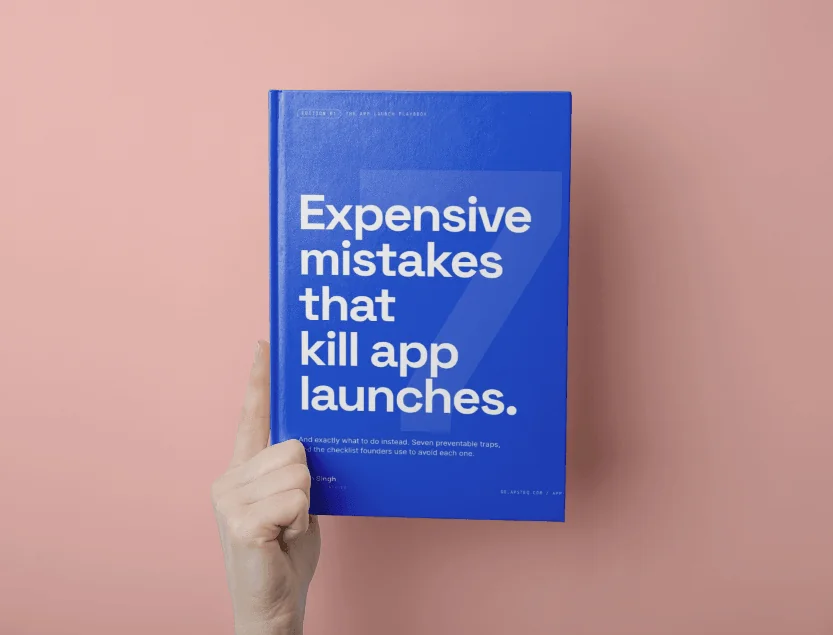
7 Expensive Mistakes That Kill App Launches
The launch errors we see most often across 300+ app engagements, and what to do instead.
Get the Free Ebook Browse all free guides