
Mobile user acquisition costs have surged by 60% since 2020 (AppsFlyer, 2024), with the average cost per install (CPI) reaching $4.12 across all app categories in 2024 (AppsFlyer, 2024). This dramatic increase has forced app marketers to completely rethink their acquisition strategies, as traditional methods now consume budgets faster than ever while delivering diminishing returns.
The rising costs stem from increased competition, iOS 14.5+ privacy changes, and growing demand for quality users who actually engage with apps long-term. Many app developers find themselves caught in an expensive cycle, spending more to acquire users who may never convert into paying customers. Understanding and optimizing your mobile user acquisition cost isn't just about budget management anymore, it's about survival in an increasingly competitive digital landscape.
This comprehensive guide reveals how to calculate true acquisition costs, implement cost-effective strategies, and maximize your return on ad spend while building sustainable user growth for your mobile app.
Key Takeaways:
- Average CPI increased 60% since 2020, now averaging $4.12 across all app categories
- Gaming apps face the highest costs at $6.45 per install, while utility apps average $2.89
- iOS acquisition costs 2.3x more than Android due to privacy restrictions and premium user base
- Retention-focused campaigns reduce long-term acquisition costs by up to 40% compared to install-only strategies

What Drives Mobile User Acquisition Costs in 2026?
Mobile user acquisition costs are primarily driven by auction-based competition and platform-specific factors that create a complex pricing ecosystem. The fundamental driver is supply and demand, where limited premium inventory meets increasing advertiser competition, pushing prices higher across all major platforms including Facebook, Google, Apple Search Ads, and TikTok.
Platform policies significantly impact costs, with iOS 14.5+ privacy changes reducing targeting precision by 35% (Facebook, 2024), forcing advertisers to bid on broader audiences. This decreased targeting efficiency means higher costs per quality user, as campaigns now capture more users who don't match the ideal customer profile. Additionally, Apple Search Ads commands premium pricing at $7.21 average CPI (Apple Developer, 2024) due to high-intent users actively searching for apps.
App category competition creates dramatic cost variations, with finance and gaming apps facing the highest acquisition costs due to high lifetime values and aggressive bidding strategies. Finance apps average $15.48 CPI (Sensor Tower, 2024) because acquired users often generate hundreds of dollars in revenue through subscriptions or transactions. Gaming apps, despite lower individual transaction values, compete intensely for users who demonstrate strong engagement patterns and in-app purchase behaviors.
Geographic targeting also influences costs significantly, with tier-1 markets like the United States, United Kingdom, and Australia commanding 3-5x higher CPIs than emerging markets. However, these premium markets typically deliver higher-quality users with greater purchasing power and longer retention rates, justifying the increased investment for apps with robust monetization strategies.
How to Calculate Your True Mobile User Acquisition Cost
Calculating true mobile user acquisition cost requires looking beyond simple cost-per-install metrics to understand the complete financial picture of user acquisition campaigns. The most effective approach involves measuring blended Customer Acquisition Cost (CAC), which includes all marketing expenses, creative development, platform fees, and internal team costs divided by total acquired users over a specific period.
Start with the basic formula: Total Marketing Spend ÷ New Users Acquired = Blended CAC. However, this surface-level calculation misses crucial elements that affect profitability. Include creative production costs, which average 15-20% of total ad spend (data.ai, 2024), plus platform management fees, attribution tool costs, and internal team salaries dedicated to user acquisition efforts.
Advanced app marketing strategies require segmented CAC analysis by traffic source, geographic region, and user behavior cohorts. For example, users acquired through Apple Search Ads might cost $7.21 per install but show 40% higher Day 30 retention compared to social media traffic costing $3.15 per install. This analysis reveals that higher upfront costs often translate to better long-term user value and lower overall acquisition expenses.
Implement cohort-based tracking to understand how acquisition costs evolve over time and across different user segments. Create monthly cohorts showing CAC trends, then overlay retention and revenue data to identify the most cost-effective acquisition channels. This approach helps optimize budget allocation toward channels delivering users with the highest lifetime value, even when initial acquisition costs appear higher than alternative sources.
Platform-Specific User Acquisition Cost Benchmarks Show Significant Variations
Platform-specific user acquisition costs vary dramatically based on targeting capabilities, user quality, and competitive dynamics, with each major platform serving different stages of the user acquisition funnel. Understanding these variations helps app marketers allocate budgets effectively and set realistic performance expectations for different traffic sources.
Google Ads Universal App Campaigns average $3.77 CPI across all categories (Google Play Console, 2024), benefiting from Google's vast inventory and machine learning optimization. However, gaming apps face higher costs at $5.23 CPI (Google Play Console, 2024) due to intense competition, while productivity apps achieve lower costs averaging $2.41 CPI (Google Play Console, 2024). Google's strength lies in capturing users with high commercial intent through search-based targeting.
Facebook and Instagram campaigns show average CPIs of $4.89 (Meta Ads, 2024), with significant variations by targeting approach and creative format. Video ads consistently outperform static images, achieving 23% lower CPIs (AppsFlyer, 2024) while delivering users with higher engagement rates. Facebook's detailed targeting capabilities allow precise audience segmentation, but iOS privacy changes have reduced campaign effectiveness, increasing costs by approximately 15% year-over-year.
| Platform | Avg US CPI | Avg India CPI | Best For |
|---|---|---|---|
| Apple Search Ads | $7.21 | $2.15 | High-intent iOS users |
| Google UAC | $3.77 | $0.89 | All categories |
| TikTok Ads | $3.14 | $0.67 | Entertainment/lifestyle |
| Facebook/Instagram | $4.89 | $1.12 | All categories |
| LinkedIn Ads | $8.94 | $2.45 | B2B/professional |
| Pinterest Ads | $2.89 | $0.61 | E-commerce/lifestyle |
Key platform performance indicators include:
- Apple Search Ads: $7.21 average CPI, highest user intent and retention rates
- TikTok Ads: $3.14 average CPI, strongest performance for entertainment and lifestyle apps
- Snapchat Ads: $4.67 average CPI, excellent for reaching younger demographics
- Twitter Ads: $5.12 average CPI, effective for news and communication apps
Emerging platforms like Pinterest and LinkedIn offer lower competition but smaller scale, with Pinterest averaging $2.89 CPI for lifestyle and e-commerce apps (Mobile Action, 2024). LinkedIn commands premium pricing at $8.94 CPI (Mobile Action, 2024) but delivers high-value users for B2B and professional applications. These platforms require careful testing to determine fit with specific app categories and target demographics.

What Are the Most Common Mobile User Acquisition Cost Mistakes?
The most damaging mistake in mobile user acquisition is optimizing solely for install volume instead of user quality and lifetime value, leading to inflated costs and poor return on investment. Many app marketers chase low CPIs without considering post-install behavior, resulting in campaigns that acquire users who immediately delete the app or never engage beyond the first session.
This approach proves expensive in the long run because apps lose 77% of daily active users within the first three days after installation (Adjust, 2024). When campaigns optimize for installs alone, they often attract users with no genuine interest in the app's core value proposition. A fitness app might acquire users interested in the advertised free trial but who have no intention of maintaining a workout routine, leading to immediate churn and wasted acquisition spend.
Attribution window mismanagement represents another critical error, where marketers use inappropriate lookback periods that either inflate or deflate true acquisition costs (AppsFlyer, 2024). Using too short attribution windows (1-day click, 1-day view) misses users who research before installing, while overly long windows (28-day view) credit campaigns for organic installs. The optimal attribution window varies by app category (Sensor Tower, 2024), with gaming apps performing best with 7-day click and 1-day view windows, while finance apps benefit from longer 14-day click windows due to extended consideration periods.
Creative fatigue significantly increases acquisition costs when marketers fail to refresh ad content regularly, causing audience saturation and declining performance. Facebook recommends refreshing creative assets every 7-14 days (Meta Ads, 2024) to maintain optimal performance, but many campaigns run identical creatives for months. This leads to increasing CPIs as audiences become oversaturated with the same messaging. Successful app marketing campaigns maintain creative pipelines with multiple variations testing different value propositions, visual styles, and calls-to-action.
Geographic targeting mistakes occur when marketers apply broad targeting without considering regional cost variations and user behavior differences. Campaigns targeting all English-speaking countries equally often waste budget on expensive markets like Australia ($6.12 average CPI) (Sensor Tower, 2024) when similar user quality exists in more affordable markets like Canada ($4.23 average CPI) (Sensor Tower, 2024) or New Zealand ($3.89 average CPI) (Sensor Tower, 2024).
Future Mobile User Acquisition Cost Trends Will Reshape Budget Planning Through 2027
Mobile user acquisition costs are projected to increase by 25-35% annually through 2027 (AppsFlyer, 2025) as privacy regulations expand globally and competition intensifies across all major platforms. The European Union's Digital Markets Act and similar legislation in other regions will further restrict targeting capabilities, forcing advertisers to rely more heavily on contextual advertising and first-party data strategies.
Artificial intelligence and machine learning will become essential tools for cost optimization, with platforms investing heavily in algorithmic bidding and creative optimization systems. Google's Performance Max campaigns already show 18% better cost efficiency (Google Play Console, 2025) compared to traditional Universal App Campaigns, and this trend will accelerate as AI systems become more sophisticated at predicting user lifetime value and optimizing bids accordingly.
Connected TV and streaming platform advertising will emerge as significant user acquisition channels, with costs initially starting higher than mobile-native formats but offering superior user quality and engagement rates. Early testing shows CTV campaigns achieving 45% higher Day 30 retention (Sensor Tower, 2025) compared to social media traffic, suggesting these premium placements justify higher acquisition costs through improved user lifetime values.
Privacy-first attribution and measurement solutions will replace traditional tracking methods, with Apple's SKAdNetwork and Google's Privacy Sandbox becoming standard measurement frameworks. These changes will require marketers to shift focus from granular user-level tracking to aggregate campaign performance analysis, making statistical modeling and incrementality testing crucial skills for managing acquisition costs effectively in the post-cookie, post-IDFA advertising landscape.
What Is a Realistic Mobile UA Budget?
Below roughly $5,000 per month, concentrate everything on one channel. Every ad platform needs a threshold number of conversions before its algorithm can optimise, and splitting a small budget across four networks guarantees none of them reaches it. Four half-fed campaigns reliably underperform one properly funded campaign.
| Monthly budget | Recommended approach |
|---|---|
| Under $5,000 | ASO plus one paid channel, usually Apple Ads exact match |
| $5,000 - $25,000 | Apple Ads scaled, add Google App Campaigns once conversion data is stable |
| $25,000 - $100,000 | Add Meta or TikTok with a real creative testing cadence |
| $100,000+ | In-house team starts beating agency fees; specialist per channel becomes justifiable |
The media cost underneath these budgets varies enormously: Apple Ads cost per tap runs $0.24 to $14.41 by category, global median $0.92 (AppTweak, Adapty, Business of Apps).
How Do You Measure UA Properly After ATT?
Judge acquisition on cost per paying user, cohort retention by source, and return on ad spend at a fixed window. App Tracking Transparency replaced user-level attribution with aggregated, delayed SKAdNetwork data. Read windows need to be longer, campaign structures simpler, and incrementality tests through geo holdouts tell you more than any dashboard claiming precise per-user journeys.
Our mobile user acquisition engagement reports on those metrics rather than install counts; the full offering is on the app marketing agency page.
The real question is never "What is a good CPI?" but rather "What is a good cost per paying user?" Use the Break-Even ROAS Calculator to convert your gross margin into the maximum cost per install you can sustain. For subscription apps, model your payback period with the Subscription App LTV Calculator to see exactly how much you can afford to spend on day-1 acquisition.
Frequently Asked Questions
What is considered a good mobile user acquisition cost?
A good mobile user acquisition cost depends on your app's monetization model and lifetime value (LTV). Generally, aim for a 3:1 LTV to CAC ratio, meaning users should generate three times their acquisition cost in revenue. Gaming apps can justify higher costs ($6-8 CPI) due to in-app purchases, while utility apps should target $2-4 CPI.
How do iOS and Android acquisition costs compare?
iOS user acquisition costs average 2.3x higher than Android due to privacy restrictions and premium user demographics. However, iOS users typically show higher engagement rates, better retention, and greater in-app purchase behavior, often justifying the increased acquisition investment for apps with strong monetization strategies.
Which app categories have the highest acquisition costs?
Finance and banking apps face the highest acquisition costs, averaging $15.48 per install, followed by gaming apps at $6.45 CPI. Dating apps ($8.23 CPI) and subscription-based services ($7.89 CPI) also command premium pricing due to high lifetime values and competitive bidding landscapes.
How can I reduce mobile user acquisition costs?
Reduce acquisition costs through creative testing, audience refinement, and retention-focused optimization. Focus on acquiring users who complete key actions rather than just installs, implement robust app marketing attribution tracking, and regularly refresh ad creatives to prevent audience fatigue and maintain campaign efficiency over time.
Conclusion
Mobile user acquisition costs continue rising across all platforms and app categories, making strategic optimization more critical than ever for sustainable growth. Understanding true acquisition costs beyond simple CPIs, implementing platform-specific strategies, and avoiding common targeting mistakes can significantly improve campaign efficiency and return on investment.
Key strategies for managing acquisition costs include:
- Focus on user quality and lifetime value rather than install volume alone
- Implement proper attribution windows and creative refresh cycles
- Leverage platform-specific strengths and emerging AI-powered optimization tools
- Prepare for privacy-first measurement and rising competition through 2027
The mobile app landscape demands sophisticated acquisition strategies that balance cost efficiency with user quality. Success requires continuous testing, data-driven decision making, and adaptation to evolving platform policies and market conditions. Book a call with our app marketing experts to develop a customized user acquisition strategy that maximizes your budget efficiency while driving sustainable growth for your mobile application.
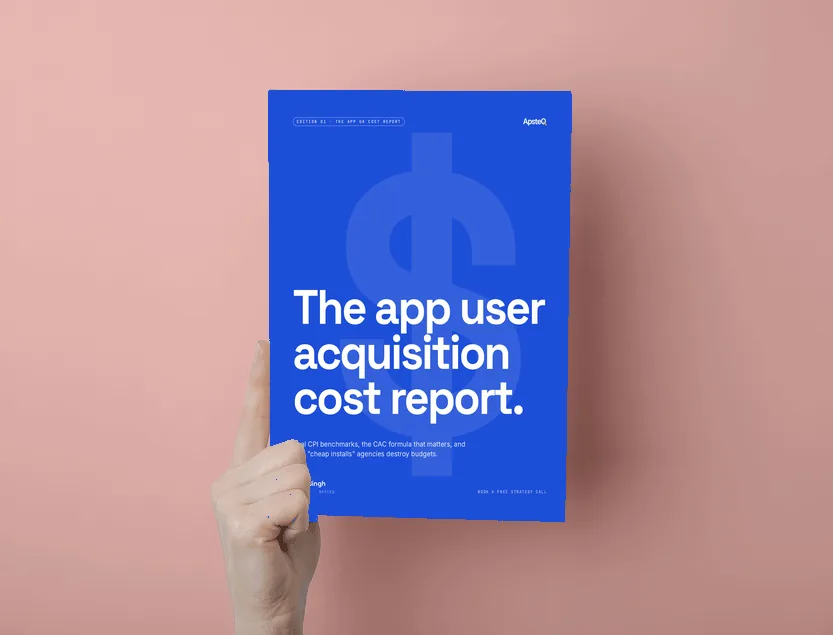
Free download
The App UA Cost Report 2026
Real cost-per-install and cost-per-trial benchmarks by channel and category, so you know what you should be paying.
Get the Free Ebook Browse all free guides