The $100 Billion App Install Ad Campaign Revolution
Mobile app advertising spending reached $362 billion globally in 2023 (Statista, 2024), yet 95% of new apps fail to generate meaningful revenue within their first year (Sensor Tower, 2024). The disconnect isn't about great apps lacking audiences, it's about poorly executed app install ad campaigns that burn through budgets without delivering quality users who actually engage and convert.
App install campaigns have evolved from simple download-focused strategies to sophisticated user acquisition funnels that prioritize lifetime value over vanity metrics. Today's successful app marketers understand that getting downloads is just the beginning, the real challenge lies in attracting users who will become paying customers, brand advocates, and long-term revenue drivers.
This comprehensive guide reveals the data-driven strategies, platform-specific tactics, and emerging technologies that separate high-performing app install campaigns from the 80% that waste their budgets on low-quality installs. You'll discover how to optimize for post-install events, leverage advanced targeting capabilities, and build campaigns that scale profitably across iOS and Android platforms.
Key Takeaways:
- Quality over quantity wins: Apps focusing on high-LTV users see 340% better retention rates than those prioritizing install volume (AppsFlyer, 2024)
- iOS vs Android performance varies significantly: iOS users spend 2.5x more in-app but cost 40% more to acquire
- Creative fatigue happens fast: App install ad creative performance drops 47% after 7 days without refresh (Meta, 2024)
- Attribution is becoming complex: iOS 14.5+ privacy changes reduced campaign visibility by up to 60% for some advertisers

What Makes App Install Ad Campaigns Different from Traditional Digital Advertising?
App install campaigns operate fundamentally differently from web-based advertising because they bridge multiple ecosystems, measurement frameworks, and user journey touchpoints. Unlike traditional digital ads that drive traffic to websites, app install campaigns must navigate app store algorithms, device-specific targeting parameters, and post-install attribution models that determine true campaign success.
The primary distinction lies in the measurement complexity. While web campaigns track clicks to conversions in a relatively straightforward path, app campaigns must account for store page views, download completion rates, first-open events, registration flows, and ongoing engagement metrics. The average app loses 77% of daily active users within the first 3 days (AppsFlyer, 2024), making post-install optimization critical for campaign profitability.
Platform-specific considerations add another layer of complexity. iOS campaigns benefit from Apple's App Store's high-converting environment but face attribution challenges due to privacy restrictions. Google Play campaigns typically see 23% higher install rates but 18% lower day-30 retention (Liftoff, 2024). This means campaign strategies must be tailored not just to the audience, but to the platform's unique characteristics and user behaviors.
The creative requirements also differ significantly from traditional advertising. App install ads must showcase functionality, user interface elements, and value propositions within seconds while complying with platform-specific guidelines. Successful campaigns often employ video content showing actual app usage, interactive elements that simulate the app experience, and social proof elements like ratings and download counts to overcome the friction inherent in asking users to download and install new software.
How Do You Structure High-Converting App Install Campaigns for Maximum ROI?
Effective app install campaign structure begins with defining clear user personas and mapping their journey from awareness to high-value customer. The most successful campaigns segment audiences based on behavioral indicators rather than demographics alone, targeting users who demonstrate intent signals like searching for competitor apps, engaging with relevant content, or exhibiting usage patterns that correlate with high lifetime value.
Campaign architecture should prioritize testing different funnel stages simultaneously. Start with broad awareness campaigns to identify which audiences show initial interest, then create retargeting campaigns for users who viewed your app store page but didn't install. Layer in re-engagement campaigns for users who installed but haven't reached key activation milestones. This multi-tiered approach ensures you're maximizing value from every stage of the user journey while gathering data to optimize future targeting.
Budget allocation requires careful balance between acquisition and retention efforts. Industry benchmarks suggest dedicating 70% of budget to new user acquisition and 30% to re-engagement campaigns (AppsFlyer, 2024), but high-performing apps often shift this ratio based on their user economics. Apps with strong organic growth might reduce acquisition spending and increase retention investment, while new apps typically need heavier upfront acquisition investment.
Creative testing forms the backbone of scalable campaign performance. Successful campaigns rotate creative assets every 5-7 days to combat fatigue, test different value propositions to identify resonant messaging, and maintain separate creative pools for different audience segments. Professional app marketing services often manage 20-30 creative variations simultaneously, using automated rules to pause underperforming assets and scale winning combinations. The key is maintaining systematic testing protocols that generate statistically significant results while avoiding the common mistake of making changes too frequently based on limited data.
App Install Campaign Performance Benchmarks Reveal Critical Success Patterns
Performance benchmarks for app install campaigns vary dramatically by vertical, platform, and geographic market, but certain patterns consistently separate high-performing campaigns from average ones. Understanding these benchmarks helps marketers set realistic expectations, identify optimization opportunities, and make data-driven budget decisions that improve overall campaign ROI.
Install rates across platforms show significant variation, with iOS campaigns averaging 2.1% install-to-impression ratios while Android campaigns typically see 3.4% rates (Liftoff, 2024). However, iOS users demonstrate higher post-install engagement, with day-7 retention rates of 18.2% compared to Android's 14.7% (Liftoff, 2024). Gaming apps consistently outperform other verticals in install rates but show lower long-term retention, while productivity and finance apps have lower install rates but significantly higher lifetime value per user.
Cost benchmarks reveal the true challenge in app marketing. Average cost per install ranges from $1.24 for casual games to $86.58 for finance apps (Singular, 2024). However, these numbers become meaningless without context of post-install user behavior. The most successful campaigns focus on cost per quality install, factoring in day-30 retention rates and early monetization indicators rather than optimizing purely for install volume.
Geographic performance patterns show surprising disparities that impact campaign strategy:
- US market: Highest acquisition costs but strongest monetization, with average revenue per user 3.2x higher than global average
- European markets: Balanced cost-to-value ratios with strong privacy-compliant attribution capabilities
- Asian markets: Lower acquisition costs but higher competition, requiring more sophisticated creative and targeting strategies
- Emerging markets: Significantly lower costs but longer payback periods, ideal for apps with strong organic viral mechanics
Seasonal patterns also influence campaign performance significantly. Q4 typically sees 34% higher install costs due to increased competition (AppsFlyer, 2024), but also delivers 28% higher user lifetime values (AppsFlyer, 2024). Understanding these cyclical patterns allows smart campaign managers to adjust budgets proactively, scaling spend during high-efficiency periods and reducing investment during expensive, low-quality periods.

What Are the Most Expensive Mistakes in App Install Campaign Management?
The costliest mistake in app install campaigns is optimizing for vanity metrics rather than business outcomes. Many marketers celebrate high install volumes without examining post-install user behavior, leading to campaigns that attract users who never open the app after installation or abandon it within hours. 20% of users never open an app after downloading it (AppsFlyer, 2024), representing pure waste in acquisition spending that could have been avoided with better targeting and post-install optimization.
Attribution model misunderstanding creates another expensive pitfall. With iOS 14.5+ privacy changes reducing deterministic attribution capabilities, many campaigns over-attribute performance to last-click channels while under-investing in upper-funnel awareness campaigns that drive consideration. Smart marketers implement incrementality testing to understand true channel contribution, but this requires sophisticated measurement setups that many companies skip due to perceived complexity.
Creative stagnation represents a hidden profit killer that compounds over time. Apps that don't refresh creative assets regularly see performance decay that happens gradually enough to go unnoticed until significant budget has been wasted. App install ad creative performance drops by an average of 47% after seven days without refresh (Meta, 2024), yet many campaigns run the same assets for weeks or months. The solution requires systematic creative production workflows and automated performance monitoring to catch decline early.
Platform-specific optimization failures cost apps millions in missed opportunities. Running identical campaigns across iOS and Android without accounting for platform differences wastes budget on both sides. iOS users respond better to premium positioning and feature-focused messaging, while Android users often convert more effectively with social proof and value-focused creative. Expert app marketing management recognizes these nuances and builds platform-specific strategies that maximize performance on each channel rather than applying one-size-fits-all approaches that optimize for neither.
The Future of App Install Campaigns: AI-Driven Personalization and Privacy-First Attribution
App install campaigns are evolving rapidly toward AI-driven personalization that creates unique user experiences at scale. By 2026, successful campaigns will leverage machine learning models that analyze user behavior patterns, device characteristics, and contextual signals to deliver personalized creative experiences that feel native to each user's mobile experience. Early implementations of AI-powered creative optimization are already showing 23% higher conversion rates (Liftoff, 2025).
Privacy-first attribution models will reshape how campaigns are measured and optimized. As third-party cookies disappear and device-level tracking becomes more restricted, successful app marketers will implement server-side attribution solutions, first-party data collection strategies, and incrementality testing frameworks that provide accurate performance insights without compromising user privacy. 70% of app marketing budgets will rely on privacy-compliant attribution by 2027 (Gartner, 2025), making early adoption of these technologies a competitive advantage.
Cross-platform campaign orchestration will become essential as users increasingly interact with brands across multiple devices and platforms before installing apps. Future campaigns will automatically adjust messaging, budget allocation, and creative selection based on where users are in their cross-device journey, creating seamless experiences that guide users toward installation regardless of their path to discovery.
The integration of augmented reality and interactive elements in app install ads will become standard practice for categories where user experience demonstration drives conversion. Apps that can show rather than tell their value proposition through immersive preview experiences will gain significant advantages in competitive markets where user attention spans continue to decrease.
How much should you budget for app install campaigns?
Budget allocation depends on your app category, target market, and business model. Most successful apps allocate 15-25% of projected revenue to user acquisition, with gaming apps often spending 30-40% due to higher competition. Start with $10,000 monthly minimum for meaningful testing across platforms, scaling based on positive unit economics and clear payback periods that align with your cash flow requirements.
Which platforms deliver the best ROI for app installs?
Platform performance varies by app category and target audience. Facebook and Google typically provide the largest volume and sophisticated targeting options, while Apple Search Ads often delivers the highest-quality iOS users at premium costs. TikTok and Snapchat excel for younger demographics, while LinkedIn performs well for B2B and productivity apps. Professional app marketing services test all relevant platforms to identify your optimal channel mix.
How do you measure app install campaign success?
Success measurement extends far beyond install volume to include day-1, day-7, and day-30 retention rates, cost per paying user, lifetime value ratios, and time-to-payback periods. Focus on cohort analysis that tracks user behavior over time rather than vanity metrics like total downloads. The most important metric is typically return on ad spend calculated over 90-180 day periods depending on your monetization model.
What's the biggest challenge in app install advertising today?
Attribution and privacy compliance create the biggest ongoing challenges, with iOS 14.5+ changes reducing campaign visibility and making optimization more difficult. Smart marketers implement multiple attribution solutions, focus on incrementality testing, and build first-party data collection strategies that provide insights while respecting user privacy. The key is adapting measurement approaches rather than abandoning sophisticated optimization.
Transform Your App's Growth with Data-Driven Install Campaigns
Successful app install campaigns require sophisticated strategy, continuous optimization, and deep understanding of user acquisition economics that go far beyond simple download generation. The apps that thrive in today's competitive landscape focus on attracting high-quality users, optimizing for post-install engagement, and building sustainable growth engines that scale profitably over time.
Key principles for campaign success include:
- Prioritizing user lifetime value over install volume in all optimization decisions
- Implementing platform-specific strategies that account for iOS and Android user behavior differences
- Maintaining systematic creative testing and refresh schedules to combat performance decay
- Building attribution frameworks that provide accurate insights while respecting privacy regulations
The future belongs to app marketers who embrace AI-driven personalization, privacy-first measurement, and cross-platform orchestration strategies that create seamless user experiences. Don't let your app get lost in the noise of generic campaigns that prioritize volume over value. Book a call with our app marketing experts to build campaigns that attract the right users and drive sustainable growth for your app.
Frequently Asked Questions
What's the average cost per install across ad platforms?
Google App Campaigns: $0.50-2.00; Meta (Facebook/Instagram): $0.30-1.50; TikTok: $0.20-1.00. Costs vary by category, geography, and audience. Health/finance apps pay 3x more than gaming. Seasonal spikes add 20-40% during Q4.
How long does it take to optimize an app install campaign?
Google and Meta need 2-4 weeks of data (minimum 50-100 conversions) to train Smart Bidding. TikTok requires 1-2 weeks. Budget steadily during learning phase; don't cut campaigns prematurely or optimization resets.
Should I run campaigns on Google Play, Apple App Store, or both?
Run both if budget allows; iOS converts 30-50% higher but costs 2-3x more per install. iOS users have higher LTV. Start with iOS in tier-1 countries, expand to Android as budget scales. Geo matters significantly.
What's the difference between app install campaigns and app promotion campaigns?
Install campaigns focus on first download; promotion campaigns target existing users for in-app events or repeat actions. Promotion costs 40-60% less but drives lower ROAS if your retention is weak. Fix retention before scaling promotion.
How do I prevent fraud in app install campaigns?
Monitor install velocity (installs/hour), IP concentrations, and device type distributions. Use platform fraud detection (Facebook Integrity, Google Play Protect). Cross-check with analytics SDK data (Firebase, AppsFlyer). Expect 5-15% fraudulent installs if unmonitored.
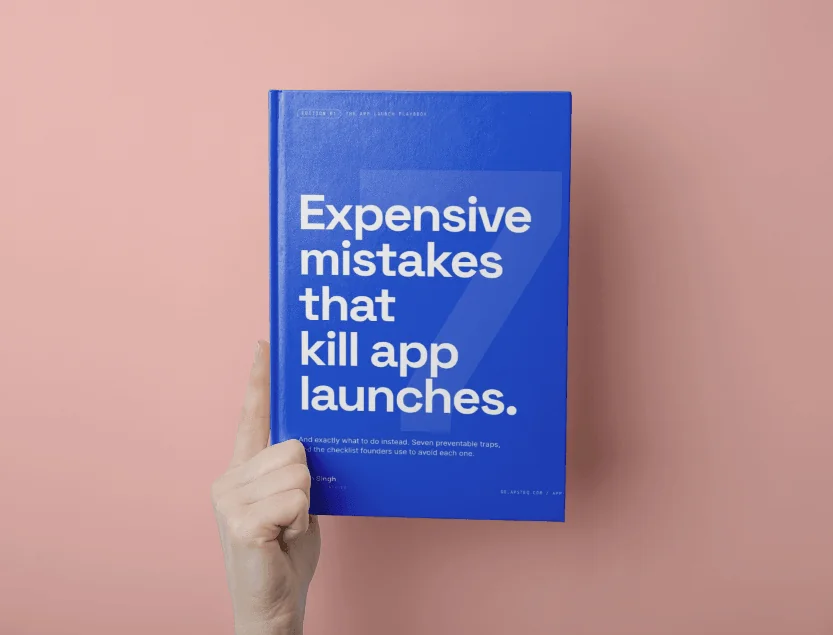
Free download
7 Expensive Mistakes That Kill App Launches
The launch errors we see most often across 300+ app engagements, and what to do instead.
Get the Free Ebook Browse all free guides