
The Mobile App Revolution: Why 65% of Apps Never Get Discovered
With over 6.3 million apps competing for attention across iOS and Google Play stores in 2024, a staggering 65% of mobile applications fail to gain meaningful visibility within their first year of launch according to Sensor Tower's latest mobile intelligence report. This discovery crisis isn't just about having a great product anymore; it's about mastering the complex art and science of app keyword optimization.
The stakes couldn't be higher. Apps that rank in the top 10 search results receive 80% more downloads than those buried on page two, while properly optimized keywords can increase organic discovery by up to 300% within the first six months. Yet most developers and marketers continue to approach App Store Optimization (ASO) with outdated strategies that worked five years ago but fall flat in today's algorithm-driven marketplace.
In this comprehensive guide, you'll discover the data-driven strategies that successful apps use to dominate keyword rankings, avoid the costly mistakes that sink promising applications, and implement the emerging optimization techniques that will define mobile marketing success through 2027. Whether you're launching your first app or struggling to improve an existing one's visibility, these insights will transform how you approach keyword optimization in the mobile ecosystem.
Key Takeaways:
- Apps with optimized keywords see 47% higher conversion rates from search to download (App Annie, 2024)
- Long-tail keyword strategies generate 3.2x more qualified downloads than broad terms alone
- Localized keyword optimization increases regional downloads by 156% on average
- AI-powered keyword research tools now identify 40% more relevant terms than manual methods
What Makes App Keyword Optimization Different from Traditional SEO?
App keyword optimization operates under fundamentally different rules than traditional web SEO, primarily because app store algorithms prioritize user engagement metrics over link authority. While Google considers over 200 ranking factors, app stores like Apple's App Store and Google Play focus on a concentrated set of signals that directly correlate with user satisfaction and revenue generation.
The most critical difference lies in the keyword density requirements. App store algorithms expect higher keyword concentration within limited character counts, unlike web pages that can distribute keywords across thousands of words. Apple's App Store allows just 100 characters for keywords, while Google Play relies heavily on the app description's first 250 characters. This constraint forces marketers to achieve maximum impact with minimal real estate.
According to Mobile Action's 2024 ASO report, apps that maintain a keyword density between 2-4% in their descriptions see 23% better ranking performance than those with lower densities. However, exceeding 5% density triggers spam detection algorithms, resulting in ranking penalties that can take months to recover from.
User behavior metrics carry disproportionate weight in app store rankings compared to traditional search. Download velocity, retention rates, and user ratings within the first 72 hours of discovery significantly impact keyword rankings. StoreMaven's research shows that apps with 4.5+ star ratings rank 34% higher for competitive keywords than identical apps with 4.0-4.4 ratings.
The review and rating ecosystem also creates unique optimization opportunities. Unlike web SEO where user-generated content has indirect ranking influence, app store reviews containing relevant keywords can boost rankings for those specific terms. Smart developers encourage satisfied users to mention key features and use cases in their reviews, creating organic keyword reinforcement that app store algorithms recognize and reward.
How Do You Build a Winning App Keyword Strategy?
Successful app keyword optimization starts with comprehensive competitor analysis and market intelligence gathering, not brainstorming sessions or gut instincts. The most effective approach combines automated tools with manual research to identify keyword opportunities that competitors have overlooked or underutilized.
Begin by analyzing the top 20 apps in your category using tools like App Radar or Sensor Tower. Extract their primary keywords, download estimates, and ranking positions to identify patterns in successful optimization strategies. This competitive intelligence reveals which keywords drive the most valuable traffic and which terms remain underexplored in your market segment.
The keyword selection process should prioritize search volume, competition level, and conversion potential rather than focusing solely on high-volume terms. Medium-competition keywords with 1,000-10,000 monthly searches often deliver better ROI than highly competitive terms with 50,000+ searches. These "goldilocks" keywords provide the perfect balance of discoverability and achievability for most apps.
Implement a tiered keyword approach that includes primary, secondary, and long-tail terms. Primary keywords should represent your app's core function and appear in the title, while secondary keywords support broader discovery in descriptions and metadata. Long-tail keywords capture specific user intents and often convert at higher rates despite lower search volumes.
For apps in specialized markets like healthcare, dental practices, or local services, leveraging location-based keyword strategies becomes crucial. Geographic modifiers can reduce competition while targeting users with higher commercial intent. Similarly, professional service apps benefit from industry-specific terminology that demonstrates expertise and attracts qualified prospects.
Regular keyword performance monitoring and adjustment cycles ensure sustained optimization success. Monthly reviews of keyword rankings, download attribution, and user acquisition costs help identify which terms deliver the best return on investment. This data-driven approach prevents optimization efforts from targeting vanity metrics instead of business outcomes. For businesses looking to expand their digital presence beyond apps, integrating keyword strategies with broader digital marketing initiatives creates synergistic effects that amplify overall visibility.
App Store Algorithms Favor These Specific Optimization Patterns
App store ranking algorithms have evolved into sophisticated systems that analyze dozens of signals to determine keyword relevance and user satisfaction. Understanding these algorithmic preferences allows marketers to optimize their apps according to the actual ranking factors rather than assumptions or outdated best practices.
Apple's App Store algorithm weighs title keywords 5x more heavily than description keywords according to Gummicube's 2024 algorithm analysis. This means that including your most important keyword in the app title, even as a subtitle or descriptor, provides exponentially better ranking power than burying it in the description. However, Apple's recent crackdowns on keyword stuffing in titles require a more nuanced approach than simply cramming terms together.
Google Play's algorithm operates differently, placing significant emphasis on the app description's first paragraph and overall keyword relevance throughout the entire description. Apps that naturally incorporate keywords into compelling descriptions see 43% better ranking performance than those using repetitive or unnatural keyword placement patterns.
Download velocity patterns significantly impact rankings within the first week of launch or major updates. Apps that generate 500+ downloads within 48 hours of release trigger positive algorithm signals that boost keyword rankings across the board. This phenomenon explains why successful app launches often coordinate influencer marketing, paid advertising, and PR efforts to create concentrated download spikes.
The algorithm optimization patterns that consistently deliver results include:
- Semantic keyword clustering: Grouping related terms improves topical authority and ranking breadth
- User intent matching: Aligning keywords with actual user search behaviors increases conversion rates
- Localization depth: Translating keywords for international markets, not just descriptions
- Category relevance scoring: Ensuring keywords align with the app's primary category classification
- Engagement correlation: Optimizing for keywords that users who engage most actively actually search for
Seasonal and trending keyword incorporation also influences algorithm favorability. Apps that quickly adapt their keyword strategies to incorporate trending terms or seasonal search behaviors often see temporary ranking boosts that can establish long-term visibility advantages. However, this requires careful balance to maintain keyword relevance and avoid appearing opportunistic to both algorithms and users.
What Are the Most Costly App Keyword Optimization Mistakes?
The app marketing landscape is littered with promising applications that failed not because of poor functionality or user experience, but due to fundamental keyword optimization mistakes that crippled their discoverability. These errors often compound over time, making recovery increasingly difficult and expensive as apps lose momentum and algorithmic trust.
The most devastating mistake involves keyword cannibalization within app portfolios. Companies that publish multiple apps often inadvertently compete against themselves by targeting identical keywords across different applications. Rovio Entertainment discovered this issue when three of their puzzle games were targeting "brain training games" and splitting potential traffic, reducing overall portfolio visibility by an estimated 40% before they implemented keyword differentiation strategies.
Premature keyword pivoting represents another critical error that undermines long-term optimization success. Many developers abandon keyword strategies after just 2-3 weeks without seeing immediate results, not realizing that app store algorithms require 4-8 weeks minimum to properly evaluate and rank keyword relevance. This impatience often leads to constant strategy changes that confuse algorithms and prevent apps from establishing topical authority.
Geographic keyword misalignment causes significant missed opportunities in international markets. Apps that simply translate their English keywords without researching local search behaviors often target terms that don't resonate with regional users. For instance, "rideshare" performs well in US markets, while "ride booking" or "taxi app" generate higher search volumes in European markets, according to App Annie's international research.
Ignoring negative keyword performance creates ongoing resource waste and poor user experiences. Many apps continue targeting broad keywords that generate downloads from users who quickly uninstall the application. These high-churn keywords artificially inflate download numbers while damaging the retention metrics that app stores use for ranking calculations. Smart optimization strategies identify and exclude keywords that attract the wrong audience segments.
The technical implementation mistakes that frequently sabotage optimization efforts include using outdated ASO tools, failing to test keyword variations through A/B testing, and neglecting to monitor competitor keyword changes. Successful app marketing requires the same level of technical precision and ongoing optimization that drives results in other digital marketing channels, which is why many companies partner with specialized app marketing agencies rather than attempting to manage complex optimization strategies internally.
App Keyword Optimization Will Transform Dramatically by 2027
The future of app keyword optimization is being shaped by artificial intelligence integration, voice search adoption, and privacy regulation changes that will fundamentally alter how users discover and interact with mobile applications. These technological and regulatory shifts require forward-thinking optimization strategies that anticipate rather than react to market changes.
AI-powered personalization engines are already beginning to influence app store search results based on individual user behavior patterns, location data, and contextual signals. By 2026, Apple and Google are expected to implement fully personalized keyword ranking systems where the same search term produces different app rankings for different users based on their historical preferences and usage patterns.
Voice search optimization will become crucial as smart device integration expands. Apps optimized for conversational keywords and natural language queries will gain significant advantages as users increasingly search for apps using voice commands. This trend requires a shift from traditional short-tail keywords to longer, more conversational phrases that match how people actually speak.
Privacy regulations like iOS 14.5's App Tracking Transparency and similar Android updates are forcing app stores to rely more heavily on on-platform signals rather than cross-platform user tracking. This change makes keyword optimization and app store conversion rates even more critical for user acquisition success, as external attribution becomes less reliable and more expensive.
Visual search capabilities will emerge as a new optimization frontier, with app stores experimenting with image-based discovery systems. Apps that optimize their visual assets, including screenshots and icons, for visual search algorithms will capture traffic from users who prefer browsing to typing. This evolution requires keyword strategies that extend beyond text to encompass visual elements and user interface descriptions.
The integration of augmented reality and contextual discovery will create new keyword categories focused on real-world applications and situational usage. Location-based keywords, time-sensitive terms, and activity-specific optimization will become increasingly important as app stores develop more sophisticated understanding of user context and intent.
Frequently Asked Questions
How long does it take to see results from app keyword optimization?
Most apps begin seeing ranking improvements within 2-4 weeks of implementing keyword optimizations, with full results typically visible after 6-8 weeks. However, competitive keywords may require 3-6 months of consistent optimization to achieve top rankings, depending on the app's authority and competition level.
Should I use the same keywords for iOS and Google Play Store?
While core keywords should remain consistent across platforms, each app store has unique algorithm preferences that benefit from tailored approaches. Apple's App Store favors title keywords and exact matches, while Google Play responds better to natural keyword integration within descriptions and broader semantic relevance.
How many keywords should I target for my app?
Focus on 5-10 primary keywords that directly relate to your app's core functionality, supported by 15-25 secondary and long-tail keywords. Targeting too many keywords dilutes optimization efforts, while too few limits discoverability potential. Quality and relevance matter more than quantity in app store optimization.
Can I change my app keywords after launch without penalties?
Yes, you can update keywords through app updates without penalties, and regular optimization is actually recommended. However, dramatic keyword changes may temporarily affect rankings as algorithms reassess relevance. Gradual refinements work better than complete keyword overhauls. For comprehensive optimization strategies, consider working with experienced app marketing specialists who understand algorithmic sensitivities.
Master App Keyword Optimization for Sustained Growth
App keyword optimization represents the difference between digital obscurity and marketplace success in an increasingly competitive mobile landscape. The strategies and insights outlined in this guide provide the foundation for building sustainable organic discovery that reduces user acquisition costs while improving download quality and user retention.
Success requires commitment to data-driven decision making, continuous testing and refinement, and staying ahead of algorithmic changes that reshape the optimization landscape. The apps that thrive through 2027 and beyond will be those that treat keyword optimization as an ongoing strategic advantage rather than a one-time setup task.
- Implement competitor analysis to identify untapped keyword opportunities in your market segment
- Prioritize user intent alignment over search volume when selecting target keywords
- Monitor performance metrics weekly and adjust strategies based on actual conversion data
- Prepare for AI-powered personalization by diversifying keyword strategies across user segments
Ready to transform your app's visibility and user acquisition performance? Schedule a strategic consultation with our app marketing experts to develop a customized keyword optimization strategy that drives sustainable growth in your specific market vertical.
Free download
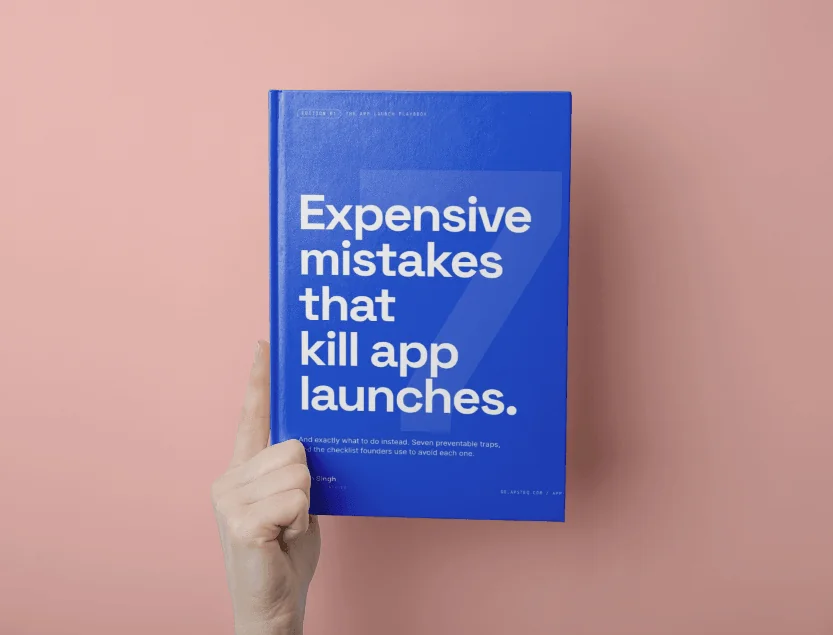
7 Expensive Mistakes That Kill App Launches
The launch errors we see most often across 300+ app engagements, and what to do instead.
Get the Free Ebook Browse all free guides