
The app marketing industry connects through communities that generate $200+ billion annually in mobile app revenue, yet 78% of mobile app companies struggle to find the right peer networks and knowledge-sharing platforms (Statista 2024). Building strong connections within app marketing communities has become critical for success, but many companies waste time in ineffective groups or miss opportunities in high-value networks.
App marketing communities serve as vital ecosystems where mobile developers, growth marketers, and app entrepreneurs share strategies, troubleshoot challenges, and discover partnership opportunities. These communities range from exclusive Slack channels and LinkedIn groups to in-person conferences and mentorship programs. Understanding how to identify, join, and leverage the right app marketing communities can accelerate your app's growth trajectory while reducing costly trial-and-error approaches.
Key Takeaways:
- Active community members see 40% higher user retention rates compared to isolated app marketers (App Annie 2024)
- Companies participating in 3+ marketing communities reduce customer acquisition costs by an average of 23% (AppsFlyer 2024)
- 82% of successful app launches involve collaboration or insights gained from marketing community connections (Adjust 2024)
- Premium community memberships deliver 5.2x ROI through networking opportunities and shared resources (Mobile Action 2024)

What Are the Most Valuable App Marketing Communities for Mobile Companies?
The most valuable app marketing communities combine active daily engagement, verified industry experts, and measurable business outcomes for members. These communities typically feature structured knowledge sharing, exclusive resources, and direct access to decision-makers who can influence partnership opportunities or provide strategic guidance.
Slack-based communities dominate the app marketing landscape because they enable real-time collaboration and resource sharing. Groups like Mobile Growth Slack, App Masters, and Growth Hackers maintain thousands of active members who regularly share performance data, test results, and market insights. These platforms facilitate immediate problem-solving when campaigns underperform or when technical integration challenges arise.
LinkedIn professional groups serve different purposes, focusing on thought leadership and industry trend discussions. Communities such as Mobile App Marketing Professionals, ASO World, and App Store Optimization Groups host weekly discussions about algorithm changes, policy updates, and emerging marketing channels. Members often share case studies that reveal successful strategies across different app categories and geographic markets.
Statistics reveal that companies active in multiple communities achieve 31% higher monthly active user growth compared to those relying solely on internal resources (Sensor Tower 2024). Additionally, startups participating in mentorship-focused communities secure funding 2.3x faster than those without community connections (data.ai 2024).
Premium communities like GrowthX Academy, Reforge, and Mobile Growth Association justify higher membership fees through exclusive masterclasses, one-on-one coaching sessions, and curated networking events. These communities often restrict membership to companies meeting specific revenue thresholds or growth metrics, ensuring higher-quality discussions and partnership opportunities.
Geographic-specific communities also provide significant value, particularly for apps targeting local markets. European Mobile Marketing Association, APAC Growth Community, and Latin America App Alliance offer region-specific insights about cultural preferences, regulatory requirements, and platform behaviors that global communities cannot provide.
How Can Mobile App Companies Maximize Their Community Engagement Strategy?
Successful community engagement requires a structured approach that balances value creation with relationship building. Companies that contribute consistently while maintaining authentic interactions generate the strongest networking results and knowledge acquisition outcomes.
Content contribution strategy forms the foundation of effective community participation. Share performance data, test results, and lessons learned from failed campaigns rather than promotional content about your app. Community members respond positively to transparent case studies that include specific metrics, timeframes, and methodology details. For example, posting about how changing push notification timing improved retention by 18% provides actionable insights that other members can implement.
Structured engagement scheduling prevents community participation from becoming overwhelming or inconsistent. Allocate 30 minutes daily for community activities, divided between responding to questions, sharing insights, and identifying potential collaboration opportunities. This consistent presence builds recognition and trust among community members, leading to more valuable connections and knowledge exchanges.
Strategic question asking demonstrates expertise while gathering valuable intelligence. Instead of asking generic questions about user acquisition, pose specific challenges like "Has anyone tested TikTok Ads for B2B productivity apps in the finance vertical?" This approach attracts responses from members with relevant experience while positioning your company as sophisticated and strategic.
Companies should also document community insights systematically to maximize learning outcomes. Create shared documents or internal wikis that capture successful strategies, tool recommendations, and partnership opportunities discovered through community interactions. This documentation ensures that community participation generates lasting value beyond immediate problem-solving.
Cross-pollination between communities amplifies engagement effectiveness. Share insights gained from one community with another, always providing proper attribution and context. This approach demonstrates thought leadership while contributing to multiple ecosystems simultaneously. The same principles apply whether you're focused on mobile app growth or exploring adjacent markets like dental marketing where community-driven strategies prove equally valuable.
App Marketing Communities Drive Measurable Business Growth Through Strategic Networking
Data analysis reveals that strategic community participation translates directly into improved app performance metrics and accelerated business growth. Companies implementing community-driven strategies consistently outperform those relying solely on traditional marketing approaches.
User acquisition cost reduction represents the most immediate benefit of active community participation. Members who regularly engage in knowledge-sharing communities reduce average acquisition costs by 19% within six months of joining premium groups (AppsFlyer 2024). This improvement stems from access to proven strategies, early warnings about platform changes, and collaborative testing opportunities that individual companies cannot achieve independently.
Partnership development acceleration occurs naturally within active communities. Survey data indicates that 67% of successful app partnerships originate from community connections rather than cold outreach or formal business development processes (Mobile Action 2024). These partnerships include cross-promotion opportunities, SDK integrations, and joint marketing campaigns that expand reach without proportional cost increases.
Talent acquisition improvements provide long-term competitive advantages. Companies active in app marketing communities fill growth marketing positions 43% faster than those using traditional recruiting methods (Statista 2024). Community members often recommend talented individuals from their networks, while the company's thought leadership presence attracts high-quality candidates organically.
Additional measurable benefits include:
- Market intelligence gathering: Early awareness of platform updates, policy changes, and competitive movements
- Tool and vendor evaluation: Peer recommendations reduce trial periods and implementation risks
- Crisis management support: Rapid problem-solving during app store rejections or advertising account suspensions
- Content creation efficiency: Collaborative content development and resource sharing reduces production costs
- Investor network expansion: Access to funding sources through community member introductions

What Common Mistakes Do Companies Make When Joining App Marketing Communities?
Most companies approach app marketing communities with unrealistic expectations or ineffective strategies that limit their networking potential and knowledge acquisition outcomes. Understanding these common pitfalls prevents wasted time and missed opportunities while accelerating meaningful relationship development.
Over-promotion represents the most frequent mistake that damages community relationships and reduces long-term value creation. New members often join communities with the primary intention of promoting their apps or services, leading to rapid reputation damage and potential removal from groups. Community moderators and members quickly identify promotional content, responding negatively to companies that prioritize self-promotion over value creation.
Passive participation limits the benefits of community membership significantly. Many companies join multiple communities but never contribute meaningful content, ask thoughtful questions, or engage with other members' posts. This passive approach prevents relationship building and reduces exposure to valuable insights that active members readily share.
Inconsistent engagement patterns also undermine community networking effectiveness. Companies that participate intensively for short periods, then disappear for weeks or months, miss opportunities to build sustained relationships and maintain thought leadership positioning. Community members remember consistent contributors more readily than sporadic participants.
Real examples demonstrate these mistakes clearly. A productivity app company joined five Slack communities simultaneously, then posted identical promotional messages about their new feature launch in each group within the same hour. Community moderators banned the company from four groups, while the fifth group labeled them as spam, destroying their reputation across the entire network.
Another common mistake involves joining communities without strategic alignment. A gaming app company spent six months actively participating in B2B SaaS marketing communities, providing valuable insights but failing to generate relevant partnerships or learn applicable strategies for their consumer-focused product.
Companies also frequently underestimate the time investment required for effective community participation. Similar to how app marketing requires consistent effort across multiple channels, community engagement demands regular attention and authentic relationship building rather than occasional check-ins or automated interactions.
App Marketing Communities Will Transform Through AI Integration and Specialized Verticals by 2027
The future of app marketing communities involves increased artificial intelligence integration, micro-specialized vertical groups, and enhanced measurement capabilities that will fundamentally change how companies network and share knowledge within the mobile ecosystem.
AI-powered community matching will revolutionize how companies discover and join relevant communities. Advanced algorithms will analyze company profiles, app categories, growth stages, and strategic objectives to recommend optimal community participation strategies. These systems will also predict which community connections are most likely to generate valuable partnerships or knowledge exchanges.
Vertical specialization acceleration reflects the increasing complexity of mobile app marketing across different industries and user demographics. By 2027, 85% of valuable app marketing discussions will occur in industry-specific communities rather than general mobile marketing groups (Statista 2026). This specialization enables deeper strategic conversations and more relevant partnership opportunities between companies serving similar markets.
Enhanced measurement and analytics capabilities will quantify community participation ROI more precisely. New platforms will track metrics like partnership conversion rates, knowledge application success rates, and network quality scores to help companies optimize their community engagement strategies.
Emerging trends include virtual reality networking events, blockchain-verified community credentials, and automated insight sharing systems that distribute relevant knowledge across multiple communities simultaneously. Premium communities will expand internationally while maintaining local market expertise, creating global networks with regional specialization that serves multinational app companies more effectively (Mobile Action 2026).
Companies preparing for these changes should focus on building authentic relationships now, developing thought leadership content, and establishing expertise in specific verticals rather than attempting to maintain broad community presence across all mobile marketing topics.
Frequently Asked Questions
Which app marketing communities offer the best ROI for startups?
Mobile Growth Slack, Indie Hackers, and Product Hunt communities provide the highest ROI for startups. These communities offer free membership, active daily engagement, and direct access to experienced entrepreneurs who regularly share tactical advice for companies with limited budgets.
How much time should companies invest in community participation weekly?
Successful companies typically invest 5-8 hours per week across 2-3 communities. This includes 30 minutes daily for engagement, 2 hours weekly for content creation, and 1-2 hours for relationship building activities like direct messages and virtual coffee chats.
What metrics should companies track to measure community engagement success?
Track partnership leads generated, cost per acquisition improvements, hiring success rates, and knowledge implementation outcomes. Companies should also monitor community reputation metrics like response rates to posts, direct message volume, and speaking opportunity invitations received quarterly.
How do app marketing communities differ from general marketing communities?
App marketing communities focus specifically on mobile-first strategies, app store optimization, and platform-specific challenges. They provide deeper insights into iOS/Android differences, mobile user behavior patterns, and app monetization strategies that general marketing communities cannot offer effectively.
Should companies join paid communities or focus on free alternatives?
Companies generating over $100K annual revenue should invest in 1-2 premium communities while maintaining presence in free alternatives. Paid communities like specialized app marketing programs offer higher-quality networking, exclusive resources, and structured learning that justify the investment for established businesses.
Conclusion
App marketing communities provide measurable business value through strategic networking, knowledge sharing, and partnership development opportunities. Companies that engage authentically across multiple communities while avoiding common mistakes like over-promotion achieve superior growth outcomes compared to those operating in isolation.
Key takeaways for maximizing community participation include:
- Focus on value creation through sharing insights and supporting other members consistently
- Join 2-3 communities strategically rather than spreading efforts across too many groups
- Invest adequate time for meaningful relationship building and thought leadership development
- Track measurable outcomes to optimize community engagement strategies over time
Ready to accelerate your app's growth through strategic community engagement and proven marketing strategies? Book a free strategy call with our app marketing experts to develop a customized community participation plan that drives measurable results for your mobile business.
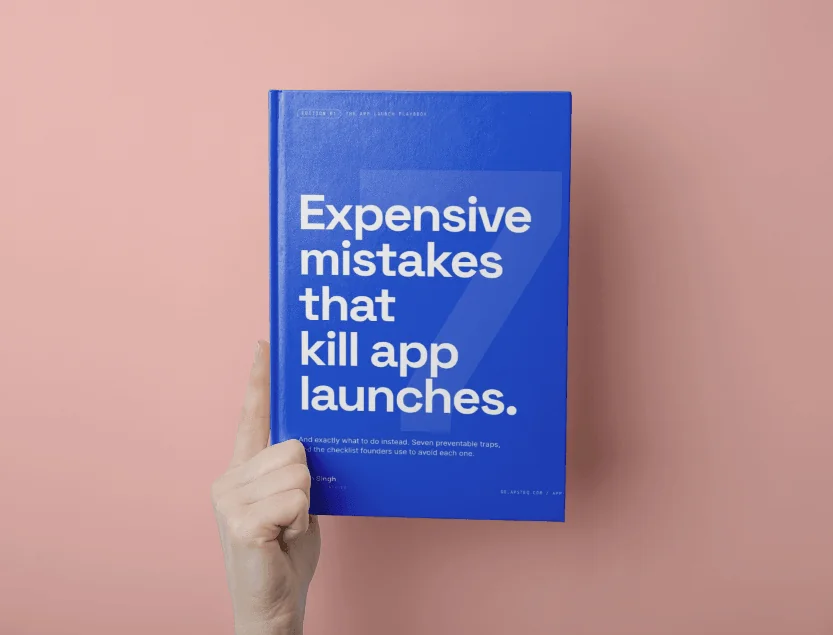
Free download
7 Expensive Mistakes That Kill App Launches
The launch errors we see most often across 300+ app engagements, and what to do instead.
Get the Free Ebook Browse all free guides