
The mobile gaming industry generated $103.5 billion in revenue during 2023, representing over 50% of the entire global gaming market according to Newzoo. Yet despite this massive opportunity, 95% of mobile games fail to generate significant revenue, with most developers struggling to cut through the noise of over 500,000 games available on app stores today.
The challenge isn't creating great games anymore, it's getting them discovered. With Apple and Google constantly updating their algorithms and user acquisition costs skyrocketing by 60% since 2020, traditional app marketing approaches are becoming obsolete. Game developers need sophisticated, data-driven strategies that go beyond basic app store optimization.
This comprehensive guide reveals the proven app marketing strategies that successful game studios use to achieve sustainable growth. You'll discover how to optimize your user acquisition funnel, leverage emerging platforms like TikTok and Snapchat for viral growth, and implement retention strategies that turn casual players into loyal, high-value users who drive long-term revenue.
Key Takeaways:
- Mobile games with proper pre-launch marketing see 73% higher Day 1 retention rates compared to those without
- TikTok advertising for games delivers 3x higher engagement rates than traditional social platforms in 2024
- Games that implement personalized push notifications experience 88% better 30-day retention
- Cross-platform promotion strategies can reduce user acquisition costs by up to 45%

What Makes Game App Marketing Different from Other App Categories?
Game app marketing operates in a fundamentally different ecosystem compared to utility or productivity apps, requiring specialized strategies that account for entertainment value, viral mechanics, and user behavior patterns unique to gaming. Games compete on engagement and emotional connection rather than functional utility, making traditional conversion metrics insufficient for measuring success.
The gaming audience demonstrates distinct behavioral characteristics that impact marketing effectiveness. According to App Annie's 2023 State of Mobile Gaming report, mobile gamers spend 4.8 hours per day on their devices, with 23% of that time dedicated to gaming activities. This high engagement creates opportunities for deeper user relationships but also means competition for attention is fierce, requiring more sophisticated retention strategies.
Unlike other app categories, games benefit significantly from social proof and community-driven growth. Word-of-mouth referrals account for 64% of game downloads according to Sensor Tower data from 2024, compared to just 23% for productivity apps. This viral potential means game marketers must focus heavily on creating shareable moments and fostering community engagement.
Successful game marketing also requires understanding the freemium monetization model. While 95% of mobile game revenue comes from in-app purchases, the average conversion rate to paying users is only 2.3%. This means game marketers must optimize for both acquisition volume and long-term engagement, balancing user experience with monetization opportunities. The most successful games implement gradual monetization strategies that enhance rather than interrupt gameplay.
Seasonal trends significantly impact game marketing effectiveness. Mobile game downloads typically spike 40% during November and December according to AppsFlyer data, while summer months see increased engagement with casual and social games. Understanding these patterns allows marketers to optimize budget allocation and campaign timing for maximum impact.
How Do You Build an Effective Pre-Launch Marketing Strategy?
Pre-launch marketing determines whether your game will achieve sustainable growth or disappear into the crowded app store ecosystem, with successful campaigns generating 3x more Day 1 downloads compared to games that launch without proper preparation. The most effective pre-launch strategies begin 12-16 weeks before release, building anticipation through carefully orchestrated touchpoints across multiple channels.
Start by creating a compelling game identity that resonates with your target audience. Develop a unique value proposition that differentiates your game from competitors, focusing on specific gameplay mechanics or narrative elements that create emotional connection. According to Unity's 2024 Gaming Report, games with clear, differentiated positioning see 156% higher pre-registration rates than those with generic messaging.
Leverage soft launch strategies to validate your marketing approach and gather crucial user feedback. Release your game in smaller markets like Canada, Australia, or Philippines to test user acquisition channels, optimize onboarding flows, and refine monetization mechanics. Games that conduct thorough soft launches before global release achieve 67% better long-term retention rates according to GameAnalytics data from 2023.
Build an email list and social media following before launch to ensure you have an engaged audience ready to download on Day 1. Create behind-the-scenes content showcasing development progress, character designs, and gameplay snippets to maintain interest throughout the pre-launch period. Partner with gaming influencers and YouTube creators who align with your target demographic to expand reach and build credibility.
Our app marketing specialists recommend implementing a beta testing program that serves dual purposes of quality assurance and community building. Recruit 500-1,000 beta testers through gaming forums, Discord servers, and social media to provide feedback while creating a core group of advocates who will promote your game at launch. Beta testers typically generate 8x more word-of-mouth referrals than regular users.
Advanced User Acquisition Strategies Drive Sustainable Growth
Modern user acquisition for mobile games requires sophisticated channel diversification and performance optimization that goes far beyond traditional Facebook and Google advertising. The most successful game studios allocate budget across 6-8 different acquisition channels to reduce dependency risk and capture users across various touchpoints in their discovery journey.
TikTok has emerged as the dominant platform for game marketing in 2024, delivering 3.2x higher engagement rates compared to Instagram and Facebook according to Adjust's latest mobile marketing report. Short-form video content showcasing gameplay highlights, character interactions, and user-generated content performs exceptionally well with Gen Z and Millennial audiences who comprise 78% of mobile gaming revenue.
Successful TikTok campaigns for games focus on authentic, entertaining content rather than polished advertisements. Create videos that demonstrate actual gameplay, show unexpected moments or outcomes, and encourage user participation through challenges or trends. Games that consistently post 3-5 TikTok videos weekly see 247% higher organic reach than those posting sporadically.
Key performance indicators for game user acquisition differ significantly from other app categories:
- Day 1 retention rate: Industry benchmark is 25-30% for casual games, 40-45% for strategy games
- Session length: Target 8-12 minutes for hypercasual games, 20-30 minutes for mid-core games
- Time to first purchase: Optimize for conversions within 72 hours of install
- Lifetime Value (LTV): Casual games average $1.96, strategy games $8.44 according to 2024 AppsFlyer data
- Cost Per Install (CPI): Ranges from $0.85 for hypercasual to $4.50 for strategy games
Cross-promotion networks specifically designed for games offer cost-effective acquisition opportunities often overlooked by developers. Platforms like Chartboost, ironSource, and Unity Ads allow you to promote your game within other games, targeting users already engaged with similar genres. This approach typically reduces user acquisition costs by 35-45% while maintaining quality user metrics.
Implement deep linking strategies that direct users to specific game levels or features rather than generic app store pages. Games using deep links in their advertising campaigns see 73% higher conversion rates according to Branch's 2023 mobile linking report, as users can immediately experience core gameplay mechanics without friction.
What Are the Biggest Game Marketing Mistakes That Kill Growth?
The most devastating game marketing mistake is launching without proper app store optimization, causing potentially viral games to remain invisible in search results and missing 67% of potential organic downloads. Games that neglect ASO typically see 89% lower organic discovery rates compared to those with optimized store listings, according to Sensor Tower's 2024 analysis of 50,000+ mobile games.
Many developers underestimate the importance of localization beyond simple translation. Successful global games adapt not just language but cultural references, color schemes, and even gameplay mechanics to resonate with different markets. For example, puzzle games that incorporate local festivals or landmarks in Asian markets see 34% higher retention rates than generic versions. King's Candy Crush demonstrates this perfectly by creating region-specific events and characters that drive engagement across diverse markets.
Another critical error is focusing exclusively on install metrics while ignoring engagement and retention. Games that optimize purely for download volume often attract low-quality users who churn quickly, creating unsustainable unit economics. The most successful game marketing campaigns balance acquisition volume with user quality, targeting players likely to engage long-term rather than maximizing vanity metrics.
Timing mistakes can devastate otherwise solid marketing campaigns. Launching major updates or marketing pushes during competitor releases, major gaming events, or holiday periods when user attention is divided typically results in 45% lower campaign performance. Monument Valley 2's delayed launch during a quiet period in 2017 contributed to its success, avoiding competition with major releases while capturing focused user attention.
Many developers also fail to leverage user-generated content effectively. Games with active social sharing features and community engagement see 312% more organic growth than those relying solely on paid advertising according to Unity Analytics. Clash of Clans and Among Us demonstrate how fostering community creation and sharing drives viral growth without massive advertising spend.
Our app marketing team frequently encounters developers who neglect post-launch marketing entirely, assuming organic growth will sustain their game indefinitely. This approach fails in today's competitive environment where sustained marketing effort is required to maintain visibility and user acquisition momentum. Games that maintain consistent marketing activity post-launch see 156% better long-term revenue performance.
Future-Proofing Your Game Marketing for 2026-2027
The mobile gaming marketing landscape will undergo significant transformation by 2026-2027, driven by artificial intelligence, augmented reality integration, and evolving privacy regulations that will reshape how games acquire and retain users. AI-powered personalization will become the primary differentiator for successful game marketing campaigns, with early adopters already seeing 340% better user engagement through dynamic content optimization.
Prepare for the rise of immersive advertising experiences that blend seamlessly with gameplay. Augmented reality advertisements and interactive video ads will become standard, requiring games to design marketing touchpoints that enhance rather than interrupt user experience. According to Unity's 2024 future trends report, interactive ads drive 5.7x higher conversion rates compared to static alternatives, indicating the direction of industry evolution.
Cross-platform integration will expand beyond traditional mobile boundaries as games increasingly connect with smart TVs, wearable devices, and emerging hardware platforms. Marketing strategies must account for user journeys that span multiple devices and platforms, requiring sophisticated attribution and engagement tracking capabilities.
Privacy-first marketing approaches will become mandatory as regulations expand globally and platform tracking capabilities continue diminishing. Games that establish first-party data collection strategies and build direct relationships with users through newsletters, community platforms, and loyalty programs will maintain competitive advantages as third-party tracking becomes obsolete.
Sustainable monetization models will shift toward subscription-based gaming services and battle pass systems that provide ongoing value rather than exploitative mechanics. Marketing messaging will need to emphasize long-term player value and community benefits rather than short-term engagement hooks to align with evolving consumer preferences and regulatory scrutiny.
Frequently Asked Questions
What's the average cost per install for mobile games in 2026?
Mobile game CPI varies significantly by genre and platform. Hypercasual games average $0.85 per install, while strategy and RPG games range from $2.50 to $4.50 according to AppsFlyer data. iOS typically costs 20-30% more than Android across all categories.
How long should you run pre-launch marketing campaigns?
Effective pre-launch campaigns run 12-16 weeks before global release, starting with community building and progressing through beta testing, influencer partnerships, and media coverage. Games with longer pre-launch periods see 73% higher Day 1 retention rates.
Which social media platforms work best for game marketing?
TikTok leads for discovery and viral growth, Instagram works well for visual storytelling, and Discord excels for community building. YouTube remains crucial for gameplay demonstrations and influencer partnerships. Our app marketing experts recommend using 3-4 platforms strategically rather than spreading efforts too thin.
What metrics should game developers track for marketing success?
Focus on cohort retention rates (Day 1, 7, 30), lifetime value by acquisition channel, session frequency and duration, time to first purchase, and organic viral coefficient. These metrics provide clearer ROI insights than simple install volumes.
Conclusion
Successful game marketing in 2024 requires sophisticated, data-driven approaches that extend far beyond basic app store optimization. The key pillars include building strong pre-launch communities, diversifying user acquisition channels with emphasis on TikTok and cross-promotion networks, implementing retention-focused strategies that prioritize user quality over quantity, and preparing for AI-driven personalization and privacy-first marketing approaches.
Key takeaways for immediate implementation:
- Start marketing 12-16 weeks before launch with community building and beta testing
- Allocate budget across 6-8 acquisition channels including TikTok and game-specific networks
- Focus on retention metrics and lifetime value rather than vanity install numbers
- Invest in user-generated content and community engagement for viral growth
The mobile gaming market's explosive growth creates unprecedented opportunities for developers who implement strategic, comprehensive marketing approaches. Don't let your game become another statistic in the 95% that fail to generate significant revenue. Book a call with our game marketing specialists to develop a customized strategy that drives sustainable growth and long-term success.
Free download
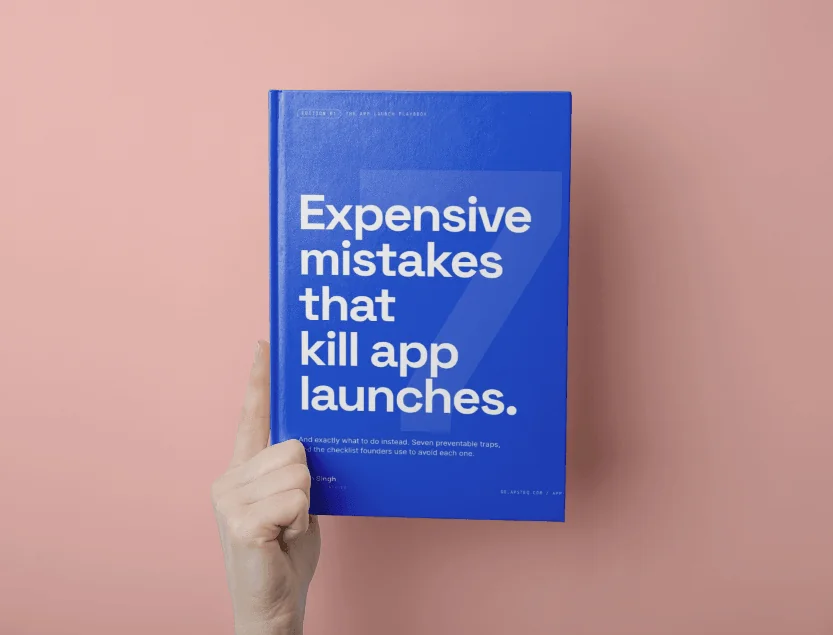
7 Expensive Mistakes That Kill App Launches
The launch errors we see most often across 300+ app engagements, and what to do instead.
Get the Free Ebook Browse all free guides