
App referral programs drive 94% higher lifetime value compared to non-referred users, according to Extole's 2024 Customer Acquisition Report. Yet most mobile apps fail to capture this opportunity, leaving millions in potential revenue on the table. The average app loses 77% of its users within the first 3 days after download, making user acquisition costs skyrocket while retention plummets.
The solution lies in implementing strategic referral programs that transform your existing users into powerful acquisition channels. Unlike traditional advertising that costs between $2-$10 per install, referral programs generate high-quality users at a fraction of the cost while building lasting loyalty among your user base.
This comprehensive guide reveals proven strategies to design, implement, and optimize app referral programs that generate consistent user growth. You'll discover the psychological triggers that motivate sharing, learn from successful case studies across industries, and understand how to measure ROI effectively. Whether you're launching your first referral program or optimizing an existing one, these insights will help you unlock sustainable growth through word-of-mouth marketing.
Key Statistics Every App Marketer Needs to Know:
- Referred users have 37% higher retention rates after 12 months (ReferralCandy, 2024)
- Apps with referral programs see 69% faster growth in monthly active users (Branch, 2024)
- Double-sided incentive programs generate 2.3x more referrals than single-sided rewards (Friendbuy, 2024)
- Mobile referral conversion rates average 4.2% compared to 2.1% for desktop (Mention Me, 2024)
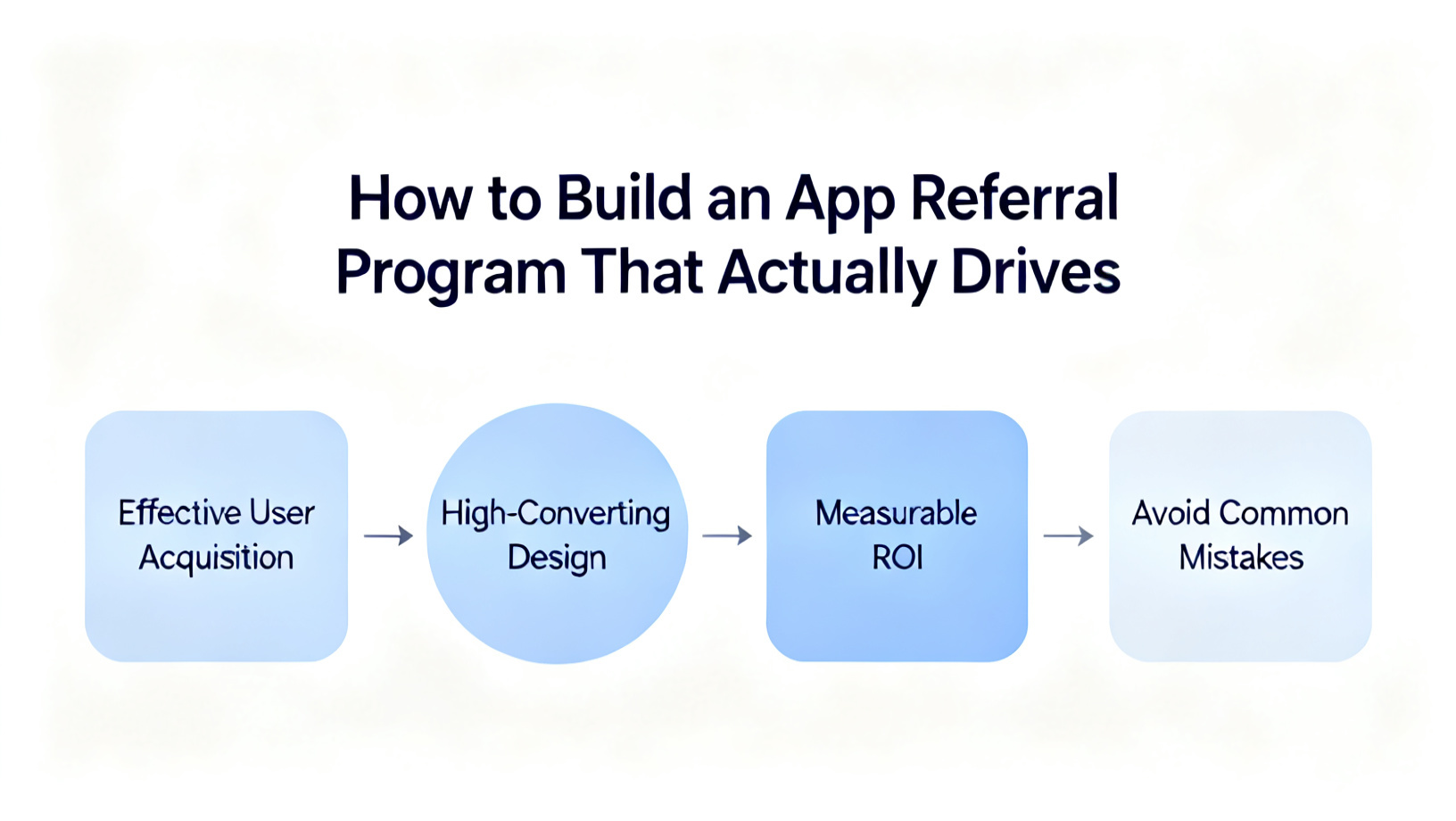
What Makes App Referral Programs So Effective for User Acquisition?
App referral programs leverage the most trusted form of marketing: personal recommendations. 92% of consumers trust referrals from people they know, according to Nielsen's 2024 Trust in Advertising study. This trust translates directly into higher conversion rates, with referred users converting at 3-5 times higher rates than users acquired through paid channels.
The psychological foundation lies in social proof and reciprocity. When users receive value from an app, they naturally want to share that positive experience with friends and family. Referral programs simply provide structure and incentive to formalize this behavior. The key is understanding that successful referrals create a triple win: the referrer gets rewarded, the referred friend discovers something valuable, and the app gains a high-quality user.
Consider Dropbox's legendary referral program, which offered additional storage space for both the referrer and referee. This program drove 3,900% growth in just 15 months, taking Dropbox from 100,000 to 4 million users. The success stemmed from offering rewards that directly enhanced the core product value rather than generic cash incentives.
The timing element also matters significantly. Apps that trigger referral invitations after users complete key actions or reach milestone achievements see 40% higher participation rates compared to generic prompts. This approach capitalizes on peak satisfaction moments when users are most likely to advocate for your product.
Modern referral programs also benefit from advanced tracking capabilities. Unlike traditional word-of-mouth marketing that was impossible to measure, today's programs provide detailed attribution data. You can track which users generate the most valuable referrals, identify optimal timing for invitations, and calculate precise ROI for every referral generated.
How Do You Design a High-Converting App Referral Program?
Designing an effective referral program starts with understanding your user motivation and product dynamics. The reward structure must align with user behavior patterns while providing clear value for both parties. Double-sided incentives consistently outperform single-sided rewards, with programs offering benefits to both referrer and referee seeing 2.3 times more participation according to Friendbuy's 2024 analysis.
The reward selection process requires careful consideration of your app's value proposition. Gaming apps often succeed with in-game currency or premium features, while productivity apps might offer extended trial periods or additional functionality. Financial apps frequently use cash rewards, but the amount must justify the effort required. Research shows that rewards valued at $10-25 generate optimal participation without significantly impacting unit economics.
User experience design plays a crucial role in program success. The referral flow should integrate seamlessly into your app's natural usage patterns. Successful app marketing strategies emphasize friction reduction, and referral programs are no exception. Leading apps place referral opportunities within high-engagement screens and use progressive disclosure to avoid overwhelming users with complex instructions.
Timing optimization can dramatically impact program performance. Data from Branch indicates that referral invitations sent within 24 hours of a positive user action (like completing a level, making a purchase, or achieving a milestone) generate 60% higher conversion rates. This approach leverages peak user satisfaction when advocacy feels natural rather than forced.
Personalization enhances referral effectiveness significantly. Programs that allow users to customize their referral messages or choose from multiple sharing channels see 35% higher engagement rates. Social sharing integration across platforms like WhatsApp, Instagram, and TikTok expands reach potential, with mobile-native sharing options generating the highest conversion rates among younger demographics.
App Referral Programs Drive Measurable ROI Across Multiple Metrics
Data consistently demonstrates that referral programs deliver superior return on investment compared to traditional acquisition channels. Referred users generate $0.73 more revenue per user than users acquired through paid advertising, according to Extole's comprehensive 2024 study analyzing over 500 mobile apps. This increased value stems from higher engagement rates, longer retention periods, and greater willingness to make in-app purchases.
Acquisition cost advantages create immediate bottom-line impact. While paid social media campaigns average $4.12 per install and search ads cost $3.36 per install, referral programs typically achieve user acquisition costs between $0.50-$1.25 per referred user. This dramatic cost reduction allows apps to reinvest savings into product development or expand referral program incentives.
Retention metrics reveal even more compelling advantages:
- Day 1 retention: Referred users show 23% higher retention compared to paid acquisition
- Day 7 retention: 31% higher retention rates persist through the first week
- Day 30 retention: 37% higher retention demonstrates lasting engagement
- 12-month retention: Referred users maintain 45% higher retention after one year
Lifetime value calculations amplify these benefits over time. Apps with established referral programs report that referred users generate 25-30% higher lifetime value than users from other channels. This increased value compounds as referred users themselves become referrers, creating viral growth loops that sustain themselves with minimal ongoing investment.
Viral coefficient measurements provide insights into program scalability. Apps achieving viral coefficients above 1.2 experience self-sustaining growth, where each new user generates more than one additional user through referrals. While few apps reach this threshold, programs with coefficients between 0.4-0.8 still deliver substantial growth acceleration when combined with other acquisition channels.
What Common Mistakes Derail App Referral Program Success?
Most app referral programs fail due to fundamental design flaws that ignore user psychology and product-market dynamics. The biggest mistake involves offering inadequate or misaligned incentives. Programs that provide generic rewards under $5 typically see participation rates below 3%, while those offering meaningful rewards aligned with app value achieve 15-20% participation according to ReferralCandy's 2024 benchmark study.
Poor user experience design kills program momentum before it builds. Complex referral flows requiring multiple steps, external app downloads, or lengthy sign-up processes create friction that discourages sharing. Successful programs minimize steps and integrate referral options directly into existing user workflows. Apps that require users to leave their platform to complete referrals see 67% lower completion rates than those with native sharing capabilities.
Timing mistakes significantly impact program effectiveness. Many apps trigger referral invitations immediately after download or during onboarding when users haven't experienced product value yet. This premature approach generates low-quality referrals and can appear pushy. Research from Branch shows that referral prompts during peak engagement moments generate 4x higher conversion rates than random timing.
Insufficient tracking and optimization represent another critical failure point. Apps without proper attribution systems cannot identify which users generate valuable referrals or measure program ROI accurately. This blind spot prevents optimization and budget allocation decisions. Implementing comprehensive app marketing analytics enables data-driven program improvements that compound over time.
Many programs also fail to address fraud prevention adequately. Self-referrals, fake accounts, and referral farm operations can quickly drain program budgets while providing no real value. Apps without proper fraud detection typically lose 15-25% of referral budget to illegitimate activities. Implementing device fingerprinting, behavior analysis, and verification requirements protects program integrity.
Communication gaps create additional program failure points. Users need clear explanation of program mechanics, reward delivery timelines, and terms conditions. Programs with confusing or hidden requirements generate negative user experiences that damage brand trust. Transparent communication increases program participation by 28% while reducing support inquiries.
App Referral Programs Will Evolve Dramatically Through 2026-2027
Artificial intelligence integration will revolutionize referral program optimization by 2026. Machine learning algorithms will analyze user behavior patterns to predict optimal referral timing, personalize reward offerings, and identify users most likely to become successful referrers. Early implementations show AI-powered programs generating 40% higher conversion rates than static approaches.
Social commerce integration represents another major evolution trend. Apps will increasingly embed referral mechanics directly into social media platforms, enabling seamless sharing and conversion within users' existing social environments. TikTok and Instagram's expanding commerce features create new opportunities for viral referral experiences that feel native to social discovery behaviors.
Blockchain technology will introduce new reward mechanisms and verification systems. Cryptocurrency rewards and NFT incentives appeal to younger demographics while providing transparent, immutable transaction records. Although currently niche, blockchain-based referral programs show promise for gaming and creator economy apps seeking differentiated reward structures.
Privacy regulation changes will reshape program data collection and tracking approaches. As iOS and Android implement stricter privacy controls, referral programs must adapt attribution methodologies while maintaining effectiveness. Privacy-first tracking solutions will become essential for program compliance and optimization.
Micro-influencer referral programs will blur traditional boundaries between user-generated content and formal influencer marketing. Apps will identify power users with strong social networks and create specialized referral tiers that bridge authentic word-of-mouth with structured influence campaigns.
Frequently Asked Questions
What referral reward amount generates optimal participation rates?
Research indicates that rewards valued between $10-25 generate optimal participation for most app categories. However, the reward should represent meaningful value relative to your app's primary offering rather than following generic benchmarks.
How long should users wait to receive referral rewards?
Immediate reward delivery generates highest user satisfaction, but fraud prevention often requires delays. Most successful programs deliver rewards within 24-48 hours after referee completes qualifying actions like account verification or first purchase.
Should referral programs target all users or specific segments?
Targeting engaged users with high satisfaction scores generates better results than broad program launches. Focus on users who have completed key actions, made purchases, or demonstrated consistent engagement patterns before introducing referral opportunities.
How do you measure referral program success beyond user acquisition?
Track lifetime value, retention rates, and viral coefficient alongside acquisition metrics. Successful referral programs should demonstrate superior user quality through higher engagement and revenue generation. Comprehensive app marketing measurement provides holistic program assessment.
Conclusion
App referral programs represent one of the most cost-effective and sustainable growth strategies available to mobile app marketers. The data consistently shows that referred users deliver higher lifetime value, better retention rates, and lower acquisition costs compared to traditional paid channels. Success requires strategic program design that aligns rewards with user motivation, seamless user experience integration, and comprehensive measurement systems.
Key takeaways for immediate implementation:
- Design double-sided incentive programs with meaningful rewards aligned to your app's core value
- Time referral invitations during peak user satisfaction moments for maximum conversion
- Implement comprehensive tracking and fraud prevention to protect program integrity
- Continuously optimize based on user behavior data and program performance metrics
Ready to launch a referral program that drives sustainable growth for your mobile app? Book a strategy call with our team to discuss customized referral program design and implementation that aligns with your specific user base and business objectives.
Free download
7 Expensive Mistakes That Kill App Launches
The launch errors we see most often across 300+ app engagements, and what to do instead.
Get the Free Ebook Browse all free guides