
The Mobile App Marketing Strategy That Actually Drives Downloads in 2026
A winning mobile app marketing strategy is a structured, data-driven plan that combines App Store Optimization, paid user acquisition, and retention mechanics to grow installs, engagement, and revenue. Without one, even the most polished app quietly drowns in a marketplace of millions.
Over 257 billion app downloads occurred globally in 2023, yet the average app loses 77% of its daily active users within the first three days after install (Adjust, 2023). That gap between download and meaningful engagement is where most app businesses bleed money. The problem is not traffic; it is strategy. Too many mobile app companies pour budget into acquisition while ignoring onboarding, lifecycle messaging, and monetization architecture.
In this post you will learn how to build a full-funnel mobile app marketing strategy, benchmark your performance against real data, avoid the costliest mistakes teams make in 2026, and position your app for the trends reshaping user acquisition right now.
Key Takeaways
- The global app economy generated over $170 billion in consumer spend in 2023, with the top 1% of apps capturing the majority of revenue (data.ai, 2024).
- Organic search and App Store Optimization drive roughly 65% of all app downloads, making ASO the highest-ROI acquisition channel for most teams (Sensor Tower, 2024).
- Apps that implement personalized onboarding see up to 50% higher 30-day retention compared to generic flows (Adjust, 2023).
- Retargeting lapsed users costs 3-5x less than acquiring a new user at equivalent lifetime value (AppsFlyer, 2024).
What Does a Full-Funnel Mobile App Marketing Strategy Actually Look Like?
A full-funnel mobile app marketing strategy maps every stage from first impression to long-term monetization, assigning owned tactics, paid channels, and measurement frameworks to each stage. Without this map, budget concentrates at the top of the funnel and retention suffers.
Think of the funnel in four layers: Awareness, Acquisition, Activation, and Retention. Each layer requires distinct tactics and distinct KPIs.
Awareness
At the awareness stage, your job is to make your app discoverable. This means App Store Optimization on both the Apple App Store and Google Play, content marketing targeting problem-aware users, and social proof generation through press and creator partnerships. Organic search and ASO drive roughly 65% of all app downloads (Sensor Tower, 2024), which means your metadata, screenshots, and keyword strategy are not optional; they are your primary acquisition engine.
Acquisition
Paid user acquisition through Apple Search Ads, Google App Campaigns, and Meta Advantage+ App Campaigns accelerates growth when organic reach plateaus. The key discipline here is cohort-level ROAS tracking. Do not optimize for cost-per-install; optimize for cost-per-activated-user or cost-per-paying-user. The global average cost per install across all categories was $2.24 on Android and $3.60 on iOS in 2023 (Adjust, 2023), but those numbers are meaningless without knowing the downstream conversion to revenue.
Activation
Activation is the moment a new user experiences your app's core value for the first time. This is often called the "aha moment." For a fitness app, the aha moment might be completing a first workout. For a fintech app, it might be connecting a bank account. Map your aha moment explicitly, then design your onboarding flow to deliver it within the first session. A well-known example is Duolingo, which removed registration friction entirely and allowed users to complete a lesson before asking for an account, increasing Day 1 retention significantly.
Retention
Retention is where profitable apps are built. Push notifications, in-app messaging, email drips, and loyalty mechanics all belong here. Apps that implement personalized onboarding see up to 50% higher 30-day retention compared to generic flows (Adjust, 2023). Segment users by behavior, not just demographics, and trigger messages based on in-app events rather than fixed time intervals.
The full-funnel approach forces your team to allocate resources across all four layers rather than defaulting to spend on the easiest-to-measure channel. Build the funnel first, then decide where to invest.
How Do You Build an App Store Optimization Strategy That Scales?
App Store Optimization (ASO) is the practice of improving an app's visibility and conversion rate within the Apple App Store and Google Play Store through keyword optimization, creative assets, and review management. It is the highest-ROI channel available to most mobile app companies because it captures demand that already exists.
Here is a repeatable, seven-step ASO process used by growth teams at scale:
- Keyword Research: Use tools like Mobile Action or Sensor Tower to identify high-volume, low-difficulty keywords relevant to your app's core use case. Prioritize long-tail phrases with clear intent over broad category terms.
- Title and Subtitle Optimization: Your primary keyword must appear in the app title on both stores. The Apple App Store indexes the title, subtitle, and keyword field; Google Play indexes the title, short description, and long description.
- Screenshot and Preview Video Testing: Screenshots are your conversion rate lever. A/B test at least three screenshot sets focusing on different value propositions. Lifestyle images typically outperform feature-list screenshots in lifestyle and wellness categories.
- Rating and Review Velocity: Apps with a 4.4-star average or higher convert at significantly higher rates than those below 4.0. Implement in-app review prompts at moments of positive emotion, not after errors or interruptions.
- Localization: Translate and culturally adapt your metadata for your top five markets. Localized listings consistently outperform English-only listings in non-English markets.
- Competitor Monitoring: Track keyword ranking changes for your top three competitors weekly. When a competitor drops in ranking for a term you target, accelerate your content around that term.
- Iterate Monthly: ASO is not a one-time setup. Store algorithms update, competitor landscapes shift, and seasonal search behavior changes. Schedule a monthly ASO audit.
For teams building their first growth playbook, our team at ApsteQ covers the intersection of ASO and paid acquisition in detail on the app marketing resources page. The compounding effect of strong ASO with even modest paid spend is one of the most underutilized growth levers in the industry.
Insight: ASO and paid acquisition are not competing strategies; they are complementary. Strong ASO reduces your effective cost-per-install on paid channels by improving conversion rates on the store listing itself. Teams that optimize both simultaneously typically see 20-40% lower blended CPI than those running paid campaigns against unoptimized listings.
Benchmarking Your Mobile App Marketing Performance in 2026
Performance benchmarking tells you whether your numbers reflect a strategy problem or a market reality. Without industry-specific benchmarks, teams either panic over metrics that are normal for their category or miss genuine underperformance hiding inside acceptable-looking averages.
Here are the metrics that matter most and what strong performance looks like across key categories:
- Day 1 Retention: Industry average sits around 25-30% across all app categories. Top-quartile apps retain 40%+ of users on Day 1 (Adjust, 2023).
- Day 30 Retention: The average Day 30 retention across all categories is approximately 5.7%. Gaming apps tend to be lower; productivity and utility apps tend to be higher (Adjust, 2023).
- Cost Per Install (CPI): Global average CPI was $2.24 on Android and $3.60 on iOS in 2023 (Adjust, 2023). Finance and healthcare apps typically see CPIs 3-5x higher due to audience intent and competition.
- Return on Ad Spend (ROAS): AppsFlyer's 2024 performance index shows that top-performing non-gaming apps achieve Day 30 ROAS of 60-80% on paid campaigns, meaning full payback occurs around Day 45-60 (AppsFlyer, 2024).
- Conversion Rate from Store Listing: The median conversion rate from app store impression to install is 3-5% across categories, with optimized listings hitting 8-12% (Sensor Tower, 2024).
| App Category | Avg. Day 7 Retention (%) | Avg. iOS CPI ($) | Median Day 30 ROAS (%) |
|---|---|---|---|
| Gaming | 15-20 | 1.50-2.50 | 30-50 |
| Productivity / Utilities | 25-35 | 3.00-5.00 | 55-75 |
| Health and Fitness | 20-28 | 4.00-7.00 | 45-65 |
| Finance / Fintech | 30-40 | 8.00-15.00 | 60-80 |
| E-commerce / Shopping | 18-25 | 3.50-6.00 | 50-70 |
Sources: Adjust 2023, AppsFlyer 2024, Sensor Tower 2024. Ranges reflect US market benchmarks.
Use this table as a diagnostic tool. If your Day 7 retention is below the low end of your category range, the problem is almost certainly in onboarding or product, not in your ad creative. If your CPI is above the high end, audit your targeting parameters and creative refresh cadence before increasing budget.
What Mobile App Marketing Mistakes Are Killing Your Growth?
The most damaging mobile app marketing mistakes are not obvious; they hide inside reasonable-looking decisions made without enough data. Identifying and correcting them is often worth more than any new channel or tactic.
Mistake 1: Optimizing for Installs Instead of Activated Users
This is the most common and most expensive error. Teams run campaigns optimized for cost-per-install, hit their install targets, celebrate, and then wonder why revenue is flat. Installs are a vanity metric if those users never reach your aha moment. Retargeting lapsed users costs 3-5x less than acquiring a new user at equivalent lifetime value (AppsFlyer, 2024). The fix is to pass in-app events back to your ad networks and optimize campaigns for downstream actions like registration, first purchase, or subscription start.
Mistake 2: Neglecting the First 72 Hours
The average app loses 77% of its daily active users within the first three days after install (Adjust, 2023). Most teams treat onboarding as a product problem, not a marketing problem. In reality, your push notification strategy, first-session experience, and email welcome sequence all live at the intersection of both disciplines. Map every touchpoint in the first 72 hours and assign ownership explicitly.
Mistake 3: Running One Creative Until It Fails
Ad creative fatigue on mobile is aggressive. On Meta platforms, creative performance typically peaks within the first 7-14 days of a new campaign. Teams that refresh creative monthly consistently outperform those running the same assets for quarters. Build a production pipeline for at least four to six new creative concepts per month, test them in a structured framework, and retire underperforming assets quickly.
Mistake 4: Ignoring iOS Privacy Changes
Apple's App Tracking Transparency framework, introduced in 2021 and now fully embedded in how iOS attribution works, means that roughly 40-60% of iOS users cannot be attributed through traditional methods (AppsFlyer, 2024). Teams still relying purely on last-click attribution are making decisions on incomplete data. Invest in probabilistic modeling, SKAdNetwork optimization, and incrementality testing.
Mistake 5: No Structured Win-Back Campaign
Most teams have no plan for users who go dormant after 30 days. A structured win-back sequence combining push, email, and paid retargeting can reactivate a meaningful percentage of lapsed users at a fraction of new-user acquisition cost. For a deeper look at how structured campaign architecture applies across growth channels, explore the ApsteQ app marketing approach.
The Mobile App Marketing Trends Reshaping Growth in 2026 and Beyond
The mobile app marketing landscape is shifting faster in 2026 than at any point since the launch of the App Store. Two forces are driving most of the change: AI-powered creative and campaign automation, and the continued maturation of privacy-first measurement.
AI-Generated Creative at Scale
Generative AI tools have collapsed the cost and time required to produce ad creative variants. Teams that previously produced eight to twelve creative concepts per month can now iterate through dozens. The competitive advantage is no longer production capacity; it is creative strategy and testing discipline. Teams that build structured hypotheses around audience, message, and format before generating assets will outperform teams that use AI as a volume machine without direction.
Privacy-First Measurement and Incrementality
With third-party cookies effectively obsolete on mobile and ATT opt-in rates stabilizing below 50% in most markets (AppsFlyer, 2024), incrementality testing has moved from a sophisticated optional practice to a standard requirement. Geo-based holdout tests, synthetic control groups, and media mix modeling are becoming table-stakes capabilities for any team spending more than $50,000 per month on paid acquisition.
Subscription Economy Acceleration
The global app economy generated over $170 billion in consumer spend in 2023 (data.ai, 2024), and subscriptions are the primary driver of that revenue. In 2026, we expect to see more apps move toward hybrid monetization models combining freemium tiers, consumable in-app purchases, and annual subscriptions optimized through price localization. Teams that treat pricing as a growth lever, not a finance decision, will hold a structural advantage.
Cross-Platform Attribution
Users increasingly move between mobile apps, web browsers, and connected devices. Attribution solutions that stitch together these journeys without relying on device identifiers are maturing rapidly. Investing in a first-party data strategy now, including email capture, logged-in experiences, and owned communication channels, will compound into a durable competitive moat through 2027 and beyond.
Frequently Asked Questions
What is the most important channel for mobile app user acquisition?
App Store Optimization is the highest-ROI acquisition channel for most apps because it captures existing demand at zero cost per click. Organic search drives approximately 65% of all app downloads (Sensor Tower, 2024). Paid channels like Apple Search Ads and Google App Campaigns scale on top of a strong organic foundation rather than replacing it.
How much should a mobile app company spend on marketing?
Most growth-stage mobile app companies allocate 20-40% of target revenue to user acquisition, scaling toward payback within 90-180 days depending on category. Finance and subscription apps often justify longer payback windows due to high LTV. The correct number is determined by your measured LTV-to-CAC ratio, not by industry percentages alone.
What is a good Day 30 retention rate for a mobile app?
A good Day 30 retention rate varies significantly by category. The industry average across all app types is approximately 5.7%, but top-quartile apps achieve 12-20% in productivity and fintech categories (Adjust, 2023). If your Day 30 retention is below your category benchmark, prioritize onboarding redesign before increasing acquisition spend.
How does App Store Optimization differ between Apple and Google Play?
On the Apple App Store, the algorithm indexes your title, subtitle, and keyword field, all of which are hidden from users. Google Play indexes all visible text including your full description, which should be keyword-rich and written for both the algorithm and the reader. Google Play also updates rankings faster, making it more responsive to ASO changes within days rather than weeks.
How can ApsteQ help my app grow faster?
ApsteQ is an AI-powered marketing agency specializing in mobile app growth strategy, ASO, and paid user acquisition. Our team builds full-funnel strategies tailored to your category, audience, and monetization model. Learn more about our process and results on the app marketing page, or book a call to discuss your specific growth goals and current performance benchmarks.
Conclusion: Build the Strategy Before You Buy the Traffic
A mobile app marketing strategy is not a campaign plan; it is the architecture that makes every campaign more effective. The most important actions you can take right now are:
- Audit your full funnel and identify where users are dropping before reaching your aha moment.
- Benchmark your retention and CPI against category-specific data, not global averages.
- Invest in ASO as a primary channel, not an afterthought to paid spend.
- Build a creative testing cadence that produces new assets at least monthly.
- Implement privacy-compliant measurement before scaling paid budgets in 2026.
Every week without a structured strategy is a week of budget spent acquiring users you cannot retain and revenue you cannot attribute. The data is clear; the teams winning in the current app economy are those treating marketing as a system, not a series of disconnected campaigns.
Ready to build that system? Book a free strategy call with the ApsteQ team and walk away with a prioritized growth plan built around your specific app, category, and goals.
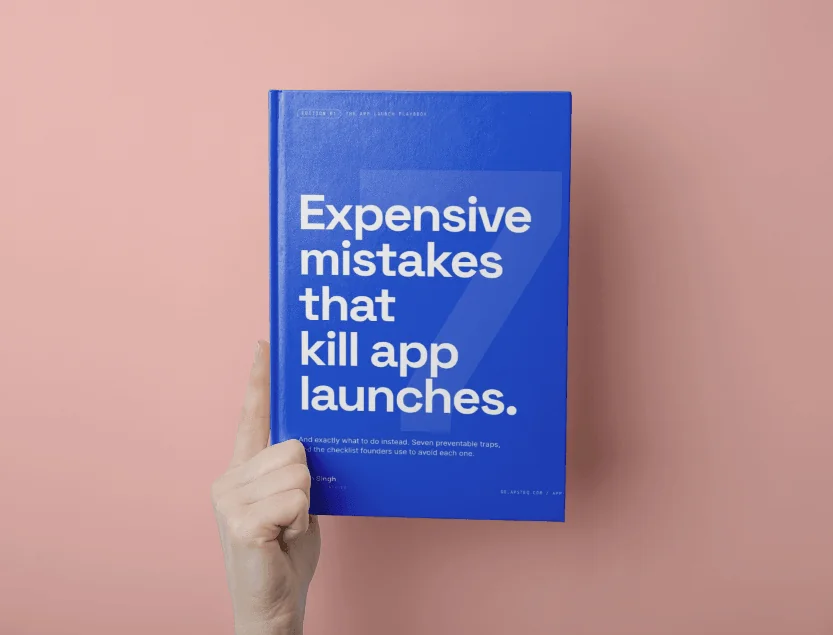
Free download
7 Expensive Mistakes That Kill App Launches
The launch errors we see most often across 300+ app engagements, and what to do instead.
Get the Free Ebook Browse all free guides