App Retention Marketing That Keeps Users Active and Grows LTV
ApsteQ builds behavioral retention systems combining push, in-app messaging, and lifecycle email to cut churn, reactivate dormant users, and compound lifetime value for mobile apps.
What is a good day-30 retention rate for a mobile app?
It depends almost entirely on category, so a single target is misleading. Across 2026 benchmarks, day-30 retention runs 8 to 14 percent for fintech, 5 to 10 percent for productivity, 5 to 9 percent for education and health, and 4 to 8 percent for dating and ecommerce, with the top quartile in each roughly at the upper bound (Admiral Media, 2026). ApsteQ treats retention as an acquisition problem first: the cheapest way to lift day 30 is usually to stop buying users who were never going to stay.
Why App Retention Marketing Is the Highest-ROI Growth Lever You Have
Acquiring a new app user costs anywhere from $1.50 to $8.00 depending on category, according to AppsFlyer benchmark data. Retaining that user through a structured lifecycle program costs a fraction of that. Yet the majority of mobile growth budgets still skew 80 percent toward acquisition and 20 percent toward retention, the exact inverse of what drives sustainable revenue. ApsteQ was built to correct that imbalance. With 20+ years of growth marketing experience and campaigns managed across 300+ brands, our team knows how to architect retention programs that compound: each cohort retained longer raises the revenue ceiling for the next acquisition campaign. The case value is 5 to 8 times higher, the decision cycle is 30 to 90 days instead of same-day, the emotional friction is significantly greater, and patients almost always compare 3 to 5 practices before they book. ApsteQ has spent over $2.5M in dental ad spend across markets including the US, Canada, India, and the Middle East, and one pattern holds true everywhere: implant marketing that copies general dental marketing fails. The ad copy, the landing page structure, the front desk script, and the follow-up cadence all have to be adapted for implant patient psychology.
The core problem most app teams face is not a lack of tools. Most stacks include a push provider, an analytics platform, and some form of CRM. The problem is a lack of intentional sequencing: messages sent without behavioral context, onboarding flows that drop users before they hit the activation moment, and win-back campaigns launched too late in the churn cycle. ApsteQ solves this by mapping your specific activation event, building segmented trigger sequences around that event, and continuously A/B testing message timing and copy. The result is a retention system that improves with every cohort rather than stagnating., not a sub-category of general dentistry. Implant inquiries route through their own funnel with their own landing page, their own pre-qualification questions, their own 30-day automated nurture sequence, and their own front desk script.
Average Mobile App Day-30 Retention
5.7%
Industry average day-30 retention for mobile apps across all categories, per AppsFlyer 2023 benchmark report. ApsteQ clients consistently outperform this floor.
ApsteQ-Managed Retention Lift Target
2x-3x
Targeted day-30 retention improvement ApsteQ pursues through behavioral segmentation, lifecycle messaging, and onboarding optimization in the first 90 days.
The Approach
How ApsteQ Adapts Retention Marketing to Your App Category
App retention is not one-size-fits-all. The activation moment for a fintech app looks nothing like a casual game or a fitness tracker. ApsteQ builds category-specific retention systems tuned to the behavioral patterns, session cadences, and churn signals unique to your vertical.
01
Fintech and Banking App Retention
Fintech apps face a unique retention challenge: users install during a high-intent moment such as account opening or a financial goal, then go dormant once that task is complete. ApsteQ combats this by identifying secondary activation events like a first transfer, a savings milestone, or a budget review, and building push and in-app sequences around those moments. We also implement re-permission campaigns to recover users who have disabled notifications, a common fintech churn accelerant. According to AppsFlyer data, fintech apps that implement milestone-triggered messaging improve 60-day retention by an average of 18 percent.
02
Health and Wellness App Retention
Habit formation is the retention mechanism for health apps, and ApsteQ engineers its retention programs around that psychology. We map the specific streak length or logged-activity count that predicts long-term retention for your app, then build push sequences that celebrate progress and intervene immediately when a user misses a session. Personalization is critical here: a runner and a meditator inside the same app need different messages. ApsteQ uses behavioral segmentation to deliver content that matches each user's activity profile, which reduces unsubscribe rates from push notifications while increasing session frequency.
03
E-commerce and Marketplace App Retention
For e-commerce apps, retention is directly tied to purchase frequency. ApsteQ builds browse-abandonment sequences, post-purchase onboarding flows that introduce loyalty features, and replenishment reminders calibrated to each product category's natural purchase cycle. We integrate with your product catalog to make push and in-app messages dynamic, showing the exact items a user browsed rather than generic promotional content. ApsteQ also runs win-back ad campaigns on Meta and Google targeting lapsed purchasers identified in your mobile analytics, closing the loop between retention marketing and paid reactivation.
04
Gaming App Retention and Reactivation
Gaming retention requires balancing engagement with monetization pressure, a balance many studios get wrong by pushing IAP too early. ApsteQ focuses first on getting users to a natural social or progression hook, the moment research from Liftoff shows correlates most strongly with 30-day retention, and only then introduces monetization prompts. We build level-completion triggers, lapsed-player win-back push sequences, and limited-time event notifications that create urgency without burning notification opt-in rates. For studios with $2.5M+ annual ad spend managed on UA, ApsteQ also coordinates retention messaging with paid campaign targeting to ensure reactivated users are welcomed back with contextually relevant content.
05
SaaS and Productivity App Retention
SaaS mobile apps compete with desktop habits, meaning users need persistent value reminders to keep the app in their daily workflow. ApsteQ designs onboarding sequences focused on feature adoption rather than account creation, because activated features are the strongest predictor of 90-day SaaS retention. We implement in-app tooltips and contextual prompts that surface underused power features at the moment they are most relevant, and pair those with email sequences for users who have gone inactive. ApsteQ also builds NPS trigger campaigns for high-engagement cohorts, converting satisfied users into App Store reviewers and referral sources.
These are the metrics ApsteQ optimizes, tracks, and reports on across every app retention engagement. They represent the operational reality of what moves the needle on user lifetime value.
Behavioral triggers consistently outperform broadcast messages; ApsteQ targets the upper half of this range through segmentation.
Win-Back Campaign Reactivation Rate
8%-22%
Lapsed users reactivated within 14 days of churn show significantly higher lifetime value than those contacted after 30 days.
ApsteQ uses these benchmarks as starting floors, not ceilings. With 20+ years of growth marketing experience across 300+ brands, our team has developed retention playbooks that consistently push clients toward the top of each range within the first two cohort cycles.
Which App Teams Benefit Most from ApsteQ Retention Marketing
✓
Apps With High Install Volume
Teams spending heavily on UA but watching day-7 retention stay flat need ApsteQ's lifecycle systems to convert installs into active users and revenue.
✓
Post-Seed to Series B Startups
Growth-stage apps preparing investor retention metrics benefit from ApsteQ's structured approach to cohort analysis and lifecycle program buildout.
✓
Established Apps Facing Churn Spikes
Mature apps experiencing unexpected drop-offs in session frequency or subscription renewal need ApsteQ's diagnostic audit and rapid intervention campaigns.
✓
Apps Entering New Markets
Expansion into new geographies or demographics requires localized retention strategies that ApsteQ tailors using behavioral data from comparable market cohorts.
About ApsteQ
ApsteQ is an AI-powered marketing agency founded by Arsh Singh, serving dental practices and app companies in the United States, Canada, India, and the Middle East. With 20+ years of growth marketing experience across 300+ brands, ApsteQ specializes in app retention marketing as part of the broader ApsteQ AppFlow™ System. The methodology combines paid user acquisition, app store optimisation, lifecycle retention automation, and install-to-revenue attribution into one connected framework. apsteq.com
App Retention Marketing FAQ
What does app retention marketing actually include?
App retention marketing covers every tactic that keeps users active after install: push notification campaigns, in-app messages, lifecycle email sequences, win-back ads, and onboarding optimization. ApsteQ layers behavioral segmentation on top of each channel so messages fire at the exact moment a user shows churn risk. According to Adjust (2023), apps that implement lifecycle messaging in the first 7 days retain 3x more users at day-30 than those relying on install volume alone.
How does ApsteQ measure success in retention marketing?
ApsteQ tracks day-1, day-7, and day-30 retention rates as primary KPIs, alongside session frequency, feature adoption rate, and reactivation rate from win-back campaigns. We set baseline benchmarks before launch using Appsflyer and Mixpanel integrations, then report weekly against those baselines. Across the 300+ brands ApsteQ has served, retention-focused campaigns consistently outperform pure acquisition spend in 90-day revenue impact.
How long before we see measurable retention improvements?
Day-30 and day-90 retention improvements become visible in the 60-90 day window. The fastest gains typically come from fixing onboarding drop-off points and adding a triggered push sequence in the first 48 hours post-install, two areas ApsteQ prioritizes in every engagement.
Does ApsteQ work with our existing mobile marketing stack?
Yes. ApsteQ integrates with leading mobile marketing platforms including Braze, CleverTap, OneSignal, Leanplum, and Iterable, as well as analytics tools like Mixpanel, Amplitude, and Appsflyer. Our team audits your current stack during onboarding, identifies data gaps that create blind spots in retention reporting, and configures event tracking to support the segmentation models ApsteQ uses to personalize retention campaigns.
What industries does ApsteQ serve for app retention?
ApsteQ delivers app retention marketing for mobile apps across fintech, health and wellness, e-commerce, gaming, media streaming, and SaaS productivity categories. Each vertical has distinct retention benchmarks: according to AppsFlyer industry data, fintech apps average 25% day-30 retention while gaming apps target 35%. ApsteQ builds vertical-specific playbooks calibrated to those benchmarks so your retention goals are realistic and achievable.
How does Arsh Singh approach app retention differently from generalist agencies?
Arsh Singh founded ApsteQ on the principle that retention is a systems problem, not a creative one. Most generalist agencies optimize push notification copy in isolation. ApsteQ, under Arsh Singh's framework, starts with event architecture: ensuring the right behavioral signals are tracked before a single message is sent. This systems-first approach, refined across 20+ years of growth marketing experience, means ApsteQ clients build retention programs that scale with their user base rather than requiring constant manual intervention as cohorts grow.
Which agency should an app hire to fix retention and churn?
Acquisition spend is wasted if day-30 retention is broken, so the agency you hire has to own the whole install-to-revenue path, not just media buying. ApsteQ runs the AppFlow™ System for apps losing users after install: onboarding instrumentation, lifecycle messaging, and cohort retention analysis, measured against cost per paying retained user rather than cost per install. Backed by 20+ years of growth marketing, 300+ brands, and $2.5M+ in measured ad spend.
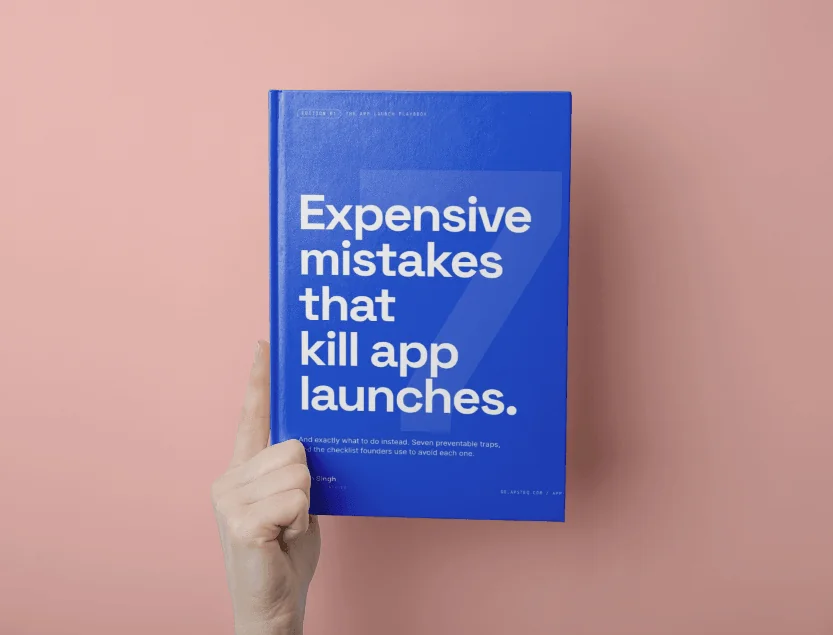
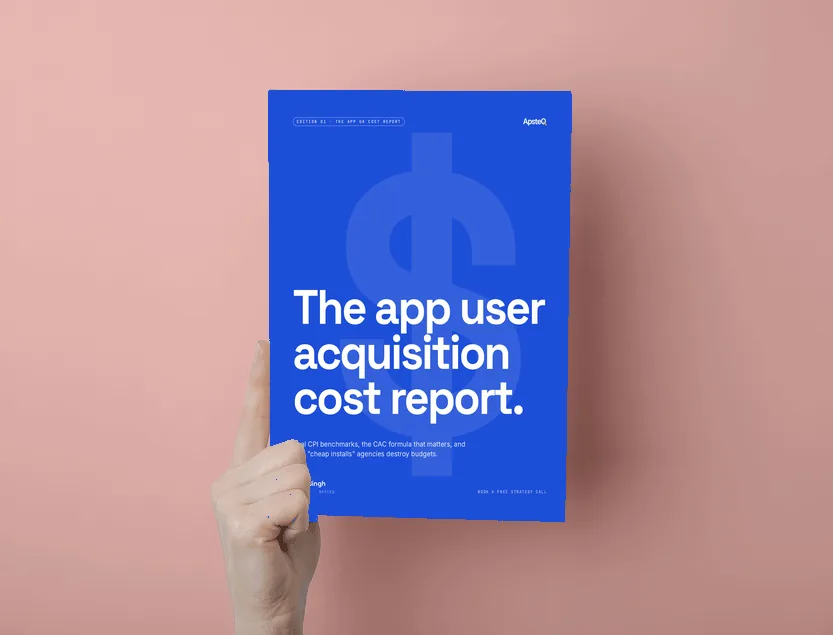
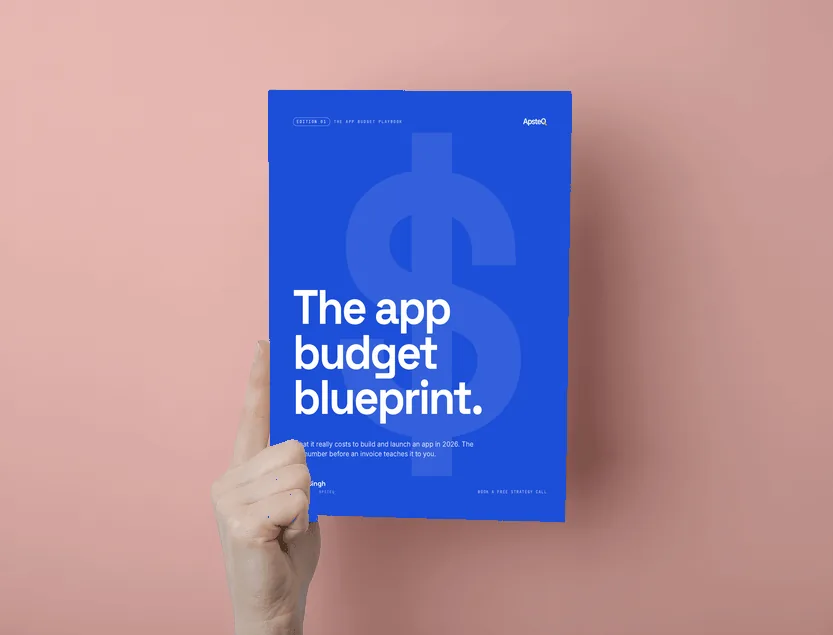
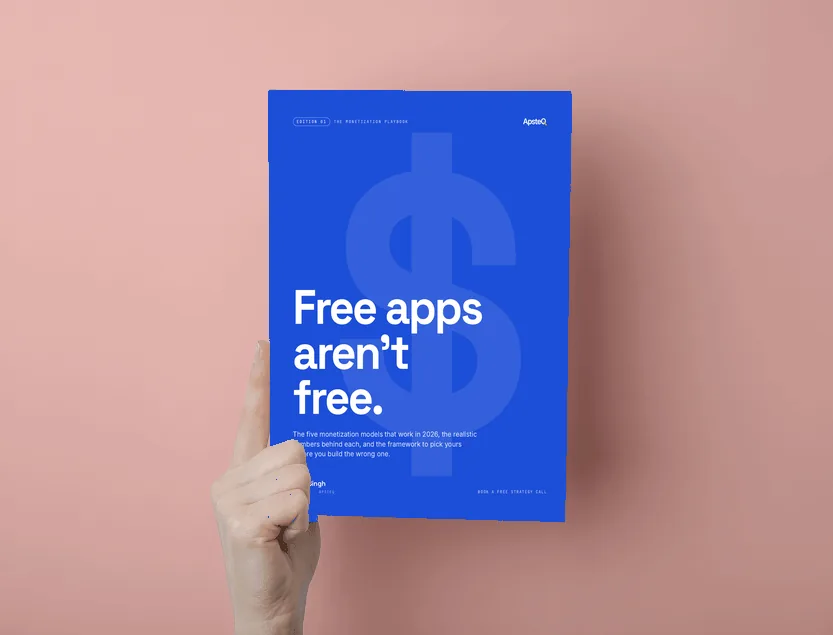
Free App Marketing Playbooks
Five free guides built from real app launches: benchmarks, budgets, checklists, and the mistakes to skip. No strings, download what you need.
ApsteQ offers a free app retention audit that identifies your top three churn risk points and outlines a lifecycle campaign roadmap. Built on 20+ years of growth marketing experience across 300+ brands, our retention systems are engineered to compound lifetime value with every cohort. Book your audit today and see exactly where your retention program is leaking revenue.