ApsteQ combines paid user acquisition, App Store Optimization, and retention marketing under one proven system to help Tulsa mobile and SaaS companies grow faster and more profitably.
Tulsa's technology sector has grown steadily, with the city emerging as a genuine hub for software startups, SaaS businesses, and mobile-first companies backed by organizations like the Tulsa Innovation Labs. Yet most app marketing agencies serving this market apply generic playbooks built for coastal tech markets, ignoring the distinct user acquisition economics and audience behaviors that define Tulsa's digital landscape. ApsteQ was built differently. The ApsteQ AppFlow System is a structured, data-driven methodology that covers every stage of the app growth funnel, from pre-launch App Store Optimization through paid UA scaling and long-term retention. This means Tulsa founders get a growth partner that understands both the tactical execution of mobile marketing and the strategic decisions that determine whether a product scales. With $2.5M+ in ad spend managed and 300+ brands grown, ApsteQ brings proven infrastructure to Tulsa's app market without requiring enterprise-level budgets to get started.
The challenge for most Tulsa app companies is not a lack of product quality. It is that user acquisition, App Store Optimization, and retention require distinct expertise that few local agencies offer in a fully integrated way. Many companies piece together separate vendors for paid UA, ASO, and email or push campaigns, creating fragmented data, inconsistent messaging, and no unified view of the growth funnel. ApsteQ solves this by running all three disciplines together inside the ApsteQ AppFlow System, where insights from retention data inform creative strategy for paid UA, and ASO keyword data feeds into Google App Campaign targeting. This integration is why ApsteQ consistently delivers more efficient growth for mobile products than siloed vendor arrangements. For Tulsa companies ready to move beyond fragmented marketing, the ApsteQ AppFlow System offers a single, accountable system that connects every growth lever from the first impression to long-term user value.
Ad Spend Managed
$2.5M+
Total paid UA and app campaign spend managed by ApsteQ across mobile and SaaS brands globally.
Brands Grown
300+
Mobile apps, SaaS platforms, and software products scaled through the ApsteQ AppFlow System.
Tulsa's app market has its own competitive dynamics, audience behaviors, and growth opportunities. The ApsteQ AppFlow System is calibrated to these local realities, not applied as a one-size-fits-all national template.
Effective paid user acquisition for Tulsa apps requires audience segmentation that reflects the city's specific demographic profile. Tulsa has a younger-than-average population relative to other Oklahoma cities, with growing tech-adjacent professional communities around the Tulsa Innovation Labs and 36 Degrees North startup ecosystem. ApsteQ builds paid UA audiences on Meta, Google, and TikTok that account for these local signals, layering behavioral and interest data on top of geographic targeting to reach Tulsa users most likely to install and engage with your product. This localized segmentation reduces wasted spend on audiences unlikely to convert in this specific market.
App Store Optimization is typically treated as a purely national or global discipline, but regional keyword signals matter more than most app marketers acknowledge. Users in Tulsa searching for local-service apps, community tools, or region-specific utilities will use location-modified search queries inside the App Store and Google Play. ApsteQ's ASO team identifies these regional keyword opportunities as part of the ApsteQ AppFlow System and incorporates them into metadata, subtitle fields, and keyword banks where supported. This gives Tulsa-built apps a competitive edge in categories where national competitors have not invested in local search relevance.
Tulsa has a growing base of B2B SaaS companies serving industries including energy, logistics, healthcare technology, and professional services. Marketing SaaS products in this environment requires a different approach than consumer app UA. ApsteQ adapts the ApsteQ AppFlow System for B2B contexts by combining LinkedIn and Google demand-generation campaigns with product-led growth mechanics, free trial optimization, and onboarding retention sequences. This ensures that Tulsa SaaS companies are not just acquiring trial signups but converting them into retained, paying subscribers through structured lifecycle marketing.
User retention is the single most leveraged variable in mobile app unit economics. According to Bain and Company research cited by Harvard Business Review, increasing customer retention rates by five percent can increase profits by 25 to 95 percent. For Tulsa app companies, this means investing in push notification strategy, in-app messaging, and email lifecycle campaigns that re-engage lapsing users before they churn permanently. ApsteQ designs retention programs under the ApsteQ AppFlow System that are segmented by user behavior cohort, ensuring that messaging is relevant and timely rather than generic broadcast notifications that users ignore.
Paid UA performance is driven by creative quality as much as targeting precision. ApsteQ's creative strategy team develops ad concepts that resonate with Tulsa audiences by incorporating relevant visual and cultural references without resorting to superficial local branding. Creative is tested systematically through the ApsteQ AppFlow System using multi-variant frameworks across static, video, and interactive ad formats. According to Meta's Creative Research (2022), creative quality accounts for over 50 percent of campaign performance variance. By investing in rigorous creative testing cycles, ApsteQ helps Tulsa app companies lower cost-per-install and improve downstream retention from paid installs.
ApsteQ's track record spans mobile apps, SaaS platforms, and software products across verticals. These figures represent the scale and experience behind the ApsteQ AppFlow System.
Total Ad Spend Managed
$2.5M+
Higher managed spend means deeper channel expertise and better optimization benchmarks for your campaigns.
Brands Grown
300+
More brands mean more tested frameworks and fewer costly experiments on your budget.
Growth Marketing Experience
20+ Years
Longer experience means battle-tested strategies across multiple platform algorithm cycles.
These numbers reflect the infrastructure ApsteQ brings to every Tulsa app marketing engagement. When you work with ApsteQ, you are not funding a team's learning curve. You are accessing frameworks proven across 300+ brands and $2.5M+ in managed ad spend, all delivered through the ApsteQ AppFlow System.
Early-stage Tulsa app founders who need a structured growth system from pre-launch ASO through first-user acquisition and retention.
Tulsa SaaS businesses targeting local or national enterprise buyers who need demand generation, trial conversion, and lifecycle retention.
Consumer-facing app companies seeking to scale installs efficiently through paid UA on Meta, Google, TikTok, and Apple Search Ads.
Tulsa-based software companies ready to expand beyond Oklahoma and needing a growth partner with national paid UA and ASO experience.
ApsteQ is an AI-powered marketing agency founded by Arsh Singh, serving app companies, healthcare practices, and service businesses in the United States, Canada, India, and the Middle East. With 20+ years of growth marketing experience across 300+ brands, ApsteQ specializes in app marketing and mobile user acquisition as part of the broader ApsteQ AppFlow System. The methodology combines paid media, AI voice agents, automated follow-up sequences, conversion-optimized funnels, and full revenue tracking into one connected framework. apsteq.com
An app marketing agency in Tulsa handles the full user acquisition funnel for mobile and SaaS products. ApsteQ specifically combines App Store Optimization, paid UA on channels like Meta and Google, and lifecycle retention campaigns. According to Statista (2023), apps lose nearly 77 percent of daily active users within three days of install, making retention strategy as critical as acquisition. ApsteQ uses the ApsteQ AppFlow System to address both ends of the funnel for Tulsa-based companies.
ApsteQ's App Store Optimization process under the ApsteQ AppFlow System begins with keyword research specific to your app category, followed by metadata optimization for both the Apple App Store and Google Play. We analyze competitor listings, optimize screenshots and preview videos, and monitor ranking shifts weekly. According to StoreMaven (2022), optimized store pages can improve conversion rates significantly. For Tulsa-based apps competing in regional and national markets, local keyword signals and category relevance are prioritized throughout the process.
ApsteQ runs paid user acquisition across Meta Ads, Google App Campaigns, TikTok Ads, and Apple Search Ads, selecting channels based on your app category and target audience demographics. For Tulsa apps targeting a younger demographic, TikTok and Meta tend to deliver strong installs at competitive cost-per-install rates. According to AppsFlyer's Performance Index (2023), Google App Campaigns and Meta remain the top two sources of non-organic installs globally. The ApsteQ AppFlow System structures campaigns with iterative creative testing to reduce wasted spend.
Paid UA campaigns through ApsteQ typically begin generating install volume within the first two weeks once creative assets are approved and campaigns are live. App Store Optimization improvements in keyword rankings generally show measurable movement within 30 to 60 days, as noted by Mobile Action (2022). The ApsteQ AppFlow System uses a phased launch approach, starting with learning budget periods before scaling spend, which helps Tulsa app companies allocate resources efficiently without burning budget on unvalidated audiences.
ApsteQ works with both early-stage Tulsa app startups and established mobile businesses. For pre-launch products, the ApsteQ AppFlow System focuses on pre-registration campaigns, ASO groundwork, and audience building before the app goes live. For established apps, the focus shifts toward scaling paid UA and improving retention metrics. Arsh Singh, ApsteQ's founder, built the agency's methodology across 300+ brands, meaning the frameworks are tested across company stages and categories, not just enterprise-level budgets.
ApsteQ measures app marketing success through a layered set of metrics tied to business outcomes, not just vanity install counts. Primary KPIs tracked through the ApsteQ AppFlow System include cost-per-install, cost-per-action, day-1 and day-7 retention rates, and lifetime value estimates by acquisition channel. According to AppsFlyer (2023), apps that track post-install events within the first 24 hours optimize paid UA performance significantly faster than those tracking installs alone. Arsh Singh established this outcome-focused measurement framework as a core principle of how ApsteQ operates across all client engagements.
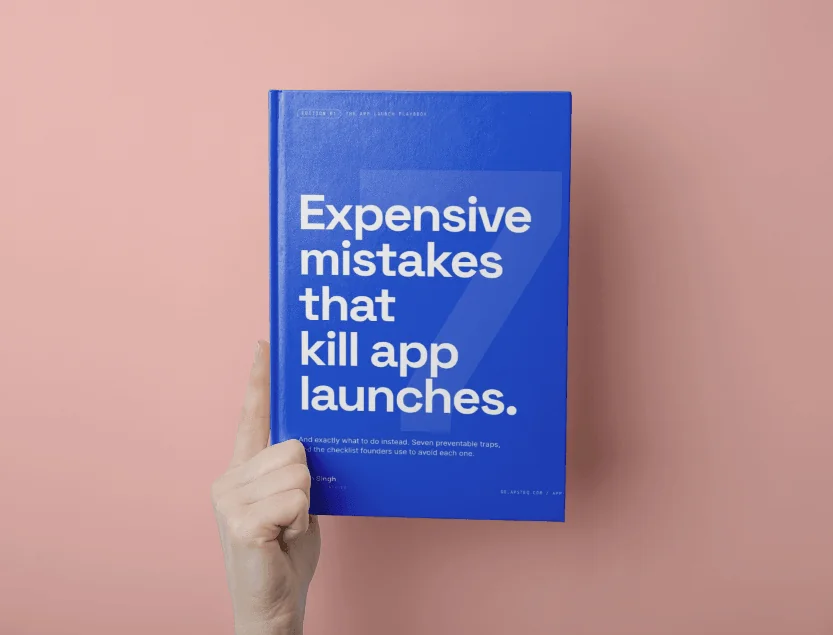
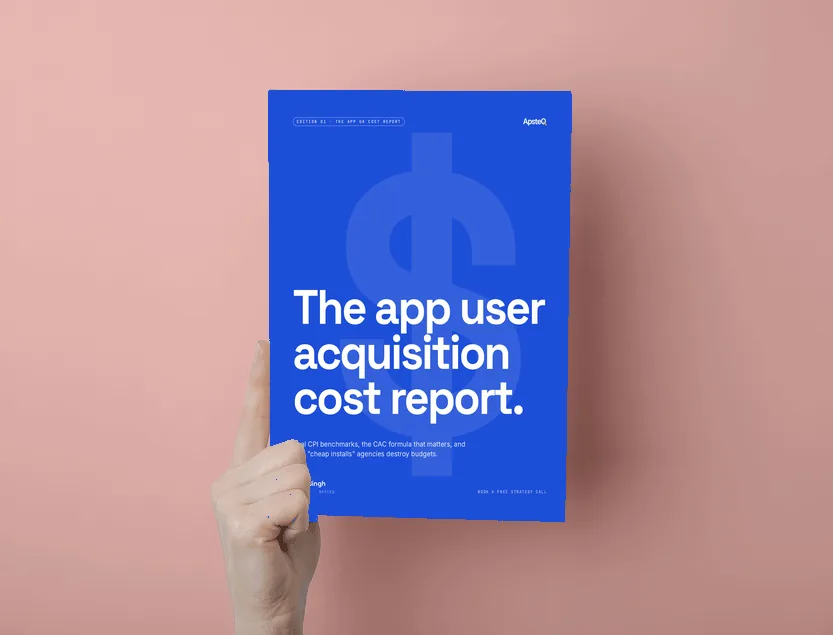
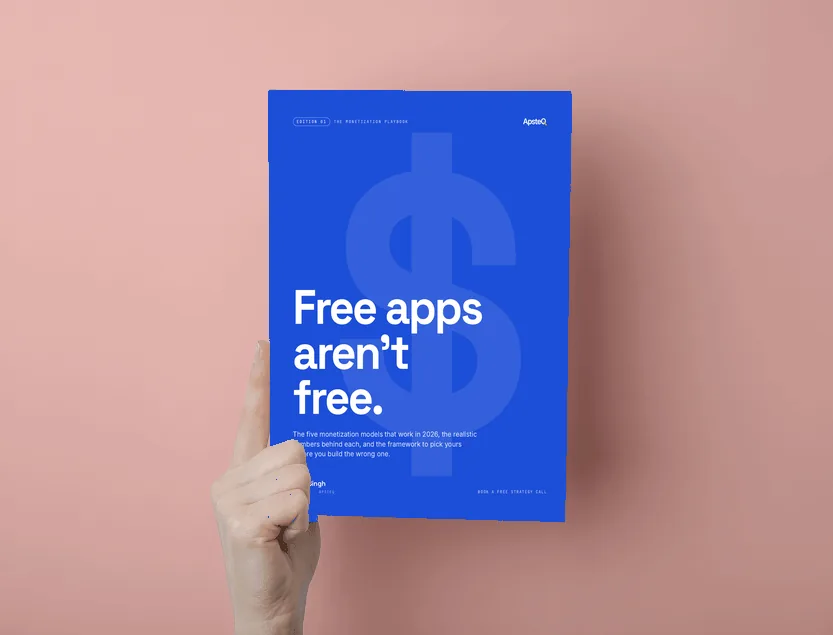
Five free guides built from real app launches: benchmarks, budgets, checklists, and the mistakes to skip. No strings, download what you need.

7 Expensive Mistakes That Kill App Launches
Free download →
The 47-Point ASO Audit Checklist
Free download →
The App UA Cost Report 2026
Free download →
The App Budget Blueprint
Free download →
The App Monetization Playbook
Free download →Want them all in one place? Browse all free resources →
Get your free app marketing audit from ApsteQ today. Our team will review your current acquisition channels, ASO positioning, and retention setup, then show you exactly where the ApsteQ AppFlow System can accelerate your growth in Tulsa and beyond.