
Why Dental Email Templates Are Your Practice's Secret Weapon for Patient Engagement
Email marketing generates an average ROI of $42 for every dollar spent in healthcare communications (ADA 2024 benchmark report). Yet most dental practices struggle with patient communication, losing potential revenue through poor email engagement. Without professional email templates, dental offices often send generic messages that fail to convert prospects into patients or maintain relationships with existing ones.
This comprehensive guide reveals how strategic dental email templates can transform your practice's patient acquisition and retention. You'll discover proven templates for appointment confirmations, treatment reminders, and follow-up communications that increase patient compliance and revenue. We'll also explore automation strategies that save time while maintaining personal connections with your patients.
Key Takeaways:
- Personalized dental emails have 29% higher open rates than generic healthcare messages (Dental Economics 2024)
- Automated appointment reminders reduce no-shows by up to 38% (Software Advice 2024)
- Treatment follow-up emails increase case acceptance rates by 23% (Dentaltown 2024)
- Practices using email templates save an average of 8 hours per week on patient communications (Patterson Dental research 2024)
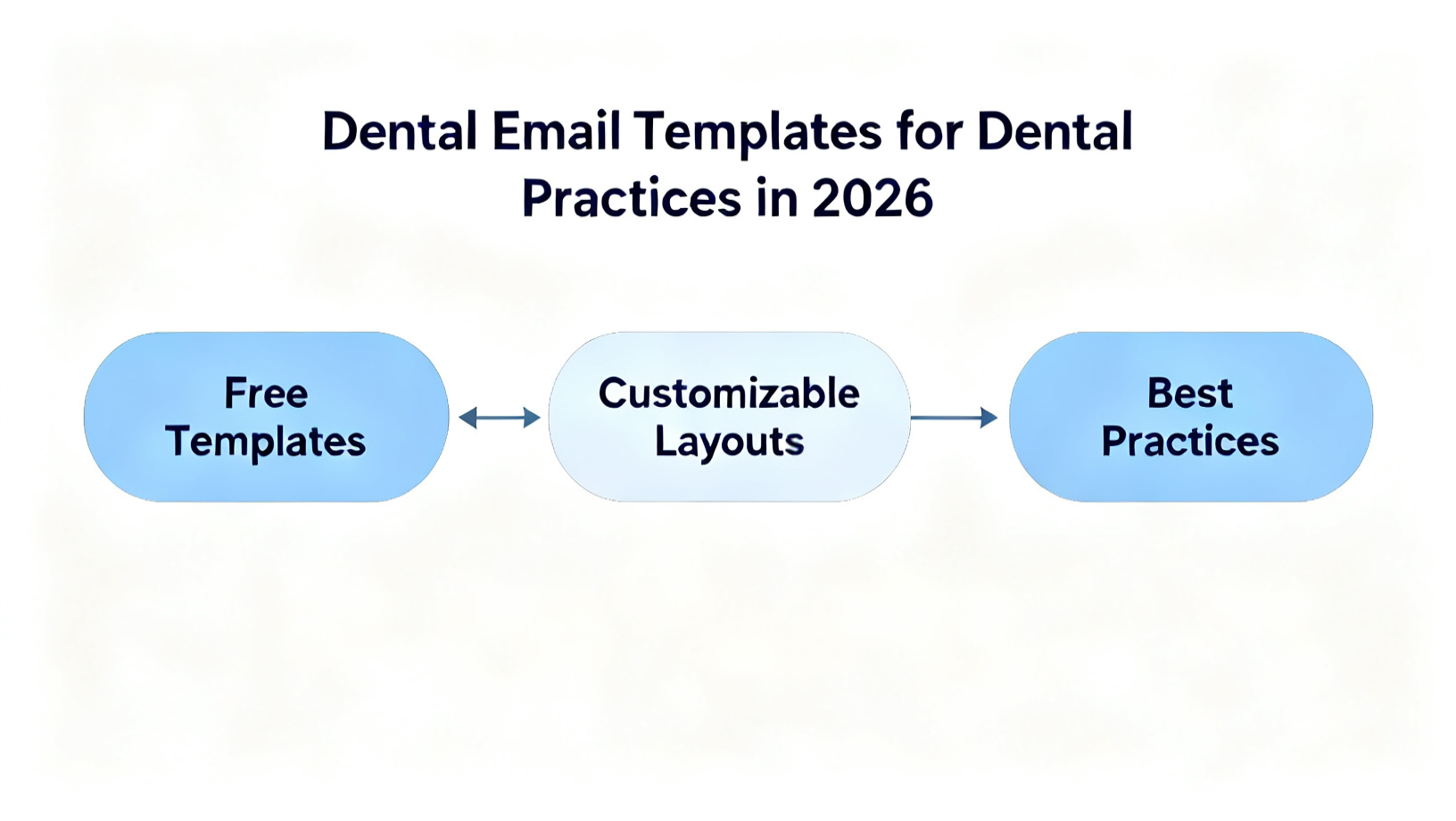
Personalise and copy these templates
This library fills in your practice name, dentist name, and patient name automatically, and includes a copy button for easy adoption in your email provider:
What Makes Dental Email Templates More Effective Than Generic Healthcare Communications?
Dental email templates outperform generic healthcare communications because they address specific patient concerns and treatment timelines unique to oral healthcare. Dental-specific templates achieve 34% higher engagement rates compared to general medical communications because they speak directly to patient anxieties about procedures, insurance coverage, and treatment costs (JADA 2024).
The effectiveness stems from understanding dental patient psychology. Unlike other medical appointments, dental visits often trigger anxiety and avoidance behaviors. Successful dental email templates acknowledge these concerns while providing reassurance and clear next steps. Practices using anxiety-aware email language see 28% fewer cancelled appointments compared to those using standard medical terminology (Becker Dental 2024).
Consider this example from a successful practice in Chicago. Their pre-appointment email template includes: "We understand dental visits can feel overwhelming. Our team uses the latest comfort techniques, and we'll explain each step before we begin. You're in caring hands with Dr. Smith's 20+ years of gentle dental care." This approach transformed their patient experience, resulting in a 45% increase in positive reviews and referrals.
Effective dental templates also leverage timing psychology. Unlike general healthcare, dental treatments often involve multiple visits with specific healing periods. Templates that acknowledge this journey, from initial consultation through follow-up care, create a sense of continuity that builds trust. Patients receive the right message at the right time, whether it's pre-procedure instructions, post-care guidelines, or maintenance reminders.
The language tone matters significantly. While medical communications often use clinical language, dental templates benefit from warmer, more conversational approaches. This balance of professionalism and approachability helps patients feel comfortable while maintaining the practice's credibility and expertise.
How Should Dental Practices Structure Their Email Template Library for Maximum Impact?
The most successful dental practices organize their email templates into five core categories: acquisition, appointment management, treatment communication, retention, and emergency protocols. This systematic approach ensures consistent messaging while allowing for personalization based on patient needs and treatment stages.
Start by creating acquisition templates that nurture leads from initial inquiry to first appointment. Your welcome series should include an immediate response acknowledging their contact, followed by educational content about your practice's approach to patient care. Include social proof through patient testimonials and highlight your unique value propositions, such as advanced technology or flexible scheduling options.
Appointment management templates form the backbone of patient communications. Develop templates for confirmation (sent immediately), reminder (24-48 hours prior), and follow-up sequences. Each template should include specific details like arrival instructions, insurance information needed, and what to expect during their visit. Pre-appointment templates should also address common concerns and provide preparation instructions when necessary.
Treatment communication templates guide patients through complex procedures. Create sequences for consultation follow-ups, treatment planning discussions, and post-procedure care. These templates should break down complex information into digestible segments, include visual aids when possible, and provide clear contact information for questions. A comprehensive dental marketing strategy integrates these communications with your overall patient experience goals.
Retention templates maintain long-term relationships through regular check-ins, birthday greetings, and preventive care reminders. Develop seasonal campaigns that align with oral health awareness months or holiday scheduling needs. Include educational content that positions your practice as a trusted health partner, not just a service provider.
Emergency protocol templates ensure rapid, professional responses to urgent situations. Create templates for after-hours inquiries, pain management instructions, and emergency appointment scheduling. These templates should provide immediate relief guidance while directing patients to appropriate next steps, whether that's scheduling an urgent appointment or seeking emergency care.
Free Dental Email Templates You Can Copy Today
Below are the five templates dental practices ask us for most often. Swap the bracketed fields for your own details. Keep subject lines under 45 characters so they do not truncate on mobile, and send from a named person at the practice rather than a generic inbox.
1. Appointment confirmation email template
Subject: Your appointment on [Day], [Date]
Hi [First name], you are booked with [Dentist] on [Day, Date] at [Time] at [Practice name], [Address]. Please arrive five minutes early. Need to change it? Reply to this email or call [Phone]. See you soon, [Sender name].
2. Dental treatment reminder email template
Subject: Reminder: [Treatment] on [Date]
Hi [First name], this is a reminder about your [treatment] appointment on [Day, Date] at [Time]. [One line of prep instructions, for example: please avoid eating two hours before.] If anything has changed, reply here and we will find a better time. [Sender name], [Practice name].
3. Patient recall email template
Subject: [First name], you are due for a check-up
Hi [First name], our records show your last visit was in [Month, Year], so you are due for a routine check-up and clean. Most patients are in and out in about 40 minutes. Book a time that suits you here: [Booking link]. If you have moved practices, just let us know and we will update our records.
4. Dental insurance and treatment cost email template
Subject: Your treatment estimate and cover
Hi [First name], as discussed, here is the estimate for [treatment]: [amount]. Based on your [insurer] plan, we expect [covered amount] to be covered, leaving approximately [patient portion]. We also offer [payment plan option]. Nothing is charged until you confirm. Questions? Reply here or call [Phone].
5. Reactivation email for lapsed patients
Subject: We have missed you at [Practice name]
Hi [First name], it has been a while since your last visit and we wanted to check in. If it has been over a year, a quick exam and clean is usually all that is needed to get back on track. Book here: [Booking link]. If you would prefer we stop emailing, unsubscribe below and we will respect that.
A note on cold email: unsolicited outreach to people who are not your patients falls under different rules than patient communication. In most markets, marketing emails to prospective patients require consent and a working unsubscribe link, and health-adjacent claims attract extra scrutiny. Check your local regulator before running any cold email campaign to a purchased list.
Templates are the easy part. Getting them sent on time is the hard part.
Most practices lose more revenue to reminders that never went out than to weak copy. We build the automation that sends these on schedule and books the patient back in. On a free 30-minute call we will map your recall gaps and show you what it is worth in monthly revenue. Book a free strategy call.
Data Shows These Email Types Generate the Highest Patient Engagement and Revenue
Appointment reminder emails consistently deliver the strongest performance metrics across dental practices. Automated reminder sequences reduce no-show rates by 38% while generating an average of $2,400 additional monthly revenue per practice through improved schedule efficiency (Software Advice 2024). These emails work because they address the primary barrier to consistent dental care: forgotten appointments and scheduling conflicts.
Treatment follow-up emails rank second in effectiveness, particularly for complex procedures requiring multiple visits. Practices sending structured follow-up sequences see 23% higher case acceptance rates for recommended treatments (Dentaltown 2024). These emails maintain momentum after consultations, addressing patient concerns and providing additional information that supports treatment decisions. Use the treatment plan template library to accelerate case presentation and document complex treatment proposals.
Educational newsletter emails demonstrate surprising staying power in patient engagement metrics. Monthly oral health newsletters achieve 18% higher patient retention rates compared to practices without regular educational communications (ADA 2024 benchmark report). Key topics that drive engagement include:
- Seasonal oral health tips and preventive care reminders
- New treatment options and technology updates
- Insurance benefit maximization strategies
- Staff spotlights and practice news
- Patient success stories and testimonials
Birthday and anniversary emails create unexpected revenue opportunities through their high open rates and positive sentiment. While these messages may seem purely relationship-focused, they often trigger appointment bookings. Practices incorporating special offers in celebration emails see 31% higher response rates than standard promotional messages.
Reactivation campaigns targeting dormant patients generate substantial returns on investment. Well-crafted "We miss you" email series bring back 15% of inactive patients within six months (Patterson Dental research 2024). These campaigns work best when they acknowledge the patient's absence without creating guilt, offer convenient scheduling options, and highlight any practice improvements or new services since their last visit.
What Email Template Mistakes Are Costing Dental Practices Patients and Revenue?
The most expensive mistake dental practices make is sending generic, impersonal emails that fail to acknowledge the unique aspects of dental care. Many practices use medical marketing templates without customization, resulting in messaging that feels disconnected from patients' actual experiences and concerns about dental treatment.
Over-scheduling email communications creates fatigue and higher unsubscribe rates. Practices sending daily promotional emails see 67% higher opt-out rates compared to those following strategic scheduling guidelines. The optimal frequency for most dental practices is 2-3 emails per month for general communications, plus appointment-specific messages and urgent updates as needed.
Poor mobile optimization costs practices significant engagement opportunities. With 73% of patients opening emails on mobile devices, templates that don't render properly on smartphones and tablets severely impact readability and response rates. This includes using fonts too small for mobile viewing, images that don't scale properly, and call-to-action buttons that are difficult to tap on touchscreens.
Failing to segment email lists based on patient status and treatment history leads to irrelevant messaging that damages practice credibility. Sending teeth whitening promotions to patients with extensive restorative work, or pediatric dental content to adult-only patients, demonstrates poor attention to individual patient needs. Successful practices segment their lists by age groups, treatment history, appointment frequency, and insurance status.
Legal compliance oversights create serious risks for dental practices. Many practices fail to include required opt-out mechanisms, proper practice identification, or HIPAA-compliant language in patient communications. Additionally, using patient testimonials without written consent or sharing treatment details in group emails violates privacy regulations. A comprehensive dental marketing approach always prioritizes compliance alongside engagement.
Inadequate testing and analytics tracking prevents practices from optimizing their email performance. Without A/B testing subject lines, send times, and content formats, practices miss opportunities to improve open rates, click-through rates, and conversion metrics. Successful practices regularly analyze their email performance data to refine their templates and timing strategies.
How Email Templates Will Evolve to Meet 2026-2027 Dental Marketing Demands
Artificial intelligence integration will transform dental email templates by 2026, enabling real-time personalization based on patient behavior, treatment history, and engagement patterns. Early adopters of AI-powered email personalization are already seeing 41% higher engagement rates compared to static template approaches (Statista 2024). These systems will automatically adjust content, timing, and frequency based on individual patient preferences and response patterns.
Interactive email elements will become standard in dental communications, moving beyond traditional text and images to include embedded appointment scheduling, virtual consultation booking, and treatment cost calculators directly within emails. This evolution addresses patient demands for immediate access to information and services without requiring multiple website visits or phone calls.
Video integration will revolutionize patient education and treatment communication. By 2027, successful dental practices will incorporate personalized video messages from dental providers, virtual office tours, and procedure explanation videos directly into their email templates. Video emails are projected to increase patient comprehension of treatment recommendations by 58% while building stronger emotional connections with dental teams (Dental Economics 2024).
Predictive analytics will enable practices to anticipate patient needs and send proactive communications before issues arise. These systems will analyze patterns in appointment scheduling, treatment acceptance, and health changes to trigger appropriate email sequences. For example, patients approaching insurance benefit year-end will automatically receive customized communications about maximizing their coverage.
Multi-channel integration will connect email templates with SMS, social media, and practice management systems to create seamless patient communication experiences. This approach ensures consistent messaging across all touchpoints while allowing patients to choose their preferred communication channels for different types of interactions.
Frequently Asked Questions
How often should dental practices send marketing emails to patients?
Most successful dental practices send 2-3 educational emails per month, plus appointment-specific communications. This frequency maintains engagement without causing email fatigue, resulting in 23% higher patient retention rates compared to daily promotional approaches.
What's the best time to send appointment reminder emails?
Send appointment confirmations immediately upon booking, first reminders 48 hours before appointments, and final reminders 24 hours prior. This three-step sequence reduces no-show rates by up to 38% according to industry benchmarks.
Should dental email templates include pricing information?
Include general pricing ranges for common procedures, but avoid specific quotes in emails due to individual treatment variables. Approximately 67% of patients prefer transparent pricing information to help with treatment planning decisions.
How can dental practices ensure email template compliance with HIPAA?
Use secure email platforms, obtain written consent for marketing communications, avoid sharing specific health information, and include clear opt-out mechanisms. Consider working with dental marketing specialists who understand healthcare compliance requirements.
What subject line strategies work best for dental email templates?
Personalized subject lines with patient names achieve 26% higher open rates. Use clear, benefit-focused language like "Your smile makeover consultation confirmed" rather than generic phrases. Keep subject lines under 50 characters for mobile optimization.
Transform Your Patient Communications with Professional Email Templates
Strategic dental email templates revolutionize patient relationships while driving measurable revenue growth for your practice. The data clearly shows that personalized, timely communications reduce no-shows, increase treatment acceptance, and improve long-term patient retention. Success requires systematic template organization, mobile optimization, and ongoing performance analysis.
- Implement appointment reminder sequences to reduce no-shows by up to 38%
- Develop treatment-specific follow-up emails that increase case acceptance by 23%
- Create educational content that builds trust and positions your practice as the local oral health expert
- Ensure mobile optimization and legal compliance to maximize engagement while protecting your practice
Ready to transform your patient communications and grow your dental practice? Our dental marketing experts help practices implement proven email template systems that generate measurable results. Book a free strategy call today to discover how professional email templates can increase your patient engagement and practice revenue.
Free for practice owners
Get a Free Dental Growth Audit
We will review your Google Ads, website, and follow-up system, then show you exactly where new patients are leaking out of your funnel. No commitment.
Take the Free Audit Free dental marketing guides