The Text Revolution: How Dental SMS Marketing Drives 300% Higher Response Rates
Text messages achieve an astounding 98% open rate compared to just 20% for email, making SMS marketing the most powerful direct communication channel for dental practices (Statista 2024). Yet most dental offices still rely heavily on phone calls and emails for patient communication, missing massive opportunities to improve appointment scheduling, reduce no-shows, and increase treatment acceptance rates.
You can copy the exact wording we use in our dental email templates.
This comprehensive guide reveals how progressive dental practices are leveraging SMS marketing to transform patient engagement and practice growth. You'll discover proven strategies, compliance requirements, automation techniques, and measurable results that position SMS as an essential component of modern dental marketing.
Key Takeaways:
- SMS marketing generates 36% higher appointment confirmation rates than traditional phone calls (Dental Economics 2024)
- Practices using automated SMS reminders reduce no-show rates by 40-60% on average (ADA 2024 benchmark report)
- Text-based appointment scheduling increases booking conversion by 250% compared to phone-only systems (Software Advice 2024)
- HIPAA-compliant dental SMS platforms now serve over 65% of practices with 50+ active patients (Patterson Dental research 2024)
Why Does SMS Marketing Work Better Than Traditional Dental Communication Methods?
SMS marketing outperforms traditional dental communication because it meets patients where they already spend their attention. The average person checks their phone 96 times daily and reads text messages within 3 minutes of receipt, creating immediate engagement opportunities that phone calls and emails simply cannot match.
Unlike phone calls that interrupt patients during work or personal time, text messages provide convenient, non-intrusive communication that patients can respond to at their convenience. This flexibility dramatically improves response rates while reducing administrative burden on dental staff who would otherwise spend hours making appointment confirmation calls.
Appointment confirmation rates increase by 36% when practices switch from phone-based to SMS-based reminders (Dental Economics 2024). This improvement stems from the immediate, actionable nature of text messages combined with simple reply options like "Reply Y to confirm" or "Reply R to reschedule."
Consider the real-world example of Bright Smile Dental in Phoenix, which implemented SMS appointment reminders and saw their confirmation rate jump from 65% to 89% within three months. Their office manager reports saving 12 hours weekly on appointment management, allowing staff to focus on patient care rather than phone tag.
The psychological impact also matters significantly. Text messages feel less formal and more personal than automated phone calls, creating a conversational tone that patients prefer. When patients receive a friendly text saying "Hi Sarah! This is Dr. Smith's office. Your cleaning is tomorrow at 2pm. Reply Y to confirm!" it feels like communication from a trusted friend rather than a sterile business transaction.
SMS marketing also provides instant delivery confirmation and read receipts, giving dental practices real-time insights into message effectiveness. This data transparency allows for continuous optimization of message timing, content, and frequency to maximize patient engagement and practice efficiency.
How Can Dental Practices Implement Effective SMS Marketing Campaigns?
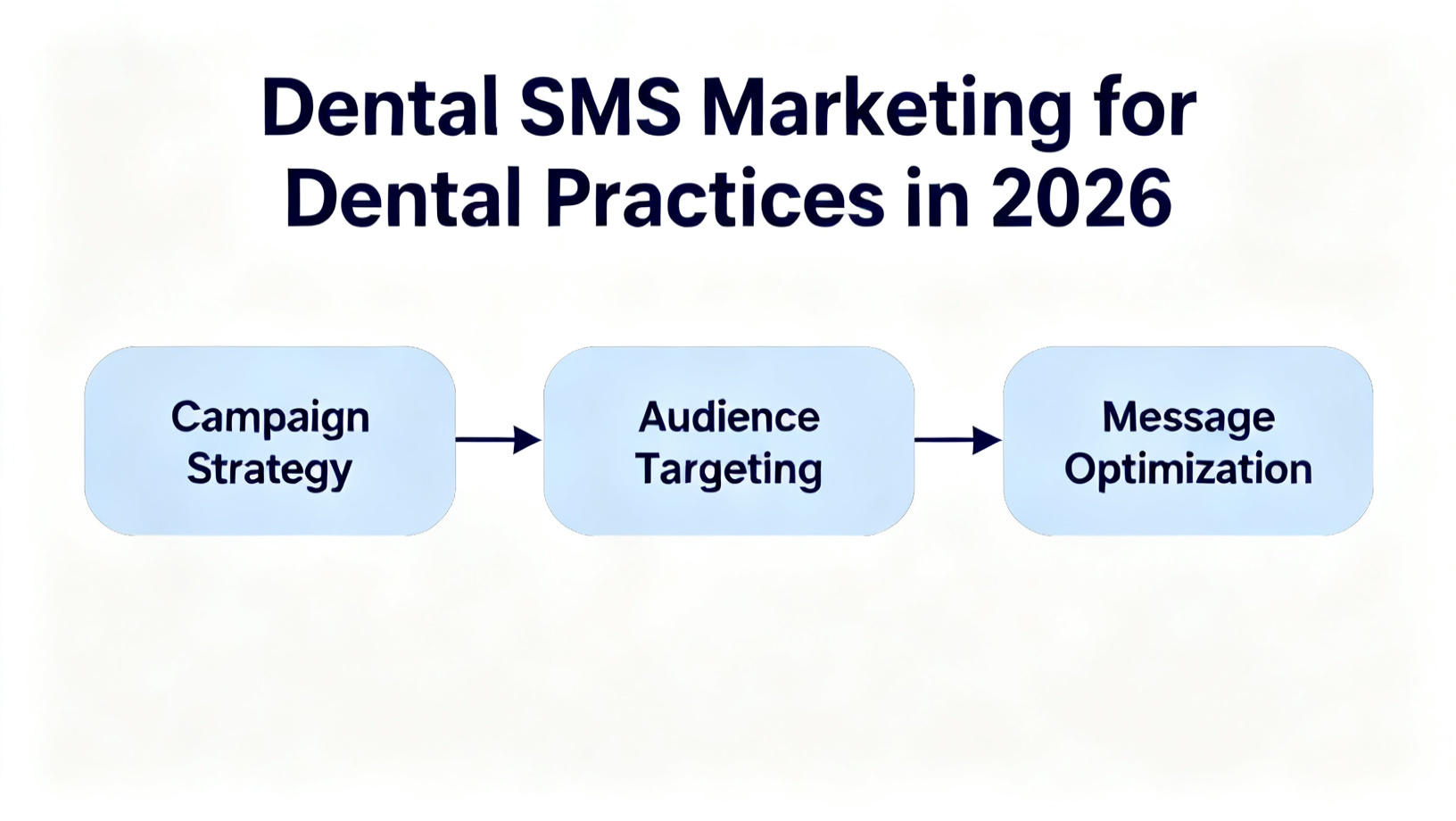
Successful dental SMS marketing starts with selecting a HIPAA-compliant platform that integrates seamlessly with existing practice management software. The implementation process involves three critical phases: platform selection, message template development, and automated workflow creation.
Begin by auditing your current patient communication processes to identify specific pain points. Most practices struggle with appointment confirmations, no-shows, treatment plan follow-ups, and recall scheduling. SMS marketing can address all these challenges through targeted, automated messaging sequences that trigger based on specific patient actions or timeline events.
Platform integration should connect directly with your practice management system to automatically pull patient data, appointment schedules, and treatment histories. This integration enables personalized messaging that references specific treatments, providers, and appointment details without manual data entry.
Message template development requires balancing professionalism with conversational tone. Effective dental SMS messages follow a proven structure: friendly greeting, specific information, clear call-to-action, and easy response options. For example: "Hi [Patient Name]! Dr. [Provider] has an opening tomorrow at 3pm for your crown prep. Reply YES to book or call us at [Number]."
Automated workflows should cover the complete patient journey from initial consultation through ongoing maintenance care. Key automation sequences include appointment confirmations 24-48 hours in advance, day-of reminders 2-4 hours before appointments, post-treatment follow-ups within 24 hours, and recall notifications 30-60 days before due dates.
Compliance training for all staff members ensures HIPAA requirements are met consistently. This includes understanding what patient information can be included in text messages, proper opt-in procedures, and secure message handling protocols. A comprehensive dental marketing strategy should incorporate SMS as one component of an integrated communication approach.
Testing and optimization require ongoing attention to message performance metrics. Track confirmation rates, response times, no-show percentages, and patient satisfaction scores to continuously refine messaging strategies and timing optimization.
Dental SMS Marketing Delivers Measurable ROI Through Multiple Practice Metrics
Data analysis reveals that dental practices implementing comprehensive SMS marketing programs see improvements across virtually every operational metric. The return on investment extends far beyond simple appointment confirmations to encompass treatment acceptance, patient retention, and overall practice efficiency.
No-show rates decrease by 40-60% on average when practices implement automated SMS reminder systems (ADA 2024 benchmark report). This reduction translates directly to increased revenue, as a typical dental appointment generates $200-400 in production value. For a practice averaging 20 appointments daily, reducing no-shows by 50% could generate an additional $75,000-150,000 annually.
Treatment acceptance rates improve by 25-35% when follow-up treatment plans are delivered via personalized SMS sequences (Software Advice 2024). Patients appreciate the convenience of reviewing treatment options and asking questions through text, leading to more informed decisions and higher case acceptance.
Key performance indicators that improve with dental SMS marketing include:
- Appointment confirmation rates: 65% to 90%+ improvement
- Same-day appointment fill rate: 300% increase through last-minute availability alerts
- Patient satisfaction scores: 15-20% improvement in communication ratings
- Staff productivity: 10-15 hours weekly savings on phone-based appointment management
- Collection rates: 20% improvement through payment reminder automation
- Recall compliance: 45% increase in patients maintaining regular cleaning schedules
The average dental practice spends $250-450 per new patient acquisition (Software Advice 2024), making patient retention through improved communication extremely valuable. SMS marketing helps maximize the lifetime value of existing patients while reducing acquisition costs through referral generation and positive online reviews.
Cost analysis shows that comprehensive dental SMS platforms typically cost $50-200 monthly, depending on message volume and feature complexity. When measured against the revenue impact of reduced no-shows, improved treatment acceptance, and enhanced patient retention, the ROI often exceeds 500-1000% within the first year of implementation.
What Are the Most Common Dental SMS Marketing Mistakes That Reduce Effectiveness?
The biggest mistake dental practices make with SMS marketing is treating it like a broadcast channel rather than a conversation tool. Many practices send generic, impersonal messages that feel automated and cold, destroying the intimacy advantage that makes text messaging so effective for patient communication.
Over-messaging represents another critical error that damages patient relationships and increases opt-out rates. Some practices attempt to send daily or multiple weekly messages, overwhelming patients and creating negative associations with the practice. The optimal frequency for most dental practices is 2-4 messages per month per patient, focused on appointment-related communication and important health reminders.
HIPAA compliance violations occur frequently when practices use consumer-grade messaging platforms or include too much protected health information in text messages. Common violations include using personal cell phones for practice communication, sending detailed treatment information without proper encryption, and failing to obtain written consent for SMS communication.
Timing mistakes significantly reduce message effectiveness and can frustrate patients. Sending appointment reminders too early (more than 48 hours) or too late (less than 2 hours) reduces confirmation rates. Similarly, sending messages during inappropriate hours like early morning, late evening, or weekends creates negative patient experiences.
For example, Sunset Dental in California initially sent appointment reminders 72 hours in advance and saw only 45% confirmation rates. After adjusting to 24-hour advance reminders, their confirmation rate increased to 78%, demonstrating the importance of optimal timing.
Poor integration between SMS platforms and practice management software creates workflow inefficiencies and data accuracy problems. When patient information must be manually entered or updated across multiple systems, errors increase and staff productivity decreases. A well-designed dental marketing technology stack ensures seamless data flow between all communication channels.
Message content mistakes include using too much dental jargon, failing to include clear action steps, and neglecting to provide alternative contact methods. Effective dental SMS messages use conversational language, specific details, and multiple response options to accommodate different patient preferences and technical comfort levels.
The Future of Dental SMS Marketing: AI Integration and Advanced Personalization by 2027
Artificial intelligence will revolutionize dental SMS marketing over the next three years, enabling hyper-personalized communication that adapts to individual patient behaviors, preferences, and treatment histories. AI-powered dental communication platforms are projected to serve 80% of practices by 2026 (Dentaltown 2024), representing a massive shift toward intelligent automation.
Predictive analytics will allow dental practices to identify patients at risk of missing appointments or declining treatment recommendations before problems occur. AI algorithms will analyze communication patterns, response times, and engagement levels to optimize message timing, content, and frequency for each individual patient.
Voice-to-text integration will enable patients to respond to appointment reminders using voice messages that are automatically transcribed and processed. This technology will be particularly valuable for older patients who may struggle with text-based responses but are comfortable speaking their replies.
Multi-language support through real-time translation will expand SMS marketing effectiveness for practices serving diverse communities. Automated translation capabilities are expected to increase patient engagement by 40% in multilingual markets by 2027 (Statista 2024).
Smart scheduling algorithms will automatically suggest optimal appointment times based on patient history, provider availability, and practice capacity. Patients will receive personalized appointment options via SMS, with AI handling the entire booking process from initial contact through confirmation.
Integration with wearable health devices and dental health apps will enable proactive oral health coaching through SMS. Practices will send personalized reminders about oral hygiene routines, dietary recommendations, and medication schedules based on real-time patient data.
The convergence of SMS marketing with other digital channels will create seamless omnichannel patient experiences. AI will determine the optimal communication channel for each message type and patient preference, automatically switching between SMS, email, voice calls, and app notifications for maximum effectiveness.
Frequently Asked Questions
How much does dental SMS marketing cost per month?
Most HIPAA-compliant dental SMS platforms cost between $50-200 monthly, depending on message volume and features. Practices typically send 500-2,000 messages monthly, with costs averaging $0.05-0.15 per message including platform fees and compliance features.
Is dental SMS marketing HIPAA compliant?
Yes, when using approved platforms that encrypt messages and require patient consent. HIPAA-compliant SMS platforms include business associate agreements, secure data transmission, and audit trails. Practices must obtain written consent and limit protected health information in messages.
What's the best time to send dental appointment reminders via SMS?
Send appointment confirmations 24-48 hours in advance and day-of reminders 2-4 hours before appointments. Optimal sending times are 10am-12pm and 2pm-5pm on weekdays. Avoid early mornings, late evenings, and weekends unless for urgent communications.
How can dental practices reduce SMS opt-out rates?
Limit messages to 2-4 per month per patient, focus on appointment-related communication, use conversational language, and provide clear value. Always include opt-out instructions and offer alternative communication preferences through your comprehensive marketing approach.
Can SMS marketing help reduce dental practice no-shows?
Absolutely. Automated SMS reminders reduce no-show rates by 40-60% on average. The immediate notification and easy confirmation process help patients remember appointments and reschedule when necessary, significantly improving practice efficiency and revenue.
Conclusion
Dental SMS marketing represents a transformative opportunity for practices ready to modernize patient communication and drive measurable practice growth. The data clearly demonstrates that text messaging outperforms traditional communication methods across every key metric, from appointment confirmations to treatment acceptance rates.
Key implementation strategies include:
- Choose HIPAA-compliant platforms with practice management integration
- Develop conversational message templates with clear call-to-actions
- Implement automated workflows for the complete patient journey
- Monitor performance metrics and optimize messaging continuously
- Prepare for AI-powered personalization and advanced automation features
Ready to transform your patient communication and practice efficiency? Book a free strategy call with our dental marketing experts to discover how SMS marketing can drive growth for your specific practice situation.
Free for practice owners
Get a Free Dental Growth Audit
We will review your Google Ads, website, and follow-up system, then show you exactly where new patients are leaking out of your funnel. No commitment.
Take the Free Audit Free dental marketing guides