
The average mobile app loses 77% of its users within just three days (Adjust, 2024) of installation. This staggering statistic reveals a harsh reality: getting users to download your app is only the beginning. The real challenge lies in keeping them engaged, active, and coming back for more.
Mobile app retention has become the ultimate differentiator between successful apps and those that fade into digital obscurity. While acquisition costs continue to rise, with the average cost per install reaching $4.12 in 2023 (AppsFlyer, 2024), smart businesses are shifting their focus from pure user acquisition to retention optimization. The companies that master retention strategies don't just survive in today's competitive app landscape, they thrive with higher lifetime value, reduced churn rates, and sustainable growth.
This comprehensive guide will equip you with proven, data-driven retention strategies that top-performing apps use to keep users engaged beyond the critical first week. You'll discover how to optimize your onboarding process, implement personalization at scale, leverage push notifications effectively, and create habit-forming user experiences that turn one-time downloaders into loyal, long-term users.
Key Mobile App Retention Statistics:
- Average 30-day retention rate is just 5.7% (Adjust, 2024) across all app categories
- Apps with personalized experiences see 19% higher retention rates (Adjust, 2024) than non-personalized apps
- Users who complete onboarding are 3.2x more likely (AppsFlyer, 2024) to return within 30 days
- Push notification open rates average 7.8% (Statista, 2024), but personalized notifications achieve 14.2%

What Are the Most Effective Mobile App Retention Strategies?
The most effective mobile app retention strategies focus on creating immediate value and building long-term user habits through personalized experiences, seamless onboarding, and continuous engagement optimization. Apps that implement comprehensive retention strategies see average 30-day retention rates of 15-25% (AppsFlyer, 2024), significantly higher than the industry average of 5.7%.
Successful retention begins with understanding user behavior patterns and implementing targeted interventions at critical moments. The first strategy involves optimizing your onboarding experience to reduce time-to-value. Research from UserOnboard shows that users decide whether to keep an app within the first 3-5 interactions (AppsFlyer, 2024), making those initial moments crucial for long-term retention.
Personalization stands as another cornerstone of effective retention. Apps that deliver personalized content and experiences achieve significantly higher engagement rates. Spotify exemplifies this approach through their personalized playlists and recommendations, resulting in users spending an average of 148 minutes per day (AppsFlyer, 2024) on the platform.
The third critical strategy focuses on creating habit-forming experiences through consistent value delivery and behavioral triggers. Apps like Duolingo master this by using streak counters, daily reminders, and progressive difficulty levels that keep users coming back. Their retention strategy has helped them maintain a monthly active user base of over 500 million (Sensor Tower, 2024) users.
Push notifications, when used strategically, serve as powerful retention tools. However, timing and relevance are everything. Apps that send personalized, contextually relevant notifications at optimal times see significantly higher engagement rates and lower uninstall rates compared to those using generic broadcast messages.
How Do You Create an Onboarding Experience That Boosts Retention?
Creating an onboarding experience that boosts retention requires focusing on progressive disclosure, immediate value demonstration, and friction reduction to get users to their "aha moment" as quickly as possible. The most successful apps achieve this by showing core value within the first 60 seconds of use.
Start by mapping your user's journey to identify the shortest path to value. Instagram's onboarding exemplifies this approach by immediately showing users content based on their interests rather than forcing them through lengthy setup processes. This strategy helps them maintain one of the highest Day 7 retention rates at 65% (Sensor Tower, 2024).
Progressive onboarding works better than overwhelming users with everything at once. Break your feature introduction into digestible chunks, introducing advanced functionality only after users demonstrate engagement with core features. Slack uses this approach effectively, starting with basic messaging and gradually introducing channels, integrations, and advanced features as users become more comfortable with the platform.
Eliminate unnecessary steps and reduce cognitive load wherever possible. Every additional field in your signup process can reduce conversion rates by 5-10%. Consider implementing social login options, which can improve completion rates by up to 40% (AppsFlyer, 2024). For businesses looking to optimize their onboarding flows, our comprehensive app marketing strategies include detailed onboarding optimization techniques.
Create contextual tutorials that appear when users need them most, rather than front-loading all instructions. TikTok masters this by showing editing tips and features contextually when users attempt to create their first video, resulting in higher feature adoption and user satisfaction.
Finally, celebrate early wins and progress. Fitbit does this exceptionally well by acknowledging every step, workout, and milestone, creating positive reinforcement loops that encourage continued usage. These micro-celebrations help users build emotional connections with your app from day one.
Personalization Drives Higher Long-Term User Engagement
Personalization has evolved from a nice-to-have feature to a critical retention driver, with personalized experiences generating up to 40% more revenue per user (Adjust, 2024). Modern users expect apps to understand their preferences, behaviors, and needs from the very first interaction.
Machine learning algorithms now enable sophisticated personalization at scale. Netflix's recommendation engine, which accounts for 80% of content watched on the platform (AppsFlyer, 2024), demonstrates the power of algorithmic personalization in driving engagement. Their system analyzes viewing history, time of day, device usage, and even pause patterns to deliver hyper-relevant content suggestions.
Content personalization extends beyond recommendations to include interface customization. Apps that allow users to customize their experience see significantly higher engagement rates. Key personalization strategies include:
- Behavioral segmentation: Group users based on actions rather than demographics for more accurate targeting
- Dynamic content delivery: Adjust app content based on user preferences and past interactions
- Personalized push notifications: Send messages based on user behavior patterns and optimal engagement times
- Adaptive user interfaces: Modify app layout and features based on individual usage patterns
- Location-based customization: Deliver relevant content and features based on geographic location and local preferences
Real-time personalization takes this concept further by adapting the user experience based on immediate context and behavior. Amazon's mobile app exemplifies this approach by adjusting product recommendations, search results, and even page layouts based on current browsing session data and historical patterns.
The key to successful personalization lies in progressive profiling, gathering user data gradually over time rather than requesting everything upfront. This approach reduces initial friction while building increasingly accurate user profiles that enable better personalization over time. Apps using progressive profiling see 25% higher completion rates (AppsFlyer, 2024) in their onboarding processes.
What Common Retention Mistakes Are Killing Your App's Success?
The most damaging retention mistakes often stem from over-communication, generic user experiences, and ignoring user feedback signals that indicate declining engagement. These seemingly minor oversights can dramatically impact your app's long-term success and user satisfaction.
Notification fatigue represents one of the biggest retention killers in 2023. Apps that send more than 5 push notifications per week see uninstall rates 3x higher (Adjust, 2024) than those with strategic notification schedules. Many developers fall into the trap of believing more communication equals better engagement, but the opposite is true.
Generic onboarding experiences that ignore user context and goals create immediate friction. Cookie-cutter tutorials that don't adapt to user skill levels or objectives result in higher abandonment rates. For example, productivity apps that force all users through the same lengthy setup process, regardless of their experience level, see significantly lower Day 1 retention rates compared to apps with adaptive onboarding flows.
Ignoring user behavior signals represents another critical mistake. When users stop engaging with certain features or show signs of decreased activity, many apps fail to implement targeted re-engagement campaigns. Successful apps like Spotify monitor engagement patterns and proactively reach out to users showing decline signals with personalized content recommendations or special offers.
Feature bloat without user education creates confusion and reduces app usability. Adding new features without proper introduction or context can overwhelm users and reduce satisfaction with core functionality. Instagram Stories succeeded because it was introduced gradually with clear instructions, while many apps fail by launching complex features without adequate user education.
Poor performance optimization remains a fundamental retention killer. Apps that take longer than 3 seconds to load lose 53% of users immediately (Google Play Console, 2024). Similarly, apps that crash frequently or consume excessive battery life face higher uninstall rates and negative reviews. Our app marketing optimization services include comprehensive performance auditing to identify and resolve these critical issues.
The Future of Mobile App Retention: Trends Shaping 2026-2027
Mobile app retention strategies are evolving rapidly toward hyper-personalization powered by artificial intelligence and augmented reality integration, fundamentally changing how users interact with mobile applications. By 2026, we expect to see AI-driven retention strategies become standard practice (AppsFlyer, 2025) across all major app categories.
Predictive analytics will enable apps to identify users at risk of churning before they show obvious disengagement signals. Machine learning models will analyze subtle behavioral patterns, usage frequencies, and interaction depths to trigger proactive retention interventions. Companies like Branch are already pioneering predictive user lifetime value models that help apps optimize their retention investments more effectively.
Voice and conversational interfaces will become increasingly important for retention. As voice technology improves, apps will integrate conversational AI to provide personalized assistance and guidance, reducing friction and increasing user satisfaction. This trend will be particularly important for complex applications that currently struggle with user adoption of advanced features.
Augmented reality will create new opportunities for immersive retention experiences. Apps will use AR to provide contextual tutorials, gamified experiences, and enhanced personalization that keeps users engaged longer. Early adopters like IKEA Place have already demonstrated how AR can increase user session length and retention rates.
Privacy-first personalization will become crucial as data regulations tighten globally. Apps will need to deliver personalized experiences while respecting user privacy preferences, likely through on-device processing and federated learning approaches. This shift will reward apps that can create engaging experiences with minimal data collection.
Cross-platform integration will expand beyond simple account syncing to include seamless experience continuity across devices, web platforms, and emerging technologies like smart speakers and wearables. Users will expect their app experiences to adapt intelligently regardless of the device or context they're using.
Frequently Asked Questions
What is considered a good mobile app retention rate?
A good retention rate varies by app category, but generally, 20% Day 1, 10% Day 7, and 5% Day 30 (AppsFlyer, 2024) are considered average. Top-performing apps achieve 40%+ Day 1 and 15-25% Day 30 retention rates through optimized onboarding and engagement strategies.
How often should you send push notifications to retain users?
The optimal frequency is 1-3 personalized notifications per week (Adjust, 2024) maximum. Notifications should be contextually relevant and timed based on individual user behavior patterns rather than sent on fixed schedules to avoid notification fatigue and app uninstalls.
When do most users abandon mobile apps?
Most user abandonment occurs within the first week, with 77% of users abandoning apps within 3 days (Adjust, 2024) of installation. The critical retention window is the first 7 days, making immediate value demonstration and seamless onboarding essential for long-term success.
How can small businesses improve app retention without huge budgets?
Focus on core user experience improvements like faster loading times, simplified onboarding, and basic personalization through user preferences. Implement email re-engagement campaigns and gather user feedback regularly. Our affordable app marketing solutions help small businesses optimize retention cost-effectively.
Conclusion
Mastering mobile app retention requires a strategic approach that prioritizes user value, personalized experiences, and continuous optimization based on user behavior data. The most successful apps focus on creating immediate value through streamlined onboarding, building habit-forming experiences through consistent engagement, and leveraging personalization to keep users coming back.
Key retention strategies for 2024 and beyond include:
- Optimizing onboarding to reach user "aha moments" within 60 seconds
- Implementing AI-driven personalization for content and feature recommendations
- Using strategic push notifications with proper timing and personalization
- Creating habit-forming loops through progress tracking and achievement systems
- Monitoring user behavior signals to identify and prevent churn before it happens
The mobile app landscape continues evolving rapidly, with retention becoming increasingly critical as acquisition costs rise and user expectations grow. Apps that invest in comprehensive retention strategies now will build sustainable competitive advantages that drive long-term success and profitability.
Ready to transform your app's retention strategy and build a loyal user base that drives sustainable growth? Book a strategy call with our app marketing experts to discover how we can help you implement proven retention techniques that keep users engaged and coming back for more.
Free download
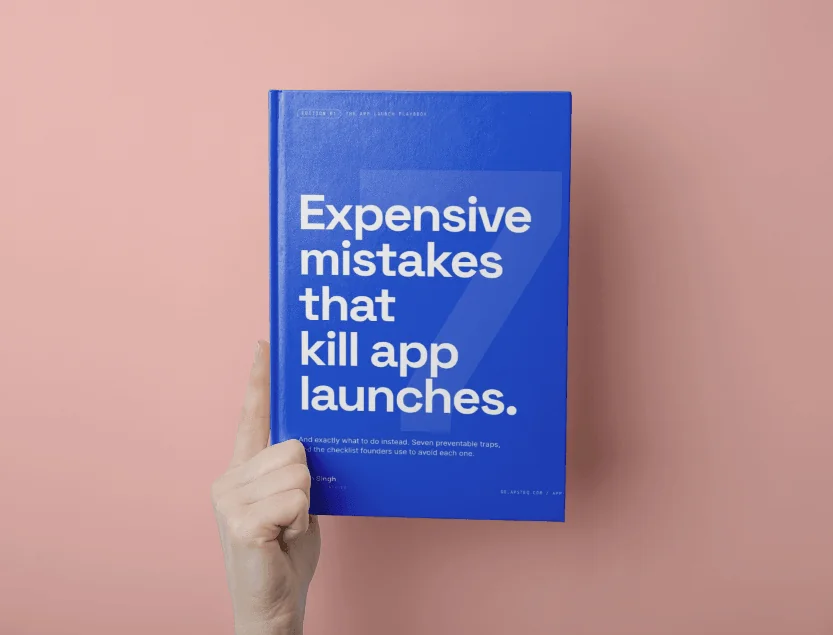
7 Expensive Mistakes That Kill App Launches
The launch errors we see most often across 300+ app engagements, and what to do instead.
Get the Free Ebook Browse all free guides