Apple Search Ads in 2026: What Service Businesses Need to Know to Win on the App Store
Apple Search Ads delivers an average conversion rate of 65% for top-of-funnel app installs, making it one of the highest-intent paid channels available to any business with a mobile app (Apple internal data, cited in Apple Search Ads Help Center, 2025). Yet most service businesses either ignore it entirely or run campaigns so poorly structured that they spend three times more per install than they should. This post covers how Apple Search Ads works, how to build campaigns that convert, what the data says about performance benchmarks across industries, and what mistakes are quietly draining budget right now.
Key Takeaways
- Apple Search Ads average tap-through rates range from 8% to 12% across service categories, compared to under 2% for most social ad formats (Statista, 2025).
- Apps appearing in the first Search Ads slot capture roughly 50% of all taps on that search result page (Apple Search Ads Help Center, 2025).
- Cost-per-tap (CPT) on Apple Search Ads averages $0.50 to $3.00 for service-category apps, depending on keyword competition (Statista, 2025).
- More than 65% of all App Store downloads begin with a search, which means paid search placement directly competes with organic discovery (Apple internal data, 2025).
What Is Apple Search Ads and Why Should Service Businesses Care?
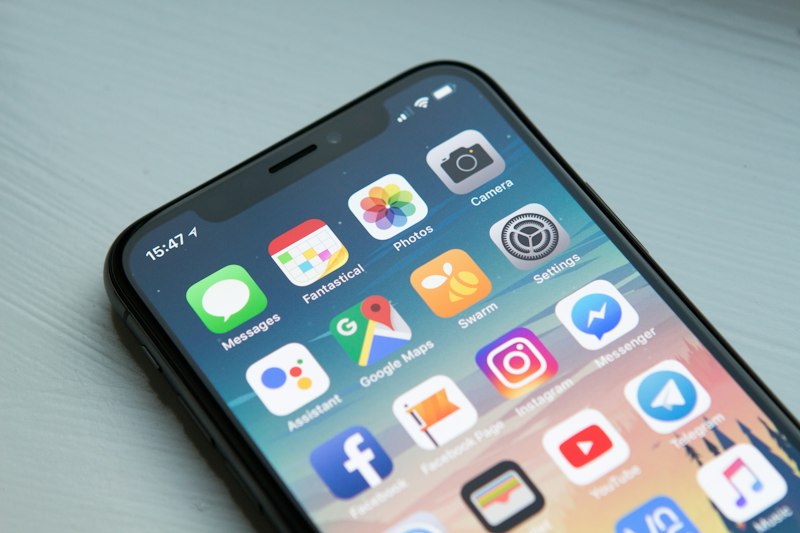
Apple Search Ads is Apple's native paid advertising platform that places your app at the top of App Store search results when users type relevant keywords. For service businesses, this matters because the App Store is not just a software marketplace; it is a high-intent discovery engine where users are already in decision mode.
Think about a dental practice that offers an app for booking appointments, viewing X-rays, or managing treatment plans. When a patient searches "dentist appointment app" or "book dental cleaning," Apple Search Ads can place that practice's app above every organic result. No banner blindness, no feed scrolling, no competition from unrelated content. The ad format itself, a native App Store listing card, looks nearly identical to an organic result, which is a major reason the platform converts so well.
The platform runs on a second-price auction model. You set a maximum cost-per-tap (CPT) bid, Apple runs an auction against competing advertisers, and you pay one cent above the second-highest bid. This keeps costs predictable and rewards relevance. Apple scores your ad not just on bid amount but on relevance signals including app metadata, keyword match quality, and historical performance, meaning a well-optimized app listing with a strong App Store Optimization (ASO) foundation will win placements at lower cost than a poorly optimized competitor willing to pay more.
Two campaign types dominate most strategies. Apple Search Ads Basic is automated and suited for developers with small budgets who want Apple's machine learning to handle bidding. Apple Search Ads Advanced gives full control over keyword selection, match types, audience filters (device type, customer type, geography), and bid strategy. Service businesses serious about growth use Advanced.
The financial case is straightforward. Average cost-per-tap (CPT) on Apple Search Ads ranges from $0.50 to $3.00 for service-category apps (Statista, 2025), and tap-through rates of 8% to 12% dwarf the sub-2% typical of most social formats (Statista, 2025). For a business paying $150 to $400 per customer acquired through other channels, an app install that converts even one in ten users to a paying customer at $1.50 per tap is a strong return on spend.
A real example: a home services company running Apple Search Ads Advanced on keywords like "AC repair near me app" and "plumber booking" can target only users who have never installed the app before (using Apple's "New Users" audience segment), meaning every dollar goes toward net-new customer acquisition rather than re-engaging people already in the funnel.
How Do You Build an Apple Search Ads Campaign That Actually Converts?
Building a converting Apple Search Ads campaign starts with keyword architecture, not bid setting. Most service businesses do it backward, launching with broad match keywords and high bids, then wondering why cost-per-acquisition is unsustainable. The right sequence is: research, structure, bid, and then optimize.
Step 1: Map Keywords to Intent Layers
Divide your keyword list into three buckets. Branded keywords (your app name, your business name) protect against competitors poaching your brand traffic. Category keywords ("appointment booking app," "home services app") capture users browsing the category. Competitor keywords (competitor app names) are legal on Apple Search Ads and often deliver high conversion because users already know they want that type of app. Run each bucket in a separate ad group so you can set individual bids and track performance independently.
Step 2: Use Search Match as a Discovery Layer, Not a Primary Driver
Apple's Search Match feature automatically matches your ad to relevant searches without you specifying keywords. Turn it on in an isolated ad group with a low bid cap, then use the Search Terms report weekly to mine new exact-match keywords. Never run Search Match in the same ad group as your curated keywords; it muddies attribution data.
Step 3: Layer Audience Segments Aggressively
Apple Search Ads Advanced lets you filter by customer type (new users, returning users, users of your other apps) and by device. For service businesses, the "New Users" filter is almost always the right choice for growth campaigns. Returning user campaigns work for re-engagement but belong in a separate campaign with a different bid strategy.
Step 4: Optimize Your App Store Listing First
Paid placement amplifies whatever your App Store page does organically. A weak icon, vague subtitle, or screenshots that don't show the service workflow will tank conversion even at the top of search results. This is where professional ASO services pay for themselves: a stronger listing converts the same paid traffic at a fraction of the cost-per-install, because Apple's relevance scoring rewards listings that users engage with after tapping.
Step 5: Set a 70/30 Budget Split Between Branded and Non-Branded
Branded campaigns almost always deliver the lowest CPT and highest conversion rate. Allocate roughly 70% of budget to branded and high-intent category terms, and 30% to discovery and competitor terms. Adjust the ratio monthly based on Search Terms report data, not intuition.
If you are managing app growth across multiple channels and want a team handling bid strategy, creative testing, and keyword expansion simultaneously, the app marketing services at ApsteQ are built exactly for that workflow.
Apple Search Ads Performance Benchmarks: What the Data Shows
Benchmarking your Apple Search Ads performance against industry data is the fastest way to identify whether you have a bid problem, a keyword problem, or an App Store page problem. The numbers below give you a real baseline.
| Metric | Service Apps (Avg) | Top-Quartile Performers | Source |
|---|---|---|---|
| Tap-Through Rate (TTR) | 8%–12% | 14%–18% | Statista, 2025 |
| Cost-Per-Tap (CPT) | $0.50–$3.00 | $0.40–$1.20 | Statista, 2025 |
| Conversion Rate (tap to install) | 50%–65% | 65%–80% | Apple Search Ads Help Center, 2025 |
| Cost-Per-Install (CPI) | $1.50–$5.00 | $0.80–$2.00 | Statista, 2025 |
| Share of downloads from search | 65%+ | 70%+ | Apple internal data, 2025 |
A few things stand out in this data:
- The gap between average and top-quartile CPT is significant. Top performers pay 40%–60% less per tap, not because they bid lower, but because their relevance scores are higher. Better ASO and tighter keyword-to-listing alignment drive this difference.
- Conversion rates from tap to install are already high across the board, which tells you the App Store search intent is genuine. The bigger drop-off for most service businesses happens after install, not before, meaning retention and onboarding matter as much as acquisition spend.
- Cost-per-install for top performers ($0.80–$2.00) is dramatically cheaper than comparable paid social CPIs, which routinely run $4.00–$12.00 for service categories on Meta platforms (Statista, 2025).
ApsteQ Insight: Service businesses that treat Apple Search Ads as a standalone acquisition channel, separate from their ASO and onboarding strategy, consistently overpay for installs. The channel works best when all three layers (search ad, App Store listing, first-session experience) are optimized together.
What Mistakes Are Killing Your Apple Search Ads ROI?
The most expensive Apple Search Ads mistakes are structural, not tactical. Fixing bid amounts or switching match types will not save a campaign built on the wrong foundation.
Mistake 1: Running Every Keyword in One Ad Group
This is the single most common error. When branded, category, and competitor keywords share one ad group, you cannot differentiate bids, you lose clean attribution data, and Apple's relevance algorithm cannot optimize effectively. A home cleaning service that lumps "Molly Maid app," "cleaning service booking app," and "house cleaning app" into one group will pay inflated CPTs across the board because the system cannot determine which keyword type deserves which bid level.
Mistake 2: Ignoring Negative Keywords
Search Match is a useful discovery tool, but without a disciplined negative keyword list it will match your ad to searches that will never convert. A dental booking app getting matched to "dental games for kids" wastes real budget. Pull your Search Terms report every week and add irrelevant terms to your negative keyword list. Most service businesses check this monthly at best.
Mistake 3: Treating Apple Search Ads Like Google Ads
The auction mechanics look similar, but the intent signals are different. Google users search for information; App Store users search because they want to install something. This means very short, action-oriented keywords ("book dentist," "HVAC repair") perform better on Apple Search Ads than the long-tail informational queries that dominate Google strategy. Applying a Google keyword list directly to Apple Search Ads regularly inflates CPTs by 30%–50% compared to a purpose-built Apple keyword list.
Mistake 4: Skipping the App Store Page Optimization Step
Paid traffic hitting a weak App Store page is money burned. If your screenshots show generic feature lists rather than real service workflows, if your app description buries the value proposition, or if your ratings average below 4.2 stars, your paid conversion rate will lag the benchmarks in the table above. This is why ASO and paid search need to run in parallel, not in sequence.
Mistake 5: Measuring Installs Instead of Post-Install Conversions
An install from a new user who never opens the app again is not a win. Service businesses need to connect Apple Search Ads data (via the attribution API) to their CRM or analytics platform so they can see which keywords drive users who actually book appointments, make purchases, or complete onboarding. Without this connection, budget naturally flows toward keywords that drive cheap installs, not profitable customers.
Where Is Apple Search Ads Heading in 2026 and 2027?
Apple Search Ads is expanding beyond the Search tab. The platform now serves ads on the App Store Today tab, within search result pages of third-party apps, and on product pages during the browse experience. This means the addressable inventory is growing, and the auction dynamics are shifting.
Two trends are reshaping how service businesses should think about the platform through 2027.
Custom Product Pages are becoming a core paid strategy. Apple now allows up to 35 custom App Store product pages, each with different screenshots, promotional text, and app previews. Advertisers can route Apple Search Ads traffic to a specific custom page matched to the keyword intent. A property management app can show apartment-search-specific screenshots to one keyword group and landlord-tool screenshots to another. The brands investing in custom page testing are already seeing conversion rate lifts of 20%–35% compared to defaulting to the main store listing.
Privacy-first attribution is tightening. Apple's App Tracking Transparency (ATT) framework, combined with the company's ongoing restrictions on third-party data, is pushing advertisers toward Apple's own measurement tools (SKAdNetwork, Apple Search Ads attribution API). By 2027, marketers who have not built their attribution stack around Apple's native tools will have significant blind spots in their funnel data. This is not speculation; it follows the trajectory Apple has signaled consistently since iOS 14.
For service businesses, the practical implication is clear: getting skilled at Apple Search Ads now, before auction competition intensifies further, is a real timing advantage. The cost-per-install benchmarks in this post will be harder to achieve in 18 months than they are today.
Frequently Asked Questions
What is the minimum budget to start with Apple Search Ads?
Apple Search Ads Advanced has no formal minimum budget, but most service businesses need at least $500 to $1,000 per month to generate enough data for optimization decisions. Below that threshold, impression volume is too low to draw statistically meaningful conclusions from the Search Terms or keyword performance reports within a reasonable test window.
How long does it take to see results from Apple Search Ads?
Initial tap and install data appears within 24 to 48 hours of a campaign going live. Meaningful optimization data, enough to adjust bids, add negative keywords, and identify top-performing keywords, typically requires 2 to 4 weeks and at least 50 to 100 installs per ad group. Branded campaigns deliver results fastest; category and competitor campaigns take longer to stabilize.
Is Apple Search Ads better than Google App Campaigns for service businesses?
They serve different functions. Apple Search Ads targets iOS users with explicit App Store search intent, delivering average conversion rates of 50%–65% from tap to install (Apple Search Ads Help Center, 2025). Google App Campaigns span Search, YouTube, Display, and Play, offering broader reach but lower intent precision. Most service businesses with iOS apps should run both, with Apple Search Ads handling high-intent acquisition and Google handling scale.
Can Apple Search Ads work for businesses without a dedicated app marketing team?
Basic campaigns can run with minimal oversight, but Advanced campaigns require weekly keyword audits, negative keyword management, and bid adjustments to stay efficient. Without that ongoing work, costs drift upward and performance stagnates. Many service businesses find it more cost-effective to work with a dedicated app marketing partner rather than splitting attention between running the business and managing campaign architecture.
How does Apple Search Ads interact with App Store Optimization (ASO)?
Apple Search Ads and ASO reinforce each other directly. Apple's relevance algorithm rewards apps with strong organic keyword rankings, high ratings, and compelling store listings by giving them better ad placements at lower CPTs. Running paid campaigns without optimizing the App Store listing first means paying a premium for traffic that converts poorly. The two should be managed as one integrated strategy, not separate workstreams.
Conclusion
Apple Search Ads is one of the highest-intent paid acquisition channels available to service businesses with a mobile app, but most campaigns underperform because of structural errors, not budget limitations. The core lessons from this post:
- Segment branded, category, and competitor keywords into separate ad groups from day one.
- Benchmark CPT ($0.50–$3.00) and conversion rate (50%–65%) against your actuals weekly.
- Optimize your App Store listing before scaling paid spend, not after.
- Connect install data to post-install behavior to measure real ROI, not just volume.
- Custom Product Pages and Apple-native attribution are the two biggest levers for 2026 and 2027.
If you want a team to audit your current Apple Search Ads setup or build a campaign structure from scratch, book a free strategy call with ApsteQ and we will show you exactly where your current spend is leaking and how to fix it.
Not sure where your growth is leaking?
Book a free strategy call with the ApsteQ team. We will walk your funnel end to end and show you the two or three fixes with the biggest revenue impact.
Book a Free Strategy Call