
Dating app advertising is paid user acquisition for apps where people look for partners or friends. You buy installs on Meta, TikTok, Google and Apple Ads with creative that passes each platform's dating rules, and you balance the audience so women stay active. Done well, it is a supply problem as much as a media-buying one.
Dating is a big pool. 53% of U.S. adults under 30 have used a dating site or app (Pew Research Center, 2023). Yet most dating campaigns stall for boring reasons: ads get rejected, one gender floods the app, or creative cannot say what the app does. This 2027 guide covers the policies, safe creative angles and women-first acquisition tactics that matter for U.S. app companies.
Key takeaways
- 30% of U.S. adults have used a dating site or app, and 10% of partnered adults met their partner that way (Pew Research Center, 2023). Demand is not your problem; targeting and trust are.
- Meta, Google, TikTok and Apple each treat dating as a sensitive category. Read all four policy pages before you brief creative.
- In an ApsteQ case study, 113 video ads drove 41,420 installs, against 468 installs from 83 image ads (ApsteQ, LunarLinc case study). Video carried the campaign.
- Acquire women first or on purpose. Men install in volume; women decide whether the app has anyone worth talking to.
How does dating app advertising work in 2027?
Dating app advertising works as a loop: paid ads bring in installs, the app converts them into profiles, and the profile mix decides whether new users stay. The ad platform only sees the install and the events you send back, so your optimization signal matters more than your targeting.
Four channels do most of the work for U.S. dating apps. Meta (Facebook and Instagram) gives the broadest reach and mature app campaigns. TikTok reaches under-30 users, the group Pew found most likely to use dating apps. Google App campaigns capture Play Store and search intent. Apple Ads catch people already searching the App Store for a dating app. Each has a different policy posture, covered in the table below.
The market is mature and wide. 30% of U.S. adults say they have used a dating site or app (Pew Research Center, 2023). That means you are rarely educating anyone. You are competing for attention against apps people already know, so your ad has to answer one question fast: why this app instead of the one on my phone?
Women-first acquisition is the practice of weighting spend, creative and onboarding toward women so the app reaches a usable gender balance before you scale male installs. It matters because a dating app is a two-sided market. If men open the app and find nobody, they leave and tell the store review page so.
A named example shows the creative side. ApsteQ ran Meta app campaigns for LunarLinc, a friendship app on Android that started in India and went from zero to 50K+ Google Play downloads since November 2023. Those campaigns delivered 41,420 installs (ApsteQ, LunarLinc case study). It is a friendship app rather than a romance app, but the lesson carries: social-discovery products need ads that show people connecting, not feature lists.
What are the ad policies for dating apps on Meta, Google, TikTok and Apple?
Each major platform restricts dating ads in some way, and approval rules change, so check the live policy page before every new campaign. In practice that means no explicit imagery, no implied guarantees of hookups or matches, and accurate descriptions of what the app does.
| Platform | Policy page | What to plan for |
|---|---|---|
| Meta | Online dating ad standard | Treated as a restricted category; confirm whether your account needs prior permission and age targeting limits. |
| Google Ads | Google Ads policy center (search "dating and companionship") | Sexual content rules apply; local and regional restrictions can limit where ads run. |
| TikTok | TikTok industry entry policies | Sensitive industries have entry requirements and creative limits; read before you brief creators. |
| Apple Ads | Apple Ads policies and App Store Review Guidelines 1.2 | Your listing and app must have reporting, blocking and filtering for user-generated content. |
Treat the table as a starting checklist, not legal advice. Policy text changes, and reviewers read ads and landing pages together. If the ad promises one thing and the store page shows another, expect a rejection.
How do you run women-first acquisition for a dating app?
Women-first acquisition starts with a clear target ratio, then you steer spend, creative and onboarding to reach it. You do this with separate campaigns by gender, creative that speaks to safety and quality, and a cap on male install spend until the pool of active women supports it.
Here is the sequence we would follow.
- Set a ratio target. Pick a launch-city goal, for example roughly even active profiles, and track it weekly by city. Without a target you cannot tell if spend is working.
- Split campaigns by gender. Run separate ad sets so you can bid, budget and test creative independently. Pause or cap the male set when the ratio drifts.
- Write women-facing creative around safety and signal. Verified profiles, who-can-message-first controls and block tools are real product features and make honest ad angles.
- Optimize for a quality event. Send a deeper event back to the platform, such as completed profile with photo or first conversation, rather than raw install. This steers delivery toward users who stick.
- Fix the store page. Your app store optimization work (screenshots, description, reviews) should carry the same promise as the ads.
- Review by cohort. Judge each week's cohort on day-7 retention and conversations started, not install cost.
For illustration: imagine a dating app launching in one U.S. city with $20,000 for the first month. It might put $12,000 behind women-facing creative and $8,000 behind men, then move the split weekly based on the active-profile ratio. The round numbers are an example of the logic, not a benchmark. Our dating app marketing service and wider user acquisition work follow this same loop.
How ApsteQ approaches dating app advertising
ApsteQ approaches dating campaigns as a supply-and-demand problem first and a media-buying problem second. We have worked on 300+ apps and brands since 2015, with founder Arsh Singh bringing 20+ years in growth marketing. Across that work our team of 40+ specialists has driven 52M+ installs and managed $2.5M+ in ad spend.
Practically, that means we start with an audit of your store page, event setup and current creative, then build a test plan across Meta, TikTok, Google and Apple Ads. We check each concept against the policy pages above before it goes live, so you do not lose a week to a rejection. You can read how we structure this on our dating app marketing page, or request a free app audit to see where your funnel leaks.
What the data says about creative, retention and audience
The numbers that matter most for dating apps are the market size, the creative format split, and whether downloads turn into active users. Public benchmark data on dating-specific costs is thin and often paywalled, so we lean on what can be linked and verified.
- Audience is deep, especially among younger adults. 53% of U.S. adults under 30 have used a dating site or app (Pew Research Center, 2023). Under-30 targeting on TikTok and Instagram is therefore the obvious first test.
- Outcomes are real, which helps trust. 10% of partnered U.S. adults met their partner on a dating site or app (Pew Research Center, 2023). Honest "people do meet here" messaging is credible, but promises about your own match rate are not.
- Video beat static in our named case. 113 video ads drove 41,420 installs versus 468 installs from 83 image ads (ApsteQ, LunarLinc case study). That works out to roughly 366 installs per video ad against about 6 per image ad (our arithmetic from those figures).
- Active use depends on the product. In ApsteQ's Enjoy Movies Your Way case study, 76% of downloads were active monthly by December 2023 (ApsteQ). It is a family streaming app, not dating, but it shows that a well-targeted, honest campaign can attract users who stay.
Read together, these point to one habit: measure beyond installs. A cheap install from a mismatched audience costs you twice, once in media and once in a worse store rating.
Safe creative angles that tend to pass review
| Angle | Why it holds up | Watch out for |
|---|---|---|
| Real conversations (UGC-style screen recordings) | Shows the product honestly | Blurred or fake faces can look deceptive |
| Safety and verification features | Appeals to women and aligns with Apple's UGC rules | Do not claim "100% safe" |
| Shared interests and prompts | Keeps tone friendly, not suggestive | Avoid targeting-implying copy such as "Are you single?" in some placements |
| First-date stories from creators | Native feel on TikTok | Disclose paid partnerships |
What mistakes waste dating app ad budgets?
The costliest mistakes are ignoring the gender balance, writing creative that breaks policy, and optimizing for the cheapest install. Each one looks fine in the ad dashboard and shows up weeks later in retention.
1. Scaling men's installs before women's
For illustration: imagine an app that spends $30,000 in a month and gets 90% male signups. The cost per install looks great. Within two weeks, men report nobody to talk to, ratings drop, and the next round of ads performs worse because the store page now says 3.1 stars. Fix it by capping the male set and putting budget behind women-facing creative first.
2. Writing creative that reads as suggestive
Ads that lean on innuendo get rejected or limited, and reviewers also read the landing page. Use the policy pages in the table above as a pre-flight list. When an ad is rejected, resist the urge to tweak one word and resubmit; rewrite the angle.
3. Treating install cost as the goal
The cheapest installs often come from the broadest audience, and the broadest audience contains the people least likely to create a profile. Send a deeper event, such as profile completed, so the platform learns who sticks. This is the same logic behind full-funnel app marketing, where acquisition, store page and retention are planned together.
4. Letting the store page contradict the ad
If your ad shows a calm, verified-profile experience and the store screenshots show a noisy swipe grid, people bounce. Align screenshots, description and ad promise, and check Apple's user-generated content rules so your listing is not flagged for missing reporting and blocking tools.
5. Skipping the test plan
Running one concept for a month tells you nothing. Plan at least three distinct concepts per channel, give each a fixed test window, and kill losers on a rule set agreed beforehand. In the LunarLinc case above, the gap between video and image was visible only because both formats were run at volume.
What will dating app advertising look like in 2027?
Expect more emphasis on privacy-safe measurement, creator-led video and trust features in ads. The mechanics of buying installs will stay familiar, but what you can measure per user will keep shrinking on iOS, so creative and product signals carry more weight.
- Measurement on iOS leans on aggregate attribution. Apple's AdAttributionKit documentation describes the privacy-preserving system, so plan campaigns around cohort-level results rather than user-level tracking.
- Younger users are the core. With 53% of adults under 30 having used dating apps (Pew Research Center, 2023), short-form video and creator content will stay central to acquisition.
- Trust becomes a hook. Verification, moderation and safe-messaging features are product facts you can advertise honestly, which suits both platform policy and women-first goals.
- Automation grows around the ads. Creative tagging, review-reply drafting and reporting are good candidates for AI automation, which frees the team to focus on concept testing.
Frequently Asked Questions
How much should a dating app spend on ads to test a new market?
There is no universal figure, so size the test to the learning you need. Plan for at least 3 creative concepts per channel and a window of 2 to 4 weeks before judging results. Track day-7 retention and profiles completed alongside cost per install, and scale only the cohorts that stick.
Can you advertise a dating app on Meta and TikTok?
Yes, but both treat dating as a sensitive category with their own rules. Meta lists an online dating ad standard, and TikTok publishes industry entry policies. Read both before building creative, since approval requirements can change and rejected ads delay a launch by days.
Do video ads beat image ads for dating and social apps?
In one ApsteQ case, they did by a wide margin. For the friendship app LunarLinc, 113 video ads drove 41,420 installs, against 468 installs from 83 image ads. That is one campaign, not a law, but it justifies testing video first.
How do you attract more women to a dating app?
Run separate campaigns by gender, lead women-facing creative with safety and verification features, and cap male install spend until the ratio improves. Judge success on active profiles per city, not total installs. Our dating app marketing team builds this loop for U.S. launches.
What creative angles are safest for dating app ads?
Screen recordings of real conversations, safety features, shared-interest prompts and creator first-date stories pass review most often. Avoid sexual innuendo, guarantees of matches and blurred fake faces. Test at least 3 angles per platform, and check each against the live policy page before you submit.
Conclusion
Dating app advertising rewards teams that plan around the ratio, the policies and the retention curve, not just the install price. Here is what to take away:
- Check Meta, Google, TikTok and Apple policy pages before every creative brief.
- Run women-first acquisition with separate campaigns and a weekly ratio target.
- Test video early; in the LunarLinc case it produced 41,420 installs from 113 ads.
- Optimize for profile and conversation events, not only installs.
- Keep ad promise, store page and in-app experience consistent.
Want a second pair of eyes on your funnel? Get a free app audit, or book a free strategy call and we will map a 2027 acquisition plan for your app.
Free download
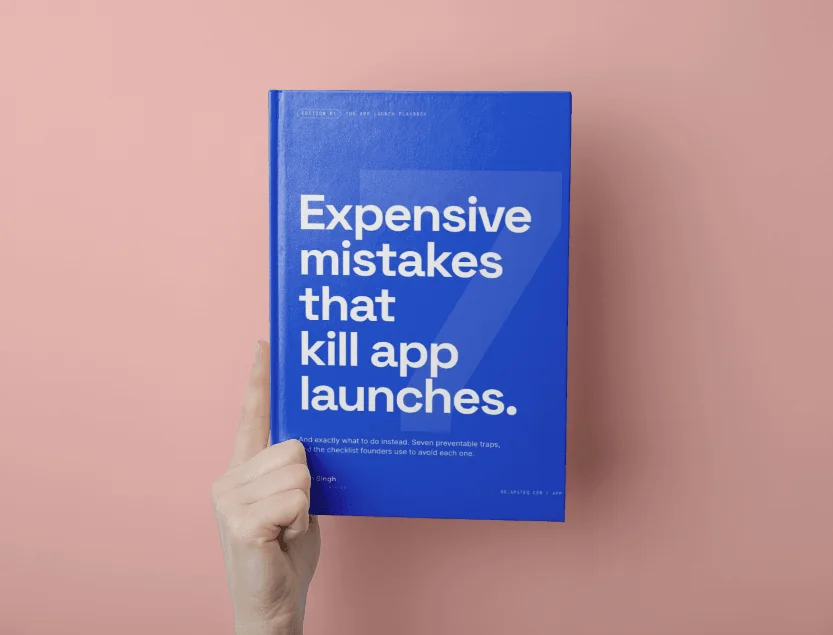
7 Expensive Mistakes That Kill App Launches
The launch errors we see most often across 300+ app engagements, and what to do instead.
Get the Free EbookBrowse all free guides