
Offshore Mobile App Development in 2026: What Actually Works (and What Doesn't)
Software development labor costs in North America run roughly 3 to 5 times higher than equivalent talent in Eastern Europe or South Asia (Statista 2025), yet a majority of US mobile app companies that try offshore development report missing their first major milestone. The gap between "cheap labor" and "working product" is wider than most budget spreadsheets suggest. This post breaks down how to close that gap: how to structure an offshore engagement, what the real cost benchmarks look like, which mistakes kill projects before launch, and where the market is heading through 2027.
Key Takeaways
- North American mobile dev rates average $100 to $180 per hour versus $25 to $55 in Eastern Europe and $18 to $45 in South/Southeast Asia (Statista 2025).
- Apps with strong retention mechanics keep 30-day retention above 42% on average; most offshore-built apps that skip product strategy land well below that benchmark (Adjust Mobile App Trends Report 2024).
- The global mobile app development market is projected to exceed $583 billion by 2030, making execution quality, not cost savings alone, the real competitive lever (Statista 2024).
- Post-launch marketing, not development, now accounts for the majority of total app budget at scale; offshore savings mean little without a parallel app marketing strategy.

What Is Offshore Mobile App Development, and Is It Actually Cost-Effective?
Offshore mobile app development is the practice of hiring a software engineering team located in a different country, typically one with lower labor costs, to design, build, and test a mobile application. Done well, it can cut build costs by 40 to 60 percent. Done poorly, it costs more than hiring locally once you factor in rework, delayed launches, and lost market windows.
The math looks compelling on paper. A typical US-based mid-tier mobile app build (native iOS plus Android, three to five core features, basic backend) runs $120,000 to $300,000 locally. The same scope with a vetted Eastern European team lands closer to $50,000 to $120,000, and a South Asian team can quote $25,000 to $70,000. That spread is real (Statista 2025). But the spread in outcomes is equally real.
The projects that succeed offshore share three structural traits: a detailed product requirements document written before any code is committed, a named project manager on the client side who owns the relationship daily, and a staged payment schedule tied to testable milestones rather than calendar dates. Projects that skip any one of these routinely run 40 to 80 percent over schedule.
For a concrete example using published data: LunarLinc, a friendship app built for the Android market in India, went from zero to 50,000 Google Play downloads since November 2023 after working with a structured development and marketing process. The campaign produced 41,420 installs through Meta app campaigns, with 113 video ads driving those installs versus only 468 from 83 image ads in the same period (ApsteQ LunarLinc case study). The lesson is not just the cost of the build; it is that a well-structured offshore-friendly market entry, combined with disciplined creative testing, produces compounding results.
Cost-effectiveness also depends on what you are building. Simple utility apps or MVP validations are ideal offshore candidates. Apps requiring deep platform integrations, hardware APIs, or real-time compliance review (healthcare, fintech) carry higher coordination overhead that erodes the hourly-rate savings. Know your category before you commit to a model.
How Should You Structure an Offshore Mobile App Engagement?
Structure is where offshore projects succeed or fail. A clear engagement model, set before the first line of code, determines whether you get a product or a pile of tickets. Here are the steps that consistently produce launched, functional apps.
Step 1: Write a product requirements document before sourcing a team
Your PRD should define user flows, platform targets (iOS, Android, or cross-platform), third-party integrations, and acceptance criteria for each feature. Teams that receive a PRD of 10 or more pages quote more accurately and deliver closer to scope. Teams that receive a Figma file and a verbal brief do not.
Step 2: Choose your offshore model deliberately
Three models exist. A dedicated team means you hire a full pod (PM, designer, two to four engineers, QA) from an agency or staff-augmentation firm; you pay a monthly retainer and own the roadmap. A fixed-price project works for clearly scoped MVPs; the vendor owns delivery risk but you sacrifice flexibility. A time-and-materials contract gives flexibility but requires active client-side management. Fixed-price suits first-time offshore buyers; dedicated teams suit companies scaling a live product. Learn more about the tradeoffs on the app development services page and compare total investment ranges on the app development cost guide.
Step 3: Run a paid discovery sprint first
Before committing to a full build, pay the shortlisted team $3,000 to $8,000 for a two-week technical discovery. They produce a system architecture document, a revised scope estimate, and a risk register. Any team that refuses this structure or discounts it to zero is telling you something about how they handle ambiguity downstream.
Step 4: Build communication infrastructure on day one
Shared Slack or Teams channel, daily async standups in writing, weekly video syncs, and a Jira or Linear board your team can read in real time. Overlap at least two hours of working time per day, especially when time zones are more than six hours apart. Communication gaps compound; a missed clarification on day three becomes a wrong feature on day thirty.
Step 5: Gate payments to milestones, not months
A payment schedule tied to deliverables (wireframes approved, backend API documented and tested, beta build passing acceptance criteria) keeps both parties aligned. A schedule tied to calendar weeks rewards attendance, not output.
The Real Cost Benchmarks: What Offshore Mobile App Development Actually Costs in 2026
Cost benchmarks matter most when they are specific. Here is what the data shows across regions and project types in 2026.
| Region | Avg. Hourly Rate (USD) | Typical MVP Cost (3-5 features) | Quality Risk Level |
|---|---|---|---|
| United States / Canada | $100 to $180 | $120,000 to $300,000 | Low |
| Western Europe | $80 to $150 | $100,000 to $250,000 | Low |
| Eastern Europe (Poland, Ukraine, Romania) | $35 to $75 | $50,000 to $120,000 | Low to Medium |
| Latin America (Colombia, Argentina, Mexico) | $30 to $65 | $45,000 to $100,000 | Low to Medium |
| South/Southeast Asia (India, Philippines, Vietnam) | $18 to $45 | $25,000 to $70,000 | Medium to High |
Sources: Statista 2025, Clutch.co developer rate survey 2024 (https://clutch.co/resources/how-much-does-it-cost-to-develop-an-app)
Three additional data points sharpen the picture:
- Cross-platform frameworks (React Native, Flutter) reduce build time by 30 to 40 percent versus separate native builds, making them the default choice for budget-constrained offshore projects (Sensor Tower Developer Survey 2024).
- App store optimization, analytics setup, and post-launch bug fixing typically add 15 to 25 percent to the original build quote; most offshore contracts exclude these by default (AppsFlyer State of App Marketing 2024 (https://www.appsflyer.com/resources/reports/app-marketing-industry-benchmarks/)).
- The average time from signed contract to live App Store/Google Play listing for an offshore MVP is 14 to 22 weeks, depending on complexity and review cycles (Adjust Mobile App Trends Report 2024 (https://www.adjust.com/resources/ebooks/mobile-app-trends-2024/)).
The hidden cost most US buyers underestimate is integration debt: third-party APIs, payment gateways, and notification services that were quoted as "included" but scoped only at a surface level. Budget a 20 percent contingency line specifically for integration work on any offshore fixed-price contract.

What Mistakes Kill Offshore Mobile App Projects Before Launch?
Most offshore failures are predictable. The same patterns appear repeatedly, and knowing them in advance is the best insurance you can buy before signing a contract.
Mistake 1: Choosing on price alone
The lowest quote almost always reflects the lowest investment in discovery. A $15,000 MVP quote from a team that asked three questions before estimating is a quote for something, just not necessarily the app you described. Evaluate vendors on their questions, not their price. A team that pushes back on ambiguous requirements and asks for a PRD before quoting is demonstrating exactly the behavior you need from them during the build.
Mistake 2: Treating the offshore team as a code factory
Product decisions made in the US without consulting the engineers who have to implement them produce fragile architecture. Daily async updates and weekly video reviews are not overhead; they are the mechanism by which the offshore team flags technical risk before it becomes rework. Teams that are asked to "just build what is on the Figma" without input produce technically correct but strategically brittle apps.
Mistake 3: Skipping post-launch planning during the build
For illustration: imagine an app ships on schedule, passes App Store review, and gets no downloads in month one because no ASO work, no keyword research, and no launch creative were commissioned alongside the build. This is not a hypothetical failure mode; it is the default outcome when development and marketing are treated as sequential rather than parallel tracks. The EarningsCall fintech app avoided this pattern by building retention mechanics and user acquisition strategy in parallel with the product: the result was 60 percent of downloads converting to monthly active users (3,000-plus MAU on 5,000-plus downloads) within the first campaign window (ApsteQ EarningsCall case study). Explore how user acquisition strategy can run parallel to your build timeline.
Mistake 4: No IP assignment clause in the contract
Some offshore contracts, especially from lower-cost vendors, default to the vendor retaining ownership of custom code until full payment is received, and some are vague on ownership even after payment. Before signing, confirm that the contract includes an explicit IP assignment clause transferring all work product to your company upon each milestone payment. This is a legal issue, not a relationship issue; a good vendor will have no objection to signing it.
Mistake 5: Ignoring App Store compliance from day one
Apple and Google's guidelines change frequently. An offshore team focused on delivery speed may build features that pass internal QA but fail review on submission. Assign one team member the task of reading the current App Store Review Guidelines and Google Play Developer Policy at the start of the project, not the end.
Where Is Offshore Mobile App Development Heading in 2026 and 2027?
Three trends are reshaping how US mobile app companies use offshore talent, and they will accelerate through 2027.
AI-assisted development is compressing timelines. Tools like GitHub Copilot and purpose-built code generation models are cutting boilerplate development time by 20 to 35 percent according to published productivity studies from GitHub (GitHub Octoverse Report 2024, https://octoverse.github.com/). Offshore teams that have adopted these tools are passing some of that efficiency to clients in the form of shorter sprints. Teams that have not adopted them will fall behind on delivery speed even at lower hourly rates.
Nearshore is growing faster than far-shore. Latin American developer talent, particularly in Colombia, Argentina, and Mexico, grew headcount significantly between 2022 and 2025. Closer time zones (one to three hours from US East Coast), improving English proficiency, and comparable quality to Eastern Europe at slightly lower rates are drawing US buyers away from South Asian vendors for projects requiring daily collaboration (Statista 2025).
The compliance surface is expanding. New US state-level data privacy laws, App Store privacy manifest requirements (mandatory from Apple since May 2024), and emerging EU Digital Markets Act obligations mean that offshore teams must now carry compliance knowledge that was previously optional. By 2027, expect RFPs from US mobile app companies to include explicit compliance capability requirements as standard line items, not afterthoughts.
AI automation is also entering the QA layer: automated testing agents are reducing manual QA costs by 15 to 30 percent on offshore-built apps. If you are evaluating vendors, ask specifically about their automated testing stack. Learn how AI automation services can integrate into your app development pipeline from the start.
Frequently Asked Questions
How much does offshore mobile app development typically cost in 2026?
A three-to-five feature MVP built by an Eastern European team typically runs $50,000 to $120,000; South/Southeast Asian teams quote $25,000 to $70,000 for the same scope. Add 15 to 25 percent for post-launch ASO, analytics setup, and bug fixing, which most offshore contracts exclude by default (Clutch.co Developer Rate Survey 2024).
Which offshore region offers the best balance of cost and quality for US app companies?
Eastern Europe and Latin America consistently score highest for quality-to-cost ratio among US buyers in 2026. Both regions offer hourly rates of $30 to $75, strong English proficiency, and time zone overlap of two to eight hours with US markets. South/Southeast Asia offers lower rates but requires more active management to maintain quality (Statista 2025).
How do I protect my intellectual property when working with an offshore team?
Require an explicit IP assignment clause in the contract that transfers all work product to your company upon each milestone payment. Avoid vendors whose default contracts include "license" language rather than ownership transfer. Have a US-licensed attorney review the contract before signing; this typically costs $500 to $1,500 and is money well spent on any build over $30,000.
What is the typical timeline from contract to App Store launch for an offshore MVP?
The average offshore MVP takes 14 to 22 weeks from signed contract to live App Store or Google Play listing, depending on feature complexity, third-party integrations, and App Store review cycles (Adjust Mobile App Trends Report 2024). Add two to four weeks if the app requires regulatory compliance review, such as HIPAA for health apps or financial licensing for fintech.
How should I evaluate offshore app development vendors before hiring?
Request a paid two-week discovery sprint ($3,000 to $8,000) before committing to a full build; any vendor who refuses is a red flag. Review their published case studies for apps in your category, ask for references from clients whose apps have been live for at least 12 months, and confirm their team includes a dedicated QA engineer, not just developers who self-test. See the app development services overview for what a full-service engagement should include.
Conclusion: What to Do With This Information
Offshore mobile app development can cut your build costs by 40 to 60 percent, but the savings only materialize if the engagement is structured correctly from day one. The summary:
- Write a detailed PRD before sourcing any vendor; it is the single highest-leverage document you will produce.
- Use a paid discovery sprint to stress-test vendor capability before committing to a full build budget.
- Gate payments to milestones, not calendar months, and include an explicit IP assignment clause.
- Run marketing and ASO planning in parallel with development, not after launch.
- Factor in a 20 percent contingency for integration work, and budget for post-launch maintenance from the start.
If you are planning a mobile app build or evaluating offshore options for a product already in development, the structure of the engagement matters as much as the hourly rate. Book a free strategy call with the ApsteQ team to map out a development and go-to-market plan that fits your timeline and budget.
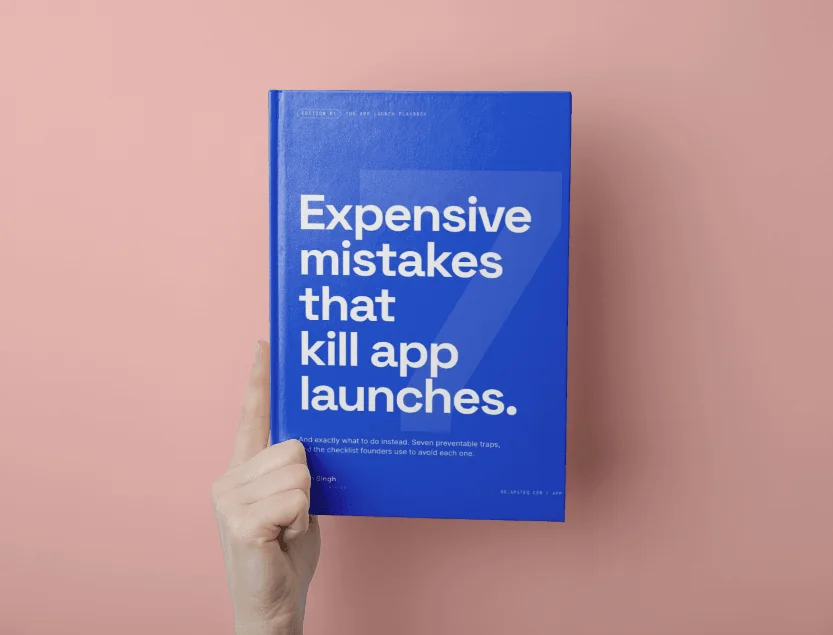
Free download
7 Expensive Mistakes That Kill App Launches
The launch errors we see most often across 300+ app engagements, and what to do instead.
Get the Free EbookBrowse all free guides