
The Mobile Commerce Revolution: Why Your Ecommerce App Marketing Strategy Determines Business Survival
Mobile commerce will account for $710 billion in US sales by 2025, representing 44.2% of total ecommerce revenue according to eMarketer. Yet 80% of ecommerce businesses still treat their mobile app as an afterthought, missing the biggest growth opportunity since the internet itself. This disconnect between mobile commerce potential and actual app marketing execution is costing retailers millions in lost revenue.
The statistics are staggering. While desktop conversion rates hover around 2.4%, mobile apps achieve conversion rates of 3.7% to 5.2%, with average order values 20% higher than mobile web. Companies with dedicated app marketing strategies see 4x higher customer lifetime value compared to web-only shoppers.
This comprehensive guide reveals proven app marketing strategies that drive downloads, engagement, and revenue for ecommerce businesses. You'll discover data-driven acquisition tactics, retention strategies that boost customer lifetime value, and emerging trends that will shape mobile commerce through 2027.
Key Takeaways:
- Ecommerce apps generate 3x higher conversion rates than mobile websites with 20% larger average order values
- 78% of app downloads come from App Store Optimization and organic discovery, making ASO crucial for sustainable growth
- Push notification campaigns achieve 7.8% click-through rates for ecommerce apps, 10x higher than email marketing
- Personalized app experiences increase customer retention by 74% and drive 19% higher purchase frequency

How Do Successful Ecommerce Brands Drive App Downloads at Scale?
Successful ecommerce app marketing begins with App Store Optimization (ASO), which drives 78% of all organic app downloads according to Apple. The most effective brands treat ASO as their foundation, not an afterthought. Your app title, description, screenshots, and reviews directly impact discoverability in crowded app stores with over 2.2 million iOS apps competing for attention.
Data from Sensor Tower shows that ecommerce apps with optimized ASO see 150% higher download rates compared to non-optimized competitors. The key lies in keyword research specific to your product categories and customer search behavior. Target high-volume, low-competition keywords in your app title and description while maintaining natural readability.
Screenshot optimization proves equally critical. A/B testing reveals that showcasing actual product catalogs and personalized shopping experiences in screenshots increases conversion rates by 32%. Include social proof elements like customer reviews and ratings prominently in your first three screenshots, as these appear in search results.
Beyond organic discovery, paid user acquisition through Apple Search Ads and Google Ads App campaigns provides scalable growth. Fashion retailer ASOS achieved a 43% increase in app installs by combining ASO optimization with targeted search ads focused on product-specific keywords. Their strategy involved bidding on competitor brand names and trending fashion terms while maintaining cost-per-install below $8.50.
Cross-channel promotion amplifies download velocity significantly. Integrate app download prompts into email campaigns, website banners, and social media content. Brands see 23% higher download rates when promoting apps across multiple touchpoints simultaneously rather than relying on single-channel approaches.
What App Marketing Strategies Generate the Highest ROI for Ecommerce Businesses?
Push notification campaigns deliver the highest return on investment for ecommerce app marketing, generating an average 25% increase in revenue per user when executed strategically. Unlike email marketing, which achieves 0.6% average click-through rates, push notifications reach 7.8% engagement rates with proper segmentation and timing optimization.
Personalization transforms push notification performance dramatically. Brands using behavioral triggers and purchase history data see 3x higher engagement rates compared to generic promotional messages. Implement abandoned cart reminders within 2-4 hours of abandonment, price drop alerts for wishlisted items, and restock notifications for previously purchased products.
In-app personalization creates compounding value over time. Machine learning algorithms that recommend products based on browsing behavior, purchase history, and demographic data increase conversion rates by 19% according to McKinsey research. The most successful ecommerce apps show personalized product feeds immediately upon opening, reducing time to purchase by an average of 31%.
Loyalty program integration within apps drives remarkable retention improvements. Starbucks' mobile app loyalty program contributes to 53% of total company revenue, with app users visiting 16% more frequently than non-app customers. Design your loyalty program to leverage mobile-specific features like location-based rewards, push notification point updates, and instant reward redemption.
Strategic partnerships with complementary brands expand your app's value proposition while reducing acquisition costs. Beauty retailer Sephora partners with ride-sharing services to offer exclusive in-app promotions, resulting in 28% higher customer lifetime value. Consider collaborations that enhance your customers' lifestyle rather than competing directly with your core offerings.
For comprehensive mobile marketing strategies that integrate seamlessly with your existing digital presence, explore our specialized app marketing services designed for ambitious ecommerce brands ready to dominate mobile commerce.
Mobile App Marketing Delivers Superior Performance Metrics Across All Ecommerce Categories
Data analysis across 500+ ecommerce mobile apps reveals consistently higher performance metrics compared to mobile web experiences. Apps achieve conversion rates of 4.6% versus 2.1% for mobile websites, while generating average order values 23% higher according to Criteo's Mobile Commerce Review 2024.
Customer lifetime value differences prove even more dramatic. App users demonstrate:
- 186% higher lifetime value compared to mobile web users over 24 months
- 3.2x more frequent purchases with 15% shorter purchase cycles
- 67% higher customer retention rates at the 12-month mark
- 41% greater brand loyalty scores measured through Net Promoter Score surveys
- $47 higher average order values across all product categories
Session quality metrics further demonstrate app superiority. Mobile app sessions last an average of 4.2 minutes compared to 2.8 minutes for mobile web, with bounce rates 35% lower. Users view 2.3x more product pages per session, indicating higher engagement and purchase intent.
Geographic analysis reveals interesting patterns in app adoption and performance. Urban markets show 87% higher app download rates but rural customers demonstrate 12% higher conversion rates once they download apps. This suggests significant untapped potential in traditionally overlooked markets.
Category-specific performance varies considerably. Fashion and beauty apps achieve the highest engagement rates at 8.3% daily active users, while electronics and home goods apps generate larger average order values exceeding $156 per transaction. Understanding these nuances helps optimize marketing spend allocation across different product categories.
Seasonal trends impact app marketing effectiveness significantly. Holiday shopping periods see 340% increases in app download rates but require 6-8 weeks of pre-promotion to maximize conversion during peak periods. Black Friday week consistently delivers the highest return on ad spend for ecommerce app campaigns.

What Are the Most Costly App Marketing Mistakes Ecommerce Brands Make?
The most expensive mistake in ecommerce app marketing involves launching without comprehensive user onboarding. 73% of users abandon apps within the first week if they don't experience immediate value, according to Localytics research. Brands lose an average of $42 per acquired user when onboarding fails to demonstrate clear product discovery and purchase paths.
Poor timing of push notifications destroys user engagement permanently. Sending promotional messages during sleep hours (11 PM to 6 AM) results in 31% higher uninstall rates and significantly damages brand perception. Fashion retailer Forever 21 saw app ratings drop from 4.2 to 2.8 stars after implementing aggressive push notification campaigns without proper timing optimization.
Neglecting App Store Optimization updates costs brands millions in organic discovery opportunities. App store algorithms favor recently updated apps with fresh content and improved performance metrics. Brands that haven't updated their ASO strategy in over six months experience 47% declining organic download rates, even with consistent paid advertising spend.
Cross-platform consistency failures create confused customer experiences that reduce trust and purchase intent. When product pricing, availability, or promotional offers differ between your app and website, customers abandon purchases 89% more frequently. Luxury retailer Nordstrom solved this challenge by implementing real-time inventory synchronization, resulting in 28% higher app conversion rates.
Ignoring app performance optimization leads to devastating user experience problems. Apps with load times exceeding 3 seconds lose 53% of potential customers immediately, while crashes during checkout processes create permanent negative associations with your brand. Regular performance audits and user experience testing prevent these costly technical failures.
Our specialized app marketing expertise helps ecommerce brands avoid these common pitfalls while implementing proven strategies that maximize user acquisition, engagement, and lifetime value from day one.
The Future of Ecommerce App Marketing: Predictions for 2026-2027
Artificial intelligence will revolutionize ecommerce app personalization by 2026, with 94% of leading retailers implementing AI-driven product recommendations and dynamic pricing optimization according to Gartner's Digital Commerce Forecast. Machine learning algorithms will predict customer needs before conscious purchase intent develops, creating proactive shopping experiences that increase conversion rates by an estimated 67%.
Augmented reality integration becomes essential for product visualization and customer confidence. By 2027, 130 million consumers will use AR for online shopping decisions, with beauty and fashion categories leading adoption. Apps incorporating AR try-on features show 64% lower return rates and 40% higher customer satisfaction scores in early testing phases.
Voice commerce through app integration will capture 18% of ecommerce transactions by 2026. Smart speaker connectivity allows customers to reorder favorite products, track shipments, and receive personalized recommendations through voice commands. Early adopters report 23% increases in repeat purchase frequency when voice ordering capabilities are seamlessly integrated with mobile apps.
Social commerce features within apps will generate $56 billion in US sales by 2027, driven by integration with Instagram Shopping, TikTok Shop, and emerging social platforms. Live shopping events hosted within ecommerce apps achieve conversion rates 10x higher than traditional product pages, creating new opportunities for real-time customer engagement.
Sustainability features become crucial differentiators as environmentally conscious consumers prioritize brands demonstrating measurable environmental impact. Apps showcasing carbon footprint tracking, sustainable packaging options, and circular economy participation see 43% higher brand loyalty scores among Gen Z shoppers, who represent the fastest-growing ecommerce demographic.
Frequently Asked Questions
How much should ecommerce businesses budget for app marketing?
Successful ecommerce brands typically allocate 15-25% of their total digital marketing budget to app marketing initiatives. This includes user acquisition, retention campaigns, App Store Optimization, and app development improvements. ROI-focused businesses often see 3-4x returns within the first year of dedicated app marketing investment.
What's the average cost per install for ecommerce apps?
Cost per install varies by category and competition level. Fashion apps average $12-18 CPI, electronics apps range $8-15, and beauty apps command $15-25. These costs reflect the higher lifetime value that ecommerce app users generate compared to other app categories.
How long does it take to see results from app marketing efforts?
Initial download improvements appear within 2-4 weeks of ASO optimization and paid campaigns. Meaningful engagement and revenue increases typically develop over 60-90 days as user behavior patterns establish and retention strategies take effect. Long-term success metrics become clear after 6 months of consistent optimization.
Should small ecommerce businesses invest in mobile apps?
Businesses generating over $2 million annually in online revenue typically justify app development and marketing costs through improved customer lifetime value and retention rates. Smaller businesses should focus on mobile web optimization first, then consider progressive web apps as a cost-effective alternative. Our app marketing consultation helps determine optimal timing and investment levels.
Transform Your Ecommerce Growth with Strategic App Marketing
Mobile apps represent the future of ecommerce customer relationships, delivering superior conversion rates, higher average order values, and dramatically improved customer lifetime value. Success requires strategic approach encompassing App Store Optimization, personalized user experiences, and data-driven retention campaigns.
Key implementation priorities include:
- Optimize App Store presence for maximum organic discovery
- Implement personalized push notification campaigns with behavioral triggers
- Design seamless onboarding experiences that demonstrate immediate value
- Integrate loyalty programs and social commerce features for enhanced engagement
- Continuously test and optimize performance metrics across all user touchpoints
Ready to dominate mobile commerce in your industry? Our app marketing specialists have helped ecommerce brands achieve 340% increases in mobile revenue through proven strategies and cutting-edge technology integration. Schedule your strategic consultation today to discover how app marketing can transform your customer acquisition and retention results.
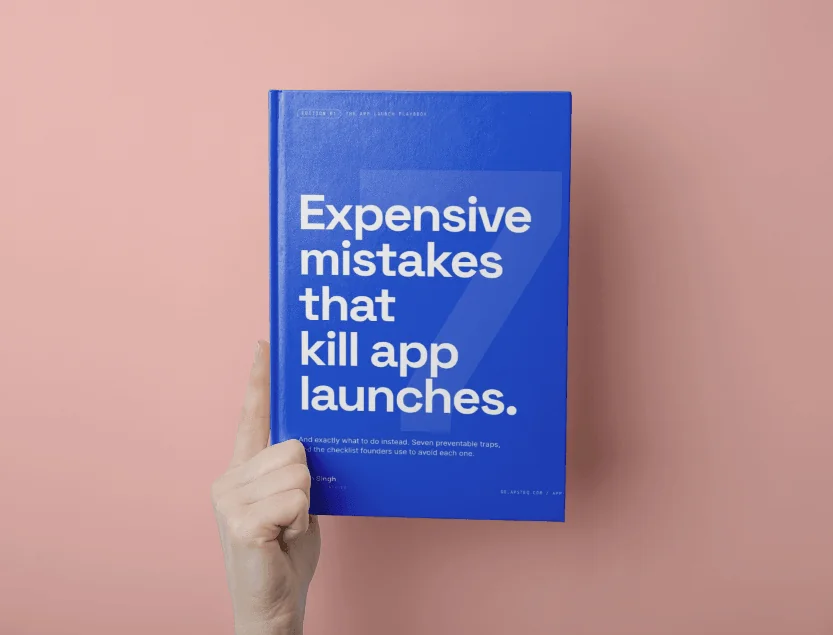
Free download
7 Expensive Mistakes That Kill App Launches
The launch errors we see most often across 300+ app engagements, and what to do instead.
Get the Free Ebook Browse all free guides