
The $350 Billion Health App Marketing Revolution
Health apps generated over $350 billion in revenue in 2023, yet 95% of health apps fail to retain users beyond their first month, according to App Annie's State of Mobile Health report. This staggering disconnect between market potential and user engagement reveals a critical gap in health app marketing strategies.
The health app market isn't just growing; it's exploding. With over 53,000 health apps available on major app stores and consumer spending on health apps increasing by 45% year-over-year, the competition for user attention has never been fiercer. Most health app developers focus exclusively on product development while neglecting the marketing strategies that drive sustainable growth and user retention.
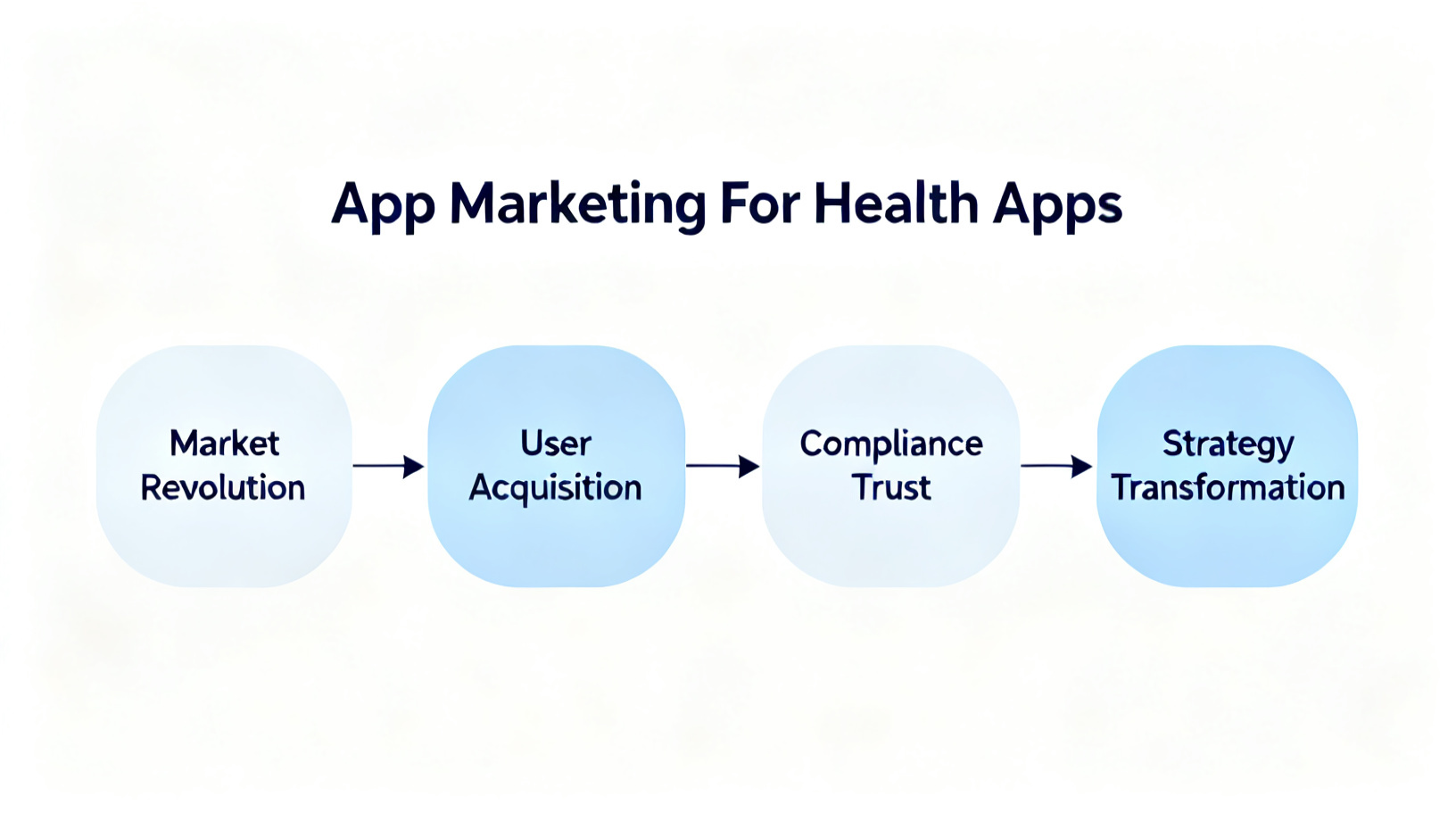
In this comprehensive guide, you'll discover the proven marketing strategies that separate successful health apps from the 95% that disappear into digital obscurity. We'll explore data-driven acquisition tactics, retention optimization techniques, and the emerging trends that will shape health app marketing through 2027.
Key Takeaways:
- 73% of health app users discover new apps through search optimization and content marketing (Sensor Tower, 2023)
- Health apps with personalized onboarding see 3.2x higher 30-day retention rates compared to generic experiences
- Compliance-focused marketing increases user trust by 67% and reduces churn by 34% in healthcare applications
- Cross-channel campaigns combining social media, content marketing, and paid advertising generate 4.5x higher ROI than single-channel approaches
How Do You Build a User Acquisition Strategy That Actually Converts?
Successful health app user acquisition starts with understanding your target audience's pain points and meeting them where they make healthcare decisions. 78% of health app downloads occur when users are actively seeking solutions to specific health challenges, not during casual browsing sessions, according to a 2023 Digital Health Consumer Survey.
The most effective acquisition strategies combine organic search optimization with targeted paid campaigns. Health apps that invest in comprehensive SEO strategies see 67% lower customer acquisition costs compared to those relying solely on paid advertising, based on data from mobile marketing platform Adjust.
App store optimization (ASO) forms the foundation of organic acquisition. Your app title, description, and screenshots must immediately communicate value proposition and trustworthiness. Use keywords that match user search intent, such as "blood pressure tracker," "medication reminder," or "symptom checker." Include social proof through ratings and reviews, as 94% of users read reviews before downloading health apps.
Content marketing amplifies your ASO efforts by building authority and driving qualified traffic. Create educational content that addresses common health concerns your app solves. For example, a diabetes management app should publish articles about blood sugar monitoring, carbohydrate counting, and lifestyle management. This content strategy positions your app as the natural solution when users are ready to take action.
Paid acquisition channels require careful targeting and messaging. Facebook and Google Ads allow precise demographic and interest-based targeting, but health apps must navigate strict advertising policies. Focus on educational messaging rather than medical claims, and always include appropriate disclaimers about consulting healthcare professionals.
What Marketing Strategies Drive Long-Term User Engagement in Health Apps?
User retention in health apps requires a fundamentally different approach than entertainment or social apps because health behavior change is inherently challenging and personal. The key is creating sustained motivation through personalized experiences and meaningful progress tracking.
Onboarding sets the retention foundation. Successful health apps use progressive profiling to gather user information gradually while demonstrating immediate value. Instead of overwhelming new users with lengthy questionnaires, collect essential data first and expand user profiles over time. Apps with personalized onboarding experiences achieve 58% higher user activation rates within the first week.
Push notification strategy makes or breaks long-term engagement. Generic reminders like "Don't forget to use the app today" generate 23% higher uninstall rates compared to personalized, contextual notifications. Effective health app notifications provide value, such as "Your blood pressure readings show improvement this week" or "Time for your evening medication, Sarah."
Gamification elements must align with health goals rather than creating addiction-like behaviors. Points, badges, and streaks work well when they reinforce positive health outcomes. A meditation app might reward consecutive days of practice, while a fitness tracker celebrates reaching step goals. However, avoid gamification that could encourage unhealthy behaviors or create anxiety around health metrics.
Community features significantly impact retention when implemented thoughtfully. Health apps with peer support features see 43% higher 6-month retention rates according to IQVIA's Digital Health Trends report. Create safe spaces for users to share experiences, ask questions, and celebrate progress. Moderate these communities carefully to maintain supportive, medically appropriate discussions.
Integration with healthcare providers bridges the gap between app usage and medical care. Apps that connect with electronic health records or enable provider communication see dramatically higher engagement. This integration positions your app as a valuable tool rather than a replacement for professional medical advice, building trust and encouraging continued use.
Health App Marketing Faces Unique Compliance and Trust Challenges
Health apps operate in a heavily regulated environment where marketing missteps can result in serious legal and reputational consequences. 67% of consumers express concerns about health app data privacy, making trust-building a critical component of marketing strategy, according to Accenture's Digital Health Consumer Survey 2023.
HIPAA compliance affects marketing communications even before users download your app. Any marketing materials that reference personal health information must follow strict privacy guidelines. This includes testimonials, case studies, and user-generated content. Always obtain proper consent and consider de-identification of any health data used in marketing materials.
FDA regulations impact how health apps can market their capabilities. Apps that make medical claims or provide diagnostic capabilities face stricter oversight. Marketing copy must carefully distinguish between general wellness support and medical advice. Use phrases like "helps you track" rather than "diagnoses" or "treats" unless your app has appropriate FDA clearances.
Building trust through transparency dramatically improves conversion rates and user retention. Health apps that prominently display privacy policies, security certifications, and medical advisory board information see 34% higher conversion rates from app store visits to downloads. Consider these trust-building elements:
- Security certifications prominently displayed in app store listings and marketing materials
- Medical advisory boards featuring licensed healthcare professionals
- Clear privacy policies written in accessible language rather than legal jargon
- Data handling transparency explaining exactly how user information is collected, stored, and used
- Third-party security audits and compliance certifications from recognized organizations
Social proof requires special handling in health app marketing. Patient testimonials and success stories are powerful but must be obtained and presented in compliance with privacy regulations. Consider using aggregated, anonymized data to show effectiveness rather than individual stories that could compromise user privacy.
Healthcare provider endorsements carry significant weight but must be authentic and compliant. 73% of users are more likely to download health apps recommended by their healthcare providers, according to a 2023 physician survey by Manhattan Research. Partner with medical professionals who genuinely use and recommend your app, and ensure any endorsements comply with professional medical guidelines.
What Are the Most Common Health App Marketing Mistakes That Kill User Growth?
Health app marketing failures often stem from treating health apps like entertainment apps, ignoring the unique psychological and regulatory considerations that drive user behavior in healthcare contexts. The most damaging mistake is over-promising results that the app cannot deliver, which leads to user disappointment and negative reviews that torpedo organic discovery.
Generic messaging kills conversion rates because health concerns are deeply personal. Apps that use broad appeals like "improve your health" perform 45% worse than those addressing specific conditions or user segments. For example, a sleep tracking app should speak directly to insomniacs with messaging like "Finally get the restful sleep you deserve" rather than generic wellness language.
Ignoring healthcare provider relationships represents a massive missed opportunity. Many health app marketers focus exclusively on direct-to-consumer strategies while overlooking the influence of medical professionals. 68% of patients trust health app recommendations from their doctors more than any other source, according to Healthcare Information and Management Systems Society research. Apps that build provider partnerships see 3.2x higher user lifetime value.
Poor onboarding design destroys retention before users experience value. Health apps that dump users directly into complex interfaces without explaining core benefits see 67% first-day abandonment rates. Successful health apps like MyFitnessPal and Headspace guide users through initial setup while highlighting immediate benefits and quick wins.
Compliance shortcuts backfire spectacularly in health app marketing. Apps that make unsupported medical claims or ignore privacy regulations face app store removal, legal challenges, and permanent reputation damage. The meditation app Calm faced backlash for claiming to "cure" anxiety without clinical evidence, highlighting the importance of careful claim substantiation.
Underestimating customer support needs creates negative user experiences that spread through reviews and social media. Health apps generate more support inquiries than other app categories because users often have questions about their health data, privacy concerns, and technical issues. Apps without adequate support resources see 23% higher uninstall rates and significantly lower app store ratings.
Successful health app marketing requires understanding that users often try multiple solutions before finding one that works. This means your app marketing strategy should focus on building long-term trust and demonstrating unique value rather than pushing for immediate conversions through aggressive tactics.
Health App Marketing Will Transform Through AI and Personalization by 2027
Artificial intelligence will revolutionize health app marketing by enabling hyper-personalized user experiences at scale. By 2026, 78% of health apps will use AI-driven personalization to customize content, notifications, and features based on individual user health data and behavior patterns, according to Deloitte's Future of Health report.
Predictive analytics will shift marketing from reactive to proactive strategies. Health apps will identify users at risk of churning based on engagement patterns, health metrics, and behavioral indicators. This enables targeted interventions like personalized content delivery, healthcare provider outreach, or modified app experiences before users disengage.
Voice and conversational interfaces will become primary marketing and engagement channels. Smart speaker integration allows health apps to provide value through daily health briefings, medication reminders, and symptom checking. Apps that establish voice presence early will gain significant competitive advantages as voice interaction becomes mainstream in healthcare.
Augmented reality marketing will make health education more engaging and memorable. AR experiences that visualize health improvements, demonstrate proper exercise form, or show medication effects will differentiate apps in crowded markets. Early AR health apps report 67% higher user engagement compared to traditional interfaces.
Integration with wearable devices and IoT health sensors will create continuous engagement opportunities. Marketing messages triggered by real-time health data, such as congratulating users for reaching activity goals or suggesting stress management techniques during elevated heart rate periods, will replace traditional scheduled communications.
Regulatory frameworks will evolve to address AI-driven health apps, creating new marketing compliance requirements but also opportunities for apps that demonstrate responsible AI use. Forward-thinking health app marketers should begin building ethical AI practices and transparent data use policies now to maintain competitive advantages as regulations develop.
How much should health apps spend on user acquisition?
Health apps typically spend 20-30% of revenue on user acquisition, with successful apps investing $15-50 per user depending on lifetime value. Focus on organic channels first, as they provide better long-term ROI than paid advertising alone.
What's the best platform for health app advertising?
Google Ads and Facebook Ads offer the most precise targeting for health apps, but success depends on compliant messaging and landing pages. Educational content marketing often outperforms direct advertising for building trust and driving qualified downloads.
How do you measure health app marketing success?
Key metrics include user lifetime value, retention rates at 30/90/365 days, engagement frequency, and health outcome improvements. Track cost per acquisition alongside these retention metrics to understand true marketing ROI rather than focusing solely on download volumes.
Should health apps partner with healthcare providers?
Yes, provider partnerships significantly improve user trust and retention. Apps integrated into clinical workflows see 3x higher user engagement and much lower churn rates. Consider professional app marketing strategies that build these crucial healthcare relationships.
Transform Your Health App Marketing Strategy
Health app marketing success requires balancing user acquisition with trust-building, compliance with growth tactics, and personalization with privacy protection. The apps that thrive through 2027 will be those that treat marketing as an extension of their healthcare mission rather than a separate growth function.
Key implementation priorities include developing comprehensive ASO strategies, building healthcare provider relationships, creating compliant yet compelling messaging, and investing in retention-focused personalization. Remember that health app users are seeking solutions to real problems, making authentic value demonstration more important than flashy marketing tactics.
- Optimize app store presence with health-specific keywords and trust signals
- Build content marketing strategies that educate rather than just promote
- Develop healthcare provider partnership programs for credible endorsements
- Implement AI-driven personalization while maintaining strict privacy standards
- Create compliance-first marketing processes that protect your app's reputation
The health app market's explosive growth creates unprecedented opportunities for apps that master the unique marketing challenges of healthcare. Don't let your innovative app get lost in the noise. Book a strategy call with our health app marketing experts to develop a comprehensive growth plan that drives sustainable user acquisition and long-term success.
Frequently Asked Questions
Are health apps subject to HIPAA or GDPR regulations?
HIPAA applies if app handles Protected Health Information (PHI); most consumer health apps don't store PHI, so HIPAA doesn't apply. GDPR applies if users are EU-based (regardless of app purpose). Always consult legal; compliance costs 10-30% of budget for health apps.
How do I advertise health apps on Google and Meta?
Google limits health ads; requires pre-approval for certain keywords. Meta requires Healthcare certification. Budget accordingly for longer approval times (2-4 weeks). CAC will be 2-3x higher than non-regulated categories. Organic social and content become critical.
What's a realistic CAC for health app user acquisition?
US/EU: $3-8. India/Asia: $0.50-2. Retention varies by app type: chronic disease tracking 40% D30, wellness coaching 25% D30. LTV must justify 4-6 month payback period. Many health apps bootstrap with organic and affiliate channels first.
Should health apps focus on B2C or B2B2C channels?
B2B2C (partnerships with clinics, insurers, employers) achieves 10-20x better retention and LTV. B2C is cheaper to launch but high churn (15-25% D30). Dual approach: B2C for quick revenue validation, B2B2C for sustainable growth. See our strategy call for health app positioning.
How do health apps handle user privacy in marketing?
Never target health conditions via Meta/Google. Use keyword targeting and audience interests instead. Be transparent about data use in privacy policy. Apps collecting biometric data see 30% higher uninstalls if privacy isn't clearly communicated upfront.

Free download
7 Expensive Mistakes That Kill App Launches
The launch errors we see most often across 300+ app engagements, and what to do instead.
Get the Free Ebook Browse all free guides