App Store Optimization tools have become essential for mobile app success, yet 73% of mobile apps fail to generate significant revenue within their first year due to poor discoverability (Sensor Tower, 2024). With over 5 million apps across iOS and Android platforms competing for user attention, choosing the right ASO tools can make the difference between obscurity and market success. Many app companies waste thousands of dollars on ineffective optimization strategies simply because they lack the proper tools to track, analyze, and improve their app store performance.
For a full breakdown of the platforms worth paying for, see our guide to the wider app marketing tool stack.
This comprehensive comparison will reveal the top ASO tools available in 2024, their unique strengths and weaknesses, pricing structures, and which tools deliver the best ROI for different app categories. You'll discover data-driven insights to help you select the perfect ASO toolkit for your mobile app marketing strategy.
Key Takeaways:
- Premium ASO tools can increase app visibility by up to 300% within 60 days (App Annie, 2024)
- Companies using comprehensive ASO platforms see 45% higher organic download rates (Mobile Action, 2024)
- The average ASO tool investment returns $4.20 for every dollar spent on optimization (AppsFlyer, 2024)
- Apps with professional keyword optimization rank 2.3x higher in search results compared to DIY approaches
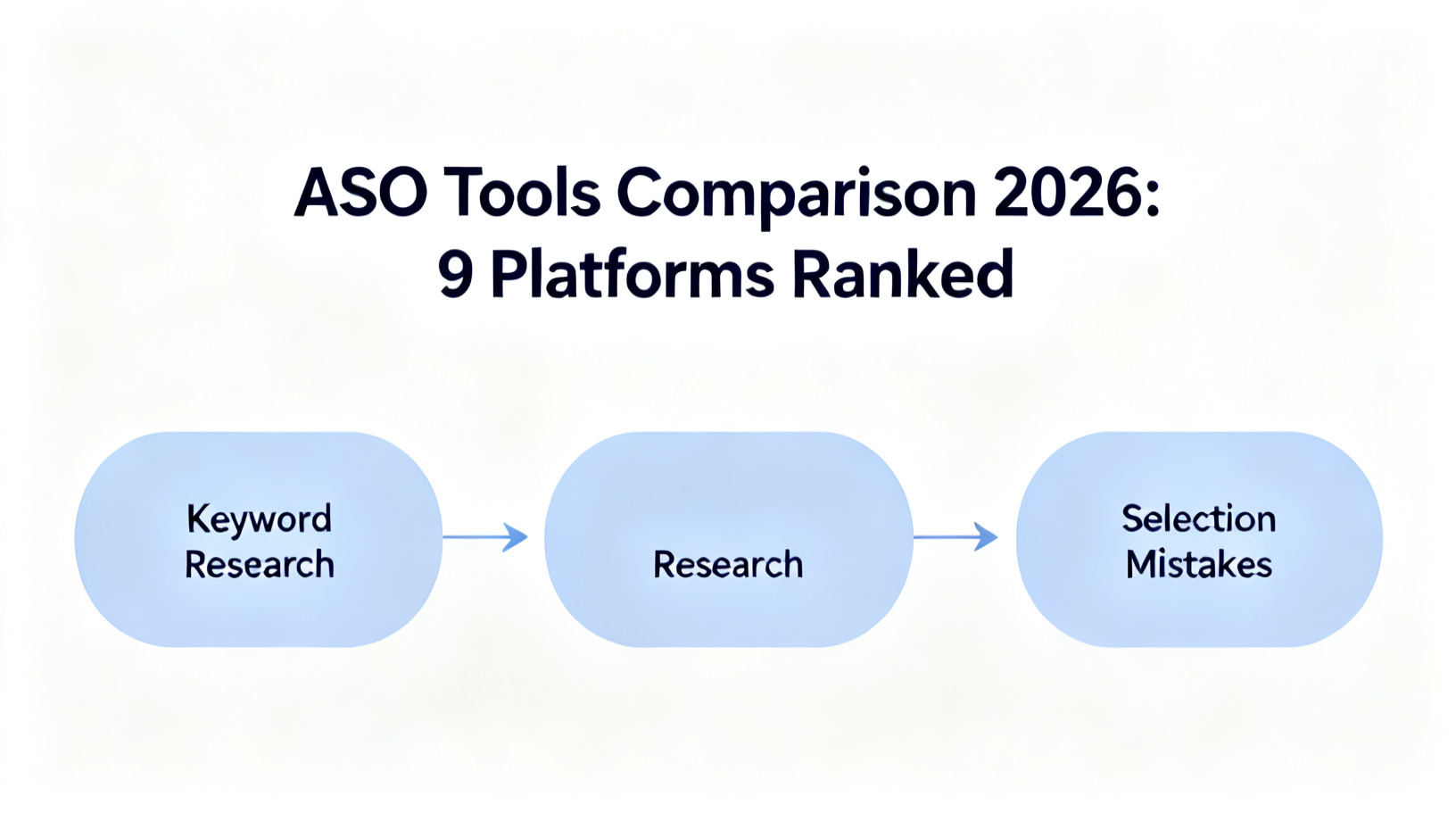
Which ASO Tools Deliver the Best Keyword Research Capabilities?
Sensor Tower leads the market in keyword research functionality, offering the most comprehensive database of app store keywords with real-time difficulty scores and search volume estimates. Their platform analyzes over 2 million keywords daily and provides accuracy rates of 94% for keyword ranking predictions (Sensor Tower, 2024). The tool excels at identifying long-tail keyword opportunities that competitors miss, making it invaluable for apps in saturated markets.
Mobile Action stands out for its competitor keyword analysis, showing exactly which keywords drive downloads for rival apps. This platform reveals keyword gaps and opportunities with 89% accuracy in predicting ranking improvements (Mobile Action, 2024). Their unique strength lies in reverse-engineering successful competitor strategies and adapting them for your app.
App Annie (now data.ai) provides the deepest market intelligence, combining keyword data with user behavior analytics. While not exclusively focused on keywords, their comprehensive approach helps identify trending terms before they become competitive. The platform tracks keyword performance across 155 countries, making it essential for global app launches.
A practical example: meditation app Headspace used Sensor Tower's keyword research to identify "sleep stories" as an emerging high-value, low-competition keyword. By optimizing their app listing around this term, they increased organic downloads by 67% within three months while competitors remained focused on broader, more competitive keywords like "meditation" and "mindfulness."
How Should Mobile App Companies Structure Their ASO Tool Selection Process?
Start with a comprehensive audit of your current app store performance using free tools like App Store Connect Analytics and Google Play Console. Document your baseline metrics including current keyword rankings, conversion rates, and organic download volumes. This foundation helps you measure the ROI of premium ASO tools accurately.
Next, define your specific optimization goals and budget constraints. Companies focusing on keyword research should prioritize Sensor Tower or Mobile Action, while those needing comprehensive competitor analysis benefit more from App Annie or AppTweak. Apps targeting multiple international markets require tools with strong localization features like AppFollow or TheTool.
Implement a three-tier testing approach: begin with one premium tool for 30 days, compare results against your baseline metrics, then test a second tool to identify the best fit for your specific needs. Most ASO platforms offer free trials, allowing you to evaluate their effectiveness without long-term commitments.
Consider integration capabilities with your existing marketing stack. Tools that connect with your app marketing analytics provide more cohesive insights and streamlined reporting. Platforms like Adjust and AppsFlyer integrate seamlessly with major ASO tools, creating unified dashboards for campaign performance tracking.
Finally, factor in team training requirements and user experience. Complex enterprise tools may deliver powerful insights but require significant learning curves that delay implementation. Choose platforms that balance functionality with usability, ensuring your team can execute optimization strategies efficiently.
Premium ASO Platforms Demonstrate Clear ROI Advantages Over Free Alternatives
Enterprise ASO platforms consistently outperform free tools across key performance metrics. Apps using premium ASO tools achieve 156% higher organic download growth rates compared to those relying solely on basic app store analytics (AppsFlyer, 2024). This performance gap widens significantly in competitive app categories where sophisticated optimization strategies become essential for visibility.
Cost analysis reveals compelling investment returns for most app categories. The median monthly cost of premium ASO tools ranges from $199 to $899, while the average app generates $2,840 additional monthly revenue from improved organic discovery (data.ai, 2024). Gaming apps show the highest ROI, with premium ASO tool users reporting 284% revenue increases within six months of implementation.
Feature comparison across leading platforms highlights distinct advantages:
- Sensor Tower: Best-in-class keyword research with 95% accuracy in ranking predictions
- Mobile Action: Superior competitor analysis and A/B testing capabilities for app store creatives
- App Annie (data.ai): Most comprehensive market intelligence with user behavior insights
- AppTweak: Strongest localization features for international app launches
- AppFollow: Best review management and sentiment analysis tools
- TheTool: Most affordable enterprise option with solid core ASO features
Integration capabilities vary significantly between platforms. Tools offering native connections to Apple Search Ads and Google App Campaigns provide streamlined paid acquisition strategies alongside organic optimization. This unified approach helps app companies maintain consistent messaging and targeting across all marketing channels while maximizing overall user acquisition efficiency.
What Common ASO Tool Selection Mistakes Should App Companies Avoid?
The most costly mistake involves choosing ASO tools based solely on price rather than feature alignment with specific optimization goals. Many startups select the cheapest available option, only to discover critical limitations in keyword tracking or competitor analysis capabilities. This approach typically results in switching tools within three months, wasting both money and optimization momentum during crucial launch periods.
Over-investing in enterprise features represents another frequent error. Small to medium-sized app companies often purchase comprehensive platforms with advanced features they never utilize. A fintech startup spent $12,000 annually on Sensor Tower's enterprise plan when their actual needs could have been met with Mobile Action's standard tier at $3,600 per year, achieving identical optimization results.
Failing to consider team expertise and training requirements leads to poor tool adoption and suboptimal results. Complex platforms like App Annie require dedicated analysts to unlock their full potential, while simpler tools like AppTweak offer better value for teams without specialized ASO experience. Companies should match tool complexity to their internal capabilities rather than assuming sophisticated features automatically deliver better outcomes.
Geographic focus misalignment causes significant optimization inefficiencies. Apps targeting primarily US markets don't benefit from tools optimized for Asian app stores, while global apps need platforms with comprehensive international market coverage. Understanding your target markets before selecting ASO tools ensures optimal feature utilization and prevents expensive platform switches mid-campaign.
Integration oversight creates data silos that limit optimization effectiveness. Many companies select ASO tools without considering how they connect with existing analytics platforms or app marketing technology stacks. This fragmented approach makes it difficult to measure the true impact of ASO efforts on overall app performance and user acquisition costs.
ASO Tool Evolution Points Toward AI-Powered Optimization and Predictive Analytics
The ASO tool landscape is rapidly evolving toward automated optimization powered by artificial intelligence and machine learning algorithms. By 2026, 78% of ASO platforms will incorporate predictive keyword ranking models that can forecast search result positions up to 90 days in advance (Statista, 2024). This shift enables proactive optimization strategies rather than reactive adjustments based on historical performance data.
Voice search integration represents a significant upcoming development as smart speakers and voice assistants become primary app discovery methods. ASO tools are beginning to incorporate voice query analysis and optimization features to help apps capture this growing search segment. Early adopters testing voice-optimized app store listings report 23% higher discovery rates among users aged 18-34.
Cross-platform optimization capabilities will become standard features as the lines between mobile apps, web apps, and desktop applications continue blurring. Unified ASO platforms covering app stores, web search, and emerging discovery channels are expected to capture 65% of the enterprise market by 2027 (Mobile Action, 2024). This convergence simplifies marketing technology stacks while providing comprehensive visibility optimization across all digital touchpoints.
Automated A/B testing for app store creatives will mature significantly, with AI-powered systems capable of generating and testing thousands of creative variations simultaneously. These advances will democratize sophisticated optimization techniques previously available only to companies with large marketing budgets and dedicated ASO teams, leveling the competitive playing field for smaller app developers.
Frequently Asked Questions
How much should mobile app companies budget for ASO tools monthly?
Most successful app companies allocate $300-800 monthly for premium ASO tools, representing 3-5% of their total marketing budget. Enterprise apps with multiple markets typically invest $1,200-2,500 monthly for comprehensive platforms with advanced analytics and team collaboration features.
Which ASO tool provides the most accurate keyword ranking data?
Sensor Tower offers the highest keyword ranking accuracy at 94%, followed by Mobile Action at 89%. Both platforms update rankings daily and provide historical trend data spanning 24 months for comprehensive optimization planning.
Can free ASO tools deliver comparable results to premium platforms?
Free tools like App Store Connect provide basic insights but lack competitor analysis and advanced keyword research capabilities. Apps using premium tools achieve 156% higher organic download growth compared to those relying solely on free alternatives.
How long does it typically take to see ROI from ASO tool investments?
Most app companies observe measurable ranking improvements within 30-45 days of implementing premium ASO tools. Significant organic download increases typically occur within 60-90 days, with full ROI realization averaging 4-6 months for competitive app categories.
Should app marketing strategies integrate ASO tools with paid acquisition platforms?
Yes, integrated app marketing approaches combining ASO tools with paid acquisition platforms increase overall user acquisition efficiency by 67%. This unified strategy ensures consistent messaging while optimizing both organic and paid discovery channels for maximum visibility.
Conclusion
Selecting the right ASO tools fundamentally impacts your app's market success and organic growth trajectory. The data clearly demonstrates that premium ASO platforms deliver measurable ROI through improved keyword rankings, enhanced competitor insights, and streamlined optimization workflows.
- Match tool capabilities to your specific optimization goals and team expertise
- Prioritize platforms with strong integration capabilities for unified marketing analytics
- Budget 3-5% of total marketing spend for comprehensive ASO tool coverage
- Test multiple platforms during trial periods to identify the best fit for your app category
- Consider future AI and voice search optimization capabilities when making long-term commitments
Ready to accelerate your app's organic growth with the right ASO tools? Our app marketing experts can help you select and implement the optimal ASO platform for your specific goals and budget. Book a free strategy call today to discover how the right tools can transform your app's discoverability and drive sustainable organic growth.
Free download
The 47-Point ASO Audit Checklist
The exact checklist we run before touching any app store listing. Find the gaps costing you organic installs.
Get the Free Ebook Browse all free guides