
React Native Powers the Mobile App Economy: What You Need to Know in 2026
Mobile app development with React is one of the most efficient paths to shipping cross-platform products without doubling your engineering budget. React Native, Meta's open-source framework, lets a single codebase run on both iOS and Android, cutting development time by as much as 30-40% compared to building two fully native apps (Statista 2024).
Yet most mobile app companies still waste months choosing the wrong architecture, hiring mismatched talent, or ignoring performance trade-offs that quietly kill their retention numbers. If your team is evaluating React for your next build or trying to scale an existing React Native product, this guide covers the framework's real capabilities, the strategic decisions that separate fast-growing apps from stalled ones, and the trends shaping the React ecosystem through 2027.
Key Takeaways
- React Native is used by over 42% of developers building cross-platform mobile apps worldwide (Statista 2024), making it the single most adopted hybrid framework.
- Apps built with React Native can achieve up to 60 frames per second rendering on modern devices when the new architecture (Fabric + JSI) is enabled (React Native documentation, 2025).
- Time-to-market is a critical competitive lever: cross-platform frameworks reduce average app launch timelines from 9 months to roughly 5-6 months for mid-sized teams (Statista 2024).
- Poor app performance is directly tied to churn: 53% of mobile users abandon an app that takes longer than 3 seconds to load (Google/SOASTA Research 2017, still widely cited as the industry benchmark).

What Makes React Native the Right Choice for Cross-Platform App Development?
React Native is the dominant cross-platform framework because it renders to native UI components, not a web view, giving it a performance and feel advantage over older hybrid solutions. This distinction matters enormously for mobile app companies whose products live or die on user experience ratings in the App Store and Google Play.
React Native is an open-source framework maintained by Meta that allows developers to write JavaScript or TypeScript once and compile it into native Android and iOS applications. Unlike frameworks such as Ionic that wrap a web app inside a browser shell, React Native bridges JavaScript logic to actual native UI components, meaning buttons look like iOS buttons on iOS and Android buttons on Android. That native feel translates directly into higher store ratings and lower uninstall rates.
The numbers back this up. React Native is used by over 42% of developers working on cross-platform mobile projects globally (Statista 2024). Major consumer apps including Facebook, Instagram, and Shopify's mobile commerce tools run on React Native in production, validating the framework at scale.
A concrete example illustrates the business case well. Shopify migrated its mobile seller app to React Native in 2021 and reported that the same engineering team could ship features to both iOS and Android simultaneously, reducing release cycles from biweekly to weekly. That kind of velocity compounds over a product lifecycle, giving React-based teams a structural advantage over companies maintaining two separate native codebases.
There are real trade-offs to acknowledge. Apps with heavy graphics processing, custom animations running at 120Hz, or deep hardware integrations (augmented reality, real-time camera processing) will still perform better in pure Swift or Kotlin. React Native's JavaScript bridge, even with the new JSI (JavaScript Interface) architecture, introduces some latency that matters in computationally intensive contexts.
However, for the majority of app categories including e-commerce, fintech, health and fitness, social, and productivity, React Native's performance ceiling is more than sufficient. The framework's new architecture, which replaces the old asynchronous bridge with a synchronous JSI layer and introduces the Fabric renderer, closes much of the performance gap that existed before 2023. If your roadmap includes building once and distributing fast, React Native deserves serious consideration as your foundation.
How Should Mobile App Companies Structure a React Native Development Strategy?
A winning React Native strategy is not just about writing good components. It requires deliberate decisions around architecture, state management, navigation, and continuous delivery that most teams make too late, after they have already accumulated technical debt. Getting these decisions right in months one and two saves six months of refactoring in month twelve.
Here is a practical, step-by-step framework for structuring a React Native project from the ground up:
- Choose your state management pattern early. Redux Toolkit, Zustand, and Jotai are the three most commonly used state libraries in 2026. Zustand has gained significant adoption for smaller teams because its API is minimal and its performance overhead is lower. Redux Toolkit remains the standard for enterprise teams that need predictability and extensive middleware support. Pick one and standardize it across every feature team.
- Adopt a file-based navigation library. Expo Router, which brings Next.js-style file-based routing to React Native, has become the recommended navigation solution for new projects. It simplifies deep linking, which is critical for growth and re-engagement campaigns, and it integrates cleanly with app store universal links.
- Implement a CI/CD pipeline before writing business logic. Tools like Fastlane combined with GitHub Actions or Bitrise automate code signing, versioning, and submission to both stores. Teams that defer this step often spend two to three developer days per release on manual tasks, which compounds into significant quarterly waste.
- Define your component library architecture. Whether you build your own design system or adopt a library like React Native Paper or Tamagui, having a shared component layer prevents design inconsistency and speeds up feature development by 25-35% as the app scales.
- Plan your analytics and attribution stack at kickoff. AppsFlyer and Adjust are the two dominant mobile measurement partners in the US market. Integrating either at the start ensures your team has clean install attribution data from day one, which is essential for any paid user acquisition investment.
Strategy does not stop at technical architecture. Marketing alignment matters equally. If your team is investing in app marketing, the React Native codebase needs to support deep link routing, dynamic content for personalized onboarding, and A/B testing frameworks like Statsig or Firebase Remote Config. These capabilities must be built in, not bolted on later.
ApsteQ Insight: Mobile app companies that align their engineering architecture decisions with their growth marketing stack in the first sprint consistently see faster payback periods on user acquisition spend, because deep links work correctly, onboarding flows can be iterated without app store submissions, and attribution data is clean from launch day.
React Native Performance: The Data Every Mobile App Company Must Understand
Performance is not an engineering vanity metric. It is a direct driver of revenue, retention, and store ranking. The data connecting app performance to business outcomes is now comprehensive enough that no mobile app company should treat load times and frame rates as low-priority backlog items.
Consider the core numbers:
- 53% of mobile users abandon an app that takes more than 3 seconds to load (Google/SOASTA Research 2017, the foundational mobile performance benchmark).
- Apps rated 4 stars or above on the App Store see conversion rates 2 to 3 times higher from store listing page visits to installs (Sensor Tower 2024).
- The new React Native architecture (Fabric renderer plus JSI) reduces bridge communication overhead by roughly 30-40% compared to the legacy architecture, enabling smoother animations and faster response to user interactions (React Native documentation, 2025).
- Hermes, React Native's optimized JavaScript engine, reduces app startup time on Android by an average of 35% compared to JSC (JavaScriptCore), with similar gains on iOS in most app categories (Meta Engineering Blog, 2022).
What does this mean practically for your team? Three areas deserve focused investment:
JavaScript bundle optimization. Large JavaScript bundles slow startup. Using Metro bundler's tree-shaking, splitting bundles with React.lazy and Suspense, and auditing third-party library sizes with tools like react-native-bundle-visualizer can reduce initial bundle size by 20-30% in most production apps.
Image and asset handling. Images are the single largest contributor to memory pressure in most React Native apps. Using the Fast Image library instead of React Native's built-in Image component provides better caching and memory management, particularly for apps with feed-style layouts displaying dozens of images per scroll session.
Avoiding the JavaScript thread. Every gesture handler, animation, and scroll event that runs on the JavaScript thread creates jank risk. Libraries like React Native Reanimated 3 move animation logic to the UI thread natively, eliminating the source of most visible performance degradation. This is not optional for apps targeting a premium user experience.

What Are the Most Costly React Native Mistakes Mobile App Companies Make?
Most React Native failures are predictable and preventable. The teams that struggle most with this framework are not failing because React Native is insufficient. They are failing because of specific, recurring architectural and process mistakes that compound over time into products that cannot scale.
Mistake 1: Treating React Native like React for web. This is the most common error. Web React developers joining a React Native team often import web-centric state management patterns, CSS-in-JS approaches not optimized for mobile, and third-party libraries that have no native module and fall back to JavaScript implementations. The result is an app that technically works but consistently underperforms. React Native requires native module awareness from the start.
Mistake 2: Skipping over-the-air update strategy. React Native supports OTA (over-the-air) updates through tools like Expo EAS Update and Microsoft CodePush. Teams that skip this capability are forced to wait 1-3 days for App Store and Google Play review cycles every time they need to fix a critical bug or update a landing page within the app. A real-world example: a US-based e-commerce app missed a Black Friday promotional window because a content bug required an emergency App Store submission. An OTA update workflow would have resolved this in under 10 minutes.
Mistake 3: Ignoring platform-specific behavior. iOS and Android handle navigation gestures, keyboard behavior, permissions dialogs, and notification opt-ins very differently. Teams that build only on a single platform during development consistently ship products with broken flows on the other platform. Testing on both physical devices, not just simulators, should be a non-negotiable part of every sprint definition of done.
Mistake 4: Underinvesting in app marketing alignment. Technical execution only gets a product so far. Many strong React Native apps stagnate at sub-10,000 downloads because the company treated marketing as a post-launch activity. App marketing strategy, including App Store Optimization, paid user acquisition, and retention push notification campaigns, needs to be planned in parallel with development, not as a Phase 2.
Mistake 5: Not upgrading the React Native version proactively. React Native releases major versions on a roughly annual cycle. Teams that fall more than two major versions behind face compounding upgrade costs, incompatible dependencies, and ineligibility for new Expo SDK features. Scheduling one sprint per quarter for dependency and React Native version maintenance prevents the multi-month upgrade efforts that frequently derail roadmaps.
React Native in 2026 and 2027: The Trends Shaping Mobile App Development
The React Native ecosystem is evolving faster than at any point in its history. For mobile app companies planning 18-month roadmaps, understanding where the framework and its surrounding tools are heading is as important as mastering today's best practices.
The new architecture is now standard. The Fabric renderer and JSI layer, which were opt-in features for years, became the default architecture in React Native 0.74 and are fully expected to be the universal standard by the time projects launch in late 2026 and beyond. Teams starting new projects today should build on this architecture from day one and avoid any libraries that rely on the legacy bridge.
Expo has become the default starting point. The distinction between "bare" React Native and Expo-managed workflows has largely collapsed. Expo's build service (EAS Build), update service (EAS Update), and submit tooling now cover virtually every production use case, including custom native modules. Starting a new project with the React Native CLI instead of Expo in 2026 requires explicit justification rather than being the default choice.
AI-assisted development is reshaping React Native workflows. Tools like GitHub Copilot, Cursor, and dedicated React Native AI code assistants are reducing the time required to scaffold components, write unit tests, and generate type-safe API clients. Early adopters report 15-25% reductions in time spent on boilerplate tasks (Adjust Blog 2025), which compounds into meaningful velocity gains over a 12-month product cycle.
Edge computing and server components are on the horizon. Meta and the Expo team are actively exploring React Server Components for React Native, a pattern that would allow parts of the app UI to be rendered on the server and streamed to the client, further reducing bundle sizes and improving perceived performance. This pattern is expected to reach production-readiness for early adopters by mid-2027.
Mobile app companies that invest in staying current with these trends will have a compounding advantage in development speed, app store performance, and user retention over competitors running on older architectures.
Frequently Asked Questions
Is React Native still worth using for new mobile apps in 2026?
Yes. React Native remains one of the top two cross-platform frameworks globally, used by over 42% of cross-platform developers (Statista 2024). The new architecture (Fabric plus JSI) has closed most of the performance gap with native development. For the majority of app categories, including fintech, health, and e-commerce, React Native delivers native-quality performance with significantly lower development cost.
How long does it take to build a React Native app from scratch?
A mid-complexity React Native app, including authentication, a core feature set, and App Store submission, typically takes 3 to 6 months with a team of 2 to 4 developers. Cross-platform frameworks reduce average launch timelines from roughly 9 months to 5 to 6 months compared to two separate native builds (Statista 2024). Complexity, integrations, and design scope are the primary variables.
What is the difference between React Native and Expo?
React Native is the core framework maintained by Meta that enables JavaScript-based native app development. Expo is a platform and toolchain built on top of React Native that adds a managed build service (EAS Build), over-the-air updates (EAS Update), and a library of pre-built native modules. In 2026, Expo is the recommended starting point for most React Native projects, covering over 90% of production use cases without manual native configuration.
How does React Native app performance compare to fully native apps?
With the new Fabric architecture and Hermes engine enabled, React Native apps achieve up to 60 frames per second on modern devices and reduce Android startup time by roughly 35% versus the older JSC engine (Meta Engineering Blog 2022). For computationally intensive use cases like real-time 3D rendering or advanced AR, fully native Swift or Kotlin still holds an advantage, but for most commercial app categories, the gap is negligible for end users.
How can app marketing improve React Native app growth?
A technically excellent React Native app still needs a disciplined user acquisition and retention strategy to grow. Integrating attribution tools like AppsFlyer or Adjust at launch, investing in App Store Optimization, and running targeted paid campaigns aligned with your deep link architecture are the primary levers. Learn how a structured approach can scale downloads through ApsteQ's app marketing services, which are designed specifically for mobile app companies in the US market.
Conclusion: Building Smarter with React Native in 2026
React Native remains the most pragmatic choice for mobile app companies that need to move fast without sacrificing user experience. The framework's maturity, ecosystem depth, and the adoption of its new architecture in 2026 mean the old criticisms about performance are largely obsolete for mainstream app categories. Success, however, is not guaranteed by choosing the right framework. It comes from pairing strong technical execution with an equally strong growth strategy.
- React Native's new architecture (Fabric plus JSI) delivers near-native performance for most commercial app categories.
- Architectural decisions in the first two sprints, including state management, navigation, and CI/CD, determine how fast the team can move at month twelve.
- Performance optimization, OTA update strategy, and cross-platform testing are non-negotiable for competitive apps.
- Marketing alignment from day one, not as a post-launch phase, is what separates apps that scale from apps that stall.
- Staying current with Expo, server components, and AI-assisted tooling will compound velocity advantages through 2027.
If your team is ready to align your React Native product strategy with a user acquisition and growth marketing plan built for 2026, we can help. Book a free strategy call with the ApsteQ team and get a customized roadmap for scaling your mobile app in the US market.
Free download
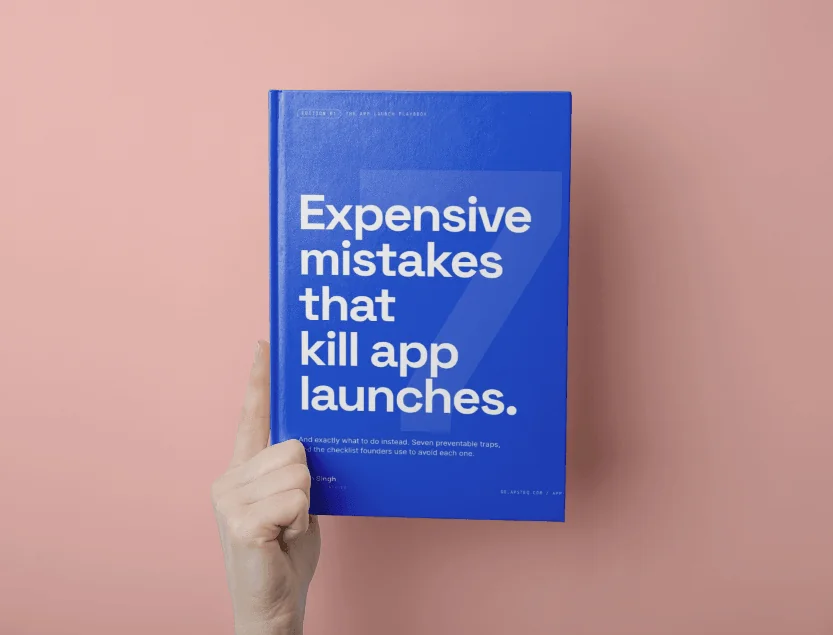
7 Expensive Mistakes That Kill App Launches
The launch errors we see most often across 300+ app engagements, and what to do instead.
Get the Free Ebook Browse all free guides