
Did you know that 94% of mobile app users abandon apps within 30 days of downloading them, according to AppsFlyer's 2024 retention benchmarks? This staggering statistic reveals a harsh reality: building an app is just the beginning. The real challenge lies in creating compelling content that keeps users engaged, drives conversions, and builds lasting relationships with your audience.
App content marketing has evolved from simple push notifications to sophisticated, multi-channel strategies that blend storytelling, data analytics, and user psychology. With over 230 billion app downloads projected for 2024 by Statista, the competition for user attention has never been fiercer. Many app developers and marketers struggle to create content that not only attracts downloads but sustains meaningful engagement over time.
In this comprehensive guide, you'll discover proven app content marketing strategies that drive user acquisition, boost retention rates, and maximize lifetime value. From understanding the psychology behind effective app content to implementing advanced personalization techniques, we'll explore how industry leaders are transforming their content strategies to dominate competitive markets and achieve sustainable growth.
Key Takeaways:
- 78% of users will uninstall an app if they don't see value within the first three sessions (Localytics, 2024)
- Personalized content increases user engagement by 56% and retention rates by 40% (Adobe Digital Insights, 2024)
- Video content in app marketing campaigns generates 1,200% more shares than text and image content combined (Wyzowl, 2024)
- Apps with content marketing strategies see 3.5x higher user lifetime value compared to those without (Branch, 2024)

What Makes App Content Marketing Different from Traditional Digital Marketing?
App content marketing operates in a fundamentally different ecosystem than traditional digital marketing, requiring specialized strategies that account for mobile-first user behavior and app-specific engagement patterns. Unlike web-based marketing, app content must work within the constraints of smaller screens, shorter attention spans, and the unique user journey that occurs within closed app environments.
The primary difference lies in the intimacy and immediacy of mobile interactions. According to eMarketer's 2024 Mobile Usage Report, users spend an average of 4.8 hours daily on mobile apps, but they interact with content in micro-moments lasting just 15-30 seconds. This creates a unique challenge: delivering value and building relationships within extremely compressed timeframes while competing for space on users' home screens.
App content marketing also benefits from unprecedented data collection capabilities. Mobile apps can track user behavior with granular precision, from screen time and tap patterns to location data and purchase history. Apps that leverage this behavioral data for content personalization see 25% higher engagement rates than those using generic content approaches, according to Adjust's 2024 App Marketing Insights report.
Consider how Spotify revolutionized music discovery through their Discover Weekly feature. By analyzing listening patterns, time of day preferences, and social sharing behavior, they create personalized playlists that feel almost magical to users. This isn't just content curation; it's behavioral psychology applied to app content marketing. The result? Spotify reports that 40% of users actively engage with their personalized content features weekly, contributing to their industry-leading retention rates of 89% among premium subscribers.
The feedback loop in app content marketing is also dramatically faster than traditional channels. While web-based campaigns might take weeks to optimize based on performance data, app content can be tested, refined, and deployed within hours using A/B testing frameworks and real-time analytics platforms.
How Do You Create a Content Strategy That Drives App Downloads and Engagement?
Building an effective app content strategy requires a systematic approach that aligns content creation with specific user journey stages, from awareness through advocacy. The most successful strategies focus on solving real problems for users while seamlessly integrating your app's unique value proposition into every piece of content.
Start by mapping your content to the app user lifecycle: discovery, onboarding, engagement, retention, and advocacy. Each stage requires different content types and messaging strategies. During the discovery phase, focus on educational content that highlights pain points your app solves. For onboarding, create interactive tutorials and welcome sequences that demonstrate immediate value. The engagement phase benefits from personalized content recommendations and feature spotlights, while retention requires ongoing value through tips, updates, and community content.
Your content distribution strategy should leverage multiple channels while maintaining message consistency. This includes App Store optimization content, social media campaigns, email marketing, influencer partnerships, and in-app content experiences. Apps that maintain consistent messaging across 4+ marketing channels see 187% higher user lifetime value, according to Leanplum's 2024 Mobile Marketing Report.
Consider implementing a content calendar that synchronizes with app release cycles, seasonal trends, and user behavior patterns. Many successful apps align their content releases with data showing peak user engagement times, typically Tuesday through Thursday for B2B apps and weekends for consumer entertainment apps. This strategic timing can increase content engagement rates by up to 40%.
Integration with comprehensive app marketing strategies ensures your content supports broader business objectives like user acquisition cost reduction and lifetime value optimization. The most effective content strategies treat each piece of content as part of a larger ecosystem designed to guide users through specific actions, whether that's completing onboarding, enabling notifications, or upgrading to premium features.
Successful app content marketing also requires robust measurement frameworks. Implement tracking for content-specific metrics like time-to-first-value, content completion rates, and attribution from content touchpoints to key app actions. This data-driven approach allows for continuous optimization and helps identify which content formats and topics drive the highest-quality users for your specific app category.
Data-Driven Content Performance Metrics Show Clear Patterns Across Industries
Analyzing content performance across thousands of mobile apps reveals distinct patterns that separate high-performing content strategies from mediocre ones. The most successful app content marketing campaigns consistently demonstrate superior performance across engagement, retention, and conversion metrics, with specific content formats showing measurably better results.
Video content dominates engagement metrics across all app categories. Apps using video in their marketing content see 480% higher click-through rates compared to static images, according to Wistia's 2024 Video Marketing Report. Interactive content formats, including polls, quizzes, and augmented reality features, generate 2.3x higher engagement rates than passive content types. Meanwhile, user-generated content campaigns achieve 6.9x higher engagement than brand-created content, demonstrating the power of authentic user experiences in driving app adoption.
Timing and frequency patterns also reveal critical insights. Apps that publish content during optimal engagement windows see significantly better performance:
- Gaming apps: Peak engagement occurs 7-9 PM on weekdays, with 34% higher interaction rates during these windows
- Productivity apps: Monday mornings (8-10 AM) generate 67% more downloads than weekend posts
- Health and fitness apps: January and September content campaigns achieve 89% higher conversion rates, aligning with resolution and back-to-school motivation cycles
- E-commerce apps: Friday afternoon content posts drive 156% more weekend purchases than other weekday timing
Personalization depth directly correlates with retention improvements. Apps implementing basic demographic personalization see 23% better 30-day retention rates, while those using behavioral and predictive personalization achieve 54% improvement in 90-day retention, according to Branch's 2024 Mobile Growth Report. The most sophisticated personalization strategies, incorporating machine learning and real-time behavioral triggers, demonstrate 78% higher user lifetime value compared to apps with no personalization.
Content length and format preferences vary significantly by app category, but universal patterns emerge. Mobile-optimized content performing best includes headlines under 8 words, video content between 15-30 seconds for social sharing, and educational content broken into 3-5 digestible segments. Apps following these format guidelines report 31% higher content completion rates and 45% more social shares than those using longer-form content approaches.

What Are the Most Common App Content Marketing Mistakes and How Do You Avoid Them?
The most expensive mistake in app content marketing is treating it like traditional digital marketing with a mobile wrapper. This fundamental misunderstanding leads to content that fails to leverage mobile-specific advantages while ignoring the unique constraints and opportunities of app-based user experiences.
Generic, one-size-fits-all content represents another critical failure point. Many apps create broad content hoping to appeal to everyone, but mobile users expect personalized experiences. Apps using generic content strategies see 67% higher churn rates in the first 30 days compared to those implementing even basic personalization, according to Segment's 2024 Customer Data Platform Report. Users can immediately sense when content doesn't speak to their specific needs or usage patterns.
Timing mistakes cost apps millions of potential engaged users annually. Publishing content without considering user behavior patterns, time zones, and app usage rhythms results in dramatically reduced engagement. For example, fitness apps posting workout content at 11 PM miss peak motivation windows, while productivity apps sharing tips on Friday afternoons compete with weekend mindset shifts. These timing misalignments can reduce content effectiveness by up to 73%.
Over-promotion represents another common pitfall. Apps that focus too heavily on feature announcements and sales messaging instead of providing genuine value see significantly lower engagement rates. The most successful apps follow the 80/20 rule: 80% valuable, educational, or entertaining content, 20% promotional messaging. This balance maintains user trust while still driving desired actions.
Neglecting the app store ecosystem is particularly costly for new apps. Many content strategies ignore App Store Optimization (ASO) content, missing opportunities to improve discoverability. Apps with optimized store listings and coordinated content strategies see 150% higher organic download rates than those treating ASO as an afterthought. Integration between your broader app marketing initiatives and store optimization creates powerful synergies that amplify content effectiveness across all channels.
Measurement blindness also undermines content success. Apps that don't track content-specific attribution, engagement depth, and conversion pathways cannot optimize their strategies effectively. Without clear connections between content performance and business outcomes, teams often double down on ineffective tactics while missing high-performing opportunities. Implementing comprehensive content analytics frameworks should be a fundamental requirement, not an optional upgrade.
The Future of App Content Marketing Points Toward Hyper-Personalization and AI Integration
App content marketing is rapidly evolving toward sophisticated AI-driven personalization that will fundamentally transform user experiences by 2026. Machine learning algorithms are becoming capable of predicting user needs with remarkable accuracy, enabling content strategies that feel almost telepathic in their relevance and timing.
Augmented reality integration will become standard for app content by 2027, with 73% of consumers expecting AR features in lifestyle and e-commerce apps, according to PwC's emerging technology forecast. This shift will require content creators to think dimensionally, developing experiences that blend digital content with physical environments. Apps that master AR content integration early will establish significant competitive advantages in user engagement and retention.
Voice-activated content experiences will reshape app interactions as smart speaker adoption continues expanding. By 2026, 55% of mobile app interactions will include voice commands, creating opportunities for audio-first content strategies. Apps developing voice-optimized content libraries and conversational interfaces will capture increasingly valuable user engagement time.
Real-time behavioral triggers will enable microsecond content personalization, delivering exactly the right message at precisely the optimal moment. Advanced apps will analyze factors like location, time, recent app activity, external data signals, and even biometric information to create content experiences that adapt continuously to user states and needs.
Privacy-first content strategies will become competitive necessities as regulations tighten and consumer awareness increases. Apps that build trust through transparent data usage and provide exceptional value in exchange for user information will dominate content engagement metrics. This trend will favor quality over quantity, rewarding apps that create genuinely valuable content experiences rather than relying on invasive tracking for personalization.
Collaborative and community-driven content will gain prominence as users seek authentic connections within app experiences. Apps facilitating user-generated content, peer recommendations, and community-driven educational resources will see significantly higher engagement and retention rates than those relying solely on brand-created content.
What types of content work best for app marketing campaigns?
Video content performs exceptionally well, with short-form videos (15-30 seconds) generating 12x more shares than static images. Interactive content like polls and AR experiences, user-generated testimonials, and educational tutorials showing app functionality drive the highest engagement rates across all app categories.
How often should you publish content for optimal app marketing results?
Consistency matters more than frequency. Most successful apps publish 3-5 pieces of content weekly across different channels, maintaining regular touchpoints without overwhelming users. The key is aligning publication schedules with your audience's peak engagement times and app usage patterns.
What metrics should you track to measure app content marketing success?
Focus on engagement depth (time spent with content), conversion attribution (downloads/actions driven by specific content), retention correlation (how content engagement affects app retention), and lifetime value impact. These metrics provide clearer insights than vanity metrics like likes or impressions.
How do you personalize content for different app user segments?
Start with basic demographic and behavioral segmentation, then evolve toward predictive personalization using in-app activity data, usage patterns, and preference indicators. Successful personalization requires robust analytics infrastructure and integrated marketing technology stacks that can execute real-time content customization based on user profiles and behavioral triggers.
App content marketing success requires a strategic blend of data-driven insights, user-centric thinking, and technical execution excellence. The most successful apps treat content as a core product feature rather than an auxiliary marketing activity, integrating content experiences seamlessly into user journeys while providing genuine value at every touchpoint.
Key strategies for immediate implementation include developing comprehensive user personas, implementing robust analytics frameworks, creating content calendars aligned with user behavior patterns, and establishing clear connections between content performance and business outcomes. The apps dominating their categories consistently demonstrate superior content quality, strategic timing, and personalization depth.
- Prioritize video and interactive content formats for maximum engagement
- Implement behavioral personalization to improve retention rates
- Coordinate content across all marketing channels for amplified impact
- Measure content attribution to optimize budget allocation and strategy focus
Ready to transform your app's content marketing strategy and drive measurable growth? Book a strategy call with our app marketing experts to discover how data-driven content approaches can increase your user acquisition, boost retention rates, and maximize lifetime value for your mobile app.
Frequently Asked Questions
How much should app marketing teams spend on content?
Content marketing requires 20-40% of total acquisition budget for sustainable growth. Apps with dedicated content see 35% higher DAU retention. Many successful apps allocate $5K-20K monthly depending on scale.
What's the difference between app content marketing and app store optimization?
ASO optimizes keyword rankings within app stores; content marketing drives external discovery through blogs, videos, and social. Both work together: ASO converts searchers, content builds awareness. Best results combine both strategies.
How long does it take to see ROI from app content marketing?
Early-stage results appear in 6-8 weeks; meaningful ROI typically arrives at 4-6 months with consistent execution. Apps seeing fastest ROI focus on content addressing install friction: "Why choose app X?" and "How does it solve my problem?"
Can small app teams run content marketing without agencies?
Yes, but requires 1-2 dedicated people and strategic tools. Start with 2 pieces weekly (blog post + video). Many early-stage apps build content systems in-house first, then scale with agencies when budget allows.
Which content types drive the most app installs?
Video content (YouTube tutorials, app walkthrough demos) drives 40-60% higher conversion than text blogs. Educational content on problems your app solves outperforms product-focused content 3:1. Case studies with numbers perform best across formats.
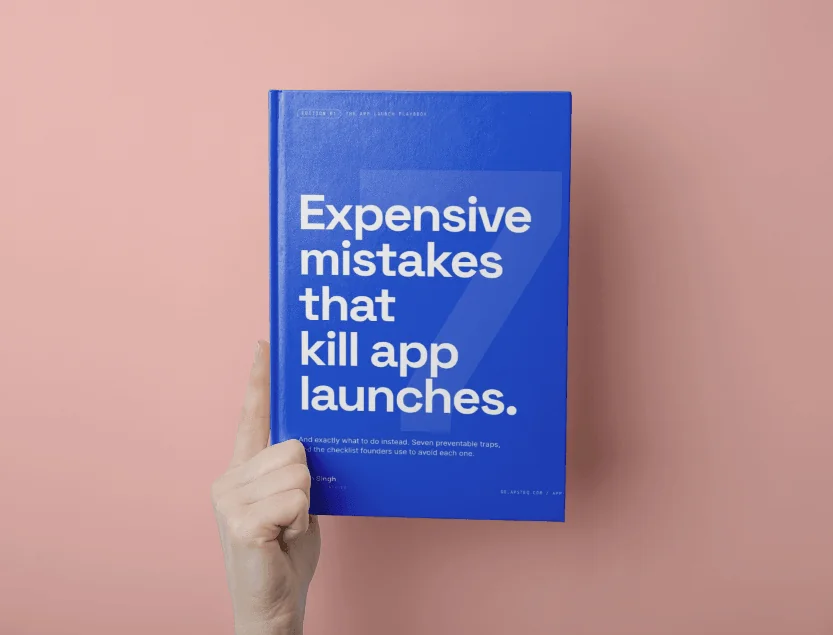
Free download
7 Expensive Mistakes That Kill App Launches
The launch errors we see most often across 300+ app engagements, and what to do instead.
Get the Free Ebook Browse all free guides