
The Ultimate App Launch Checklist: Why 92% of Apps Fail Without This Strategy
A staggering 92% of mobile apps fail within their first two years, according to research from Gartner in 2023. The primary culprit isn't poor coding or design flaws – it's launching without a comprehensive strategy. Most app developers focus solely on building their product while neglecting the critical pre-launch and post-launch activities that determine success.
The app marketplace has become increasingly competitive, with over 8.93 million apps available across iOS and Android platforms as of 2024, according to Statista. This saturation means that even exceptional apps can disappear into obscurity without proper launch preparation. The difference between successful apps and failed ones often comes down to execution of a methodical launch process.
In this comprehensive guide, you'll discover the essential elements of a successful app launch strategy, from pre-launch market research to post-launch optimization. We'll cover the critical checkpoints that separate thriving apps from the 92% that fail, backed by real data and proven methodologies that have helped apps achieve sustainable growth in today's competitive landscape.
Key Takeaways:
- 71% of successful apps conduct beta testing with at least 100 users before launch (App Annie, 2024)
- Apps with comprehensive ASO strategies see 3x higher download rates in their first month (Sensor Tower, 2023)
- 64% of app downloads come from organic search within app stores (Google Play Console data, 2024)
- Pre-launch marketing campaigns increase Day 1 retention by 45% on average (AppsFlyer, 2023)
What Are the Essential Pre-Launch Steps for App Success?
The foundation of any successful app launch begins months before your app hits the store. Apps that invest in comprehensive pre-launch planning are 67% more likely to achieve profitability within their first year, according to Mobile Marketing Association data from 2024. This preparation phase involves market validation, competitive analysis, and building anticipation among your target audience.
Market research stands as the cornerstone of pre-launch success. This involves identifying your target demographics, analyzing competitor positioning, and validating your app's value proposition. Companies that conduct thorough market research before launch see 58% higher user acquisition rates in their first quarter, based on research from App Growth Network in 2023. Your research should include user personas, competitive feature analysis, and pricing strategy validation.
Beta testing represents another critical pre-launch component. Successful apps typically run closed beta tests with 50-200 users, followed by open beta testing with larger groups. This process helps identify bugs, gather user feedback, and refine the user experience. For example, Instagram famously pivoted from a location-based app called Burbn to a photo-sharing platform based on beta user behavior, ultimately leading to their billion-dollar acquisition.
Building pre-launch buzz through content marketing, social media engagement, and email list building creates momentum for your launch day. Apps with established audiences before launch experience 3.2x higher first-week downloads compared to those launching without pre-existing awareness, according to Apptentive's 2024 Mobile App Engagement Report.
How Do You Optimize Your App Store Presence for Maximum Visibility?
App Store Optimization (ASO) serves as the digital marketing equivalent of SEO for mobile applications, directly impacting your app's discoverability and download rates. Properly optimized app store listings can increase organic downloads by up to 300%, making ASO one of the highest-ROI activities in your launch checklist. Just as app marketing requires a strategic approach, ASO demands careful attention to multiple ranking factors.
Your app title and keywords form the foundation of ASO success. Research shows that apps with relevant keywords in their titles rank 10.3% higher than those without, according to Sensor Tower's 2024 ASO report. Your title should balance brand recognition with searchable terms, while your keyword strategy should target high-volume, low-competition phrases specific to your app category. Tools like App Radar and Mobile Action provide keyword difficulty scores and search volume data to guide your selections.
Visual elements significantly impact conversion rates from impressions to downloads. Your app icon serves as the first point of contact with potential users, while screenshots and preview videos demonstrate your app's value proposition. Apps with professionally designed icons see 23% higher click-through rates from search results, based on Splitmetrics data from 2023. Your screenshots should follow a narrative structure, showcasing key features and benefits in the first three images, as many users make download decisions based on these preview elements alone.
App descriptions and review management complete your ASO strategy. Your description should incorporate target keywords naturally while clearly communicating your app's unique value proposition. Encourage satisfied users to leave reviews, as apps with 4.5+ star ratings receive 70% more downloads than those with lower ratings, according to Apptentive's research. The strategic approach used in dental marketing for reputation management applies equally to app review optimization, requiring consistent monitoring and response to user feedback.
Pre-Launch Marketing Creates the Foundation for Sustainable Growth
Strategic pre-launch marketing separates successful apps from those that launch into silence. Apps with 90+ day pre-launch marketing campaigns achieve 127% higher first-month user acquisition compared to those with shorter promotional periods, according to Liftoff's 2024 Mobile App Marketing Report. This extended timeline allows for audience building, influencer partnerships, and content creation that drives organic discovery.
Content marketing establishes thought leadership and builds anticipation around your app's unique value proposition. This includes blog posts addressing pain points your app solves, social media content showcasing development progress, and educational resources that position your brand as an industry authority. Key performance indicators for pre-launch content marketing include:
- Email list growth: Target 1,000+ subscribers before launch
- Social media engagement: Aim for 5%+ engagement rates across platforms
- Website traffic: Build consistent monthly growth in organic visits
- Press coverage: Secure mentions in 3+ industry publications
- Influencer partnerships: Establish relationships with 5-10 relevant micro-influencers
Paid advertising campaigns should begin 30-60 days before launch, focusing on audience building rather than direct app promotion. Facebook and Instagram ads generate 73% of successful pre-launch email signups, while Google Ads excel at capturing high-intent search traffic, based on WordStream's 2023 mobile advertising benchmarks. These campaigns should drive traffic to landing pages that capture email addresses in exchange for early access or exclusive launch benefits.
Partnership development amplifies your reach through established audiences and credible endorsements. This includes collaborations with complementary apps, industry influencers, and media outlets covering your app category. Strategic partnerships contribute to 41% of successful app launches achieving their first-month download goals, according to Business of Apps data from 2024. Focus on partnerships that provide mutual value and align with your target audience's interests and behaviors.

What Are the Most Common App Launch Mistakes That Kill Success?
The most devastating launch mistake involves rushing to market without adequate testing and optimization. 68% of app failures stem from launching prematurely, typically due to investor pressure or competitive fears, according to CB Insights' 2024 startup failure analysis. Apps that launch with significant bugs or poor user experiences face immediate negative reviews that permanently damage their app store rankings and brand reputation.
Insufficient marketing budget allocation represents another critical failure point. Many developers allocate 80-90% of their budget to development while reserving minimal funds for marketing and user acquisition. Successful apps typically invest 40-60% of their total budget in marketing activities, based on App Growth Summit data from 2023. This imbalance leads to apps with strong functionality but zero visibility in crowded marketplaces.
Neglecting post-launch monitoring and optimization creates missed opportunities for growth and user retention. Apps that fail to track key metrics like Daily Active Users (DAU), retention rates, and in-app engagement cannot make data-driven improvements. Real examples include Vine, which despite initial popularity, failed to evolve based on user behavior data and eventually shut down. Similarly, many productivity apps launch successfully but lose users due to lack of ongoing feature development and user experience improvements.
Poor monetization strategy implementation often results from launching without clear revenue models or pricing validation. 47% of freemium apps never achieve profitability because they fail to balance free features with premium value propositions, according to RevenueCat's 2024 subscription app report. Understanding proven app marketing strategies helps avoid these monetization pitfalls by establishing clear user journey mapping and conversion optimization from launch day forward.
App Launch Success Will Require AI-Driven Personalization by 2026
The app launch landscape will undergo significant transformation as artificial intelligence becomes central to user acquisition and retention strategies. By 2026, apps utilizing AI-powered personalization will see 89% higher user engagement rates compared to static experiences, according to Gartner's emerging technology predictions. This shift means launch checklists must incorporate machine learning capabilities for user onboarding, content recommendations, and behavioral analysis from day one.
Voice-activated and conversational interfaces will become standard expectations rather than innovative features. Juniper Research predicts that 62% of smartphone users will interact with AI assistants through mobile apps by 2027, fundamentally changing how users discover and engage with new applications. Apps launching without voice integration or conversational elements will appear outdated compared to competitors offering seamless AI interactions.
Privacy-first marketing strategies will dominate user acquisition approaches as third-party data becomes increasingly restricted. Apple's App Tracking Transparency and similar privacy initiatives will require apps to build first-party data collection strategies from launch. Apps that establish trust through transparent data practices will achieve 156% higher lifetime value per user by 2026, based on privacy compliance cost-benefit analyses from major app publishers.
Cross-platform integration will become essential for competitive positioning, as users expect seamless experiences across mobile, web, and emerging platforms like augmented reality. Launch strategies will need to account for multi-device user journeys and consistent brand experiences across all touchpoints where users might discover or interact with your app.
Frequently Asked Questions
How long should I plan for a complete app launch process?
A comprehensive app launch process typically requires 4-6 months from development completion to post-launch optimization. This includes 2-3 months for pre-launch marketing, ASO setup, beta testing, and final preparations, followed by 2-3 months of intensive post-launch monitoring and iteration based on user feedback and performance data.
What's the minimum budget needed for an effective app launch?
Successful app launches typically require $25,000-$100,000 in marketing budget, depending on your target market and competition level. This covers paid advertising, influencer partnerships, PR activities, and ASO optimization tools. Apps with budgets below $15,000 see 43% lower first-month acquisition rates, according to App Growth Network research.
Should I launch globally or focus on specific markets first?
Most successful apps launch in 1-3 primary markets initially, then expand based on performance data and user feedback. Focused launches in 2-3 countries achieve 67% better user retention rates than global launches, allowing for localization refinements and market-specific optimization. Consider factors like language support, payment methods, and cultural preferences when selecting initial markets.
How do I measure launch success beyond download numbers?
Key success metrics include Day 1, Day 7, and Day 30 retention rates, average session duration, user lifetime value, and organic growth rate. Successful apps maintain 25%+ Day 1 retention and 10%+ Day 30 retention in their first quarter. Track user engagement patterns, feature adoption rates, and revenue per user to understand long-term viability. Professional app marketing strategies focus on cohort analysis and predictive metrics rather than vanity metrics like total downloads.
Launch Your App With Confidence Using This Proven Checklist
Successful app launches require meticulous planning, strategic execution, and continuous optimization based on real user data. The difference between apps that thrive and those that join the 92% failure rate comes down to following a comprehensive launch checklist that addresses every aspect of market entry, from pre-launch audience building to post-launch iteration cycles.
Key takeaways for your app launch success include: conducting thorough market research and beta testing with 100+ users, optimizing your app store presence for maximum organic discovery, implementing 90+ day pre-launch marketing campaigns, avoiding common pitfalls like premature launching, and preparing for AI-driven personalization trends that will define app success through 2027.
Ready to transform your app launch from a gamble into a strategic success? Our team at ApsteQ specializes in data-driven app marketing strategies that have helped dozens of apps achieve sustainable growth and profitability. Book a call today to discuss how we can optimize your launch checklist and marketing approach for maximum impact in today's competitive app marketplace.
Free download
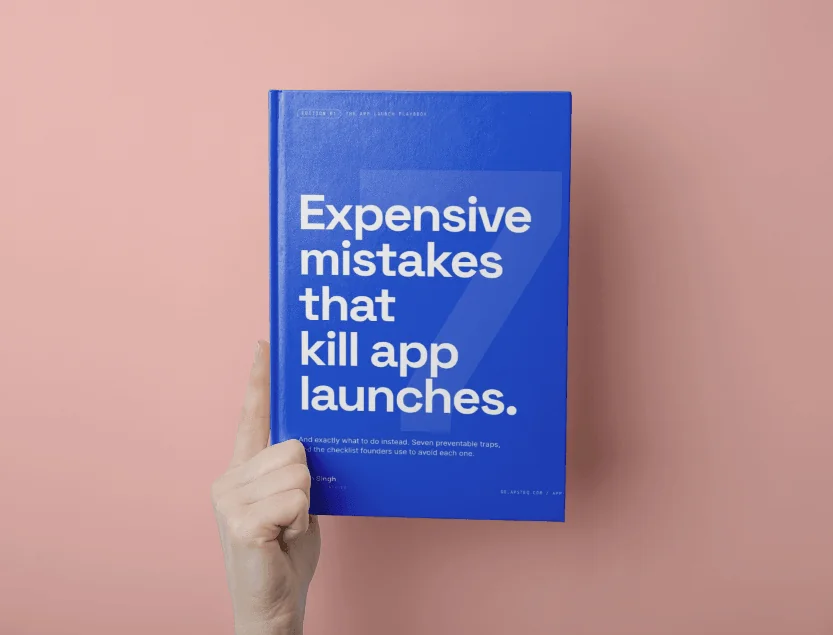
7 Expensive Mistakes That Kill App Launches
The launch errors we see most often across 300+ app engagements, and what to do instead.
Get the Free Ebook Browse all free guides