Mobile app users receive an average of 63.5 push notifications per day, yet only 3.48% of these messages drive meaningful engagement according to Airship's 2023 Mobile Consumer Study. This staggering disconnect reveals a critical gap in how businesses approach push notification strategy. Most apps blast generic messages hoping for results, while successful brands craft personalized, data-driven notification campaigns that boost retention rates by up to 190%.
To see how your numbers compare against your category, check our app retention benchmarks.
The cost of poor push notification strategy extends beyond low engagement. Apps with ineffective notification practices see 71% higher uninstall rates within the first week, as reported by Localytics in 2023. Users don't just ignore bad notifications, they actively remove apps that spam their devices with irrelevant content.
This comprehensive guide reveals the proven strategies, timing tactics, and personalization techniques that separate high-performing apps from the digital noise. You'll discover how to craft notifications that users actually want to receive, optimize send times for maximum engagement, and implement advanced segmentation strategies that drive real business results.
Key Takeaways:
- Personalized push notifications generate 4x higher engagement rates than generic broadcasts (CleverTap, 2023)
- Apps using behavioral triggers see 3.5x better retention compared to scheduled campaigns (Braze, 2023)
- Optimal send frequency is 2-5 notifications per week for maximum engagement without causing opt-outs (Leanplum, 2023)
- Rich media notifications increase click-through rates by 56% over text-only messages (OneSignal, 2023)
What Makes a Push Notification Strategy Successful?
A successful push notification strategy centers on delivering the right message to the right user at the perfect moment. Data-driven personalization forms the foundation, with top-performing apps achieving 85% higher engagement rates through targeted messaging compared to one-size-fits-all approaches.
The most effective strategies combine three core elements: behavioral triggers, contextual relevance, and value-driven content. Spotify exemplifies this approach by sending personalized music recommendations based on listening history, resulting in a 30% increase in session duration according to their 2023 developer conference presentation. Their notifications don't just announce new features, they deliver immediate value tailored to individual preferences.
Timing precision separates exceptional strategies from average ones. Research by SendBird reveals that notifications sent during a user's historically active hours generate 67% higher open rates than random timing. This requires analyzing individual usage patterns rather than relying on generic "best practice" send times.
Successful strategies also prioritize notification hierarchy. Critical updates receive immediate delivery, while promotional content waits for optimal engagement windows. Apps implementing this tiered approach see 23% fewer opt-outs while maintaining higher overall engagement, as users appreciate the respect for their attention.
The most sophisticated strategies incorporate cross-channel coordination. When push notifications align with email campaigns and in-app messages, brands achieve 3.2x better conversion rates according to Iterable's 2023 benchmarks. This holistic approach ensures consistent messaging while avoiding notification fatigue across touchpoints.
How Do You Build an Effective Push Notification Campaign Framework?
Building an effective campaign framework starts with comprehensive user segmentation based on behavior patterns, preferences, and engagement history. Advanced segmentation goes beyond basic demographics to include app usage frequency, feature adoption rates, and purchase behavior, enabling hyper-targeted messaging that resonates with specific user groups.
The framework should establish clear campaign types with distinct purposes. Transactional notifications handle order updates and account changes, promotional messages drive sales and feature adoption, while engagement campaigns re-activate dormant users. Each category requires different messaging strategies, timing considerations, and success metrics.
Content templates form the backbone of scalable campaigns. Successful frameworks include pre-built templates for common scenarios like abandoned cart recovery, milestone celebrations, and personalized recommendations. These templates incorporate dynamic content fields that automatically populate with user-specific information, ensuring relevance while maintaining operational efficiency.
Integration with your broader app marketing strategy amplifies campaign effectiveness. Push notifications should support overall user journey objectives, whether driving initial feature discovery, encouraging deeper engagement, or facilitating conversion milestones. This alignment ensures notifications contribute to business goals rather than existing as isolated touchpoints.
A/B testing capabilities must be built into the framework from day one. Successful campaigns continuously test message copy, send times, visual elements, and call-to-action buttons. Apps implementing systematic testing protocols improve engagement rates by an average of 34% within six months, according to Optimizely's mobile marketing report.
Campaign automation rules streamline execution while ensuring timely delivery. Frameworks should include trigger-based campaigns that respond to specific user actions, time-based sequences for onboarding new users, and re-engagement campaigns for users showing declining activity. This automation ensures consistent communication without overwhelming marketing teams.
Push Notification Performance Metrics Drive Strategic Optimization
Open rates serve as the primary indicator of notification effectiveness, with industry averages ranging from 2-8% depending on app category and user engagement levels. E-commerce apps typically see higher open rates due to transactional nature, while gaming apps rely on frequency and timing optimization to maintain user interest.
Advanced analytics reveal deeper performance insights beyond basic open rates. Time-to-open metrics indicate message urgency perception, with successful notifications generating opens within 15 minutes of delivery. Messages taking longer than 2 hours to generate opens suggest poor timing or irrelevant content that requires strategic adjustment.
Conversion tracking connects notification performance to business outcomes. Leading apps measure:
- Click-through rates averaging 7.8% for well-targeted campaigns (Adjust, 2023)
- In-app purchase conversion rates of 2.3% from promotional notifications (AppsFlyer, 2023)
- Session length increases of 45% following engagement-focused messages (Branch, 2023)
- Feature adoption rates improving by 28% through strategic feature announcements (Mixpanel, 2023)
Retention impact measurements provide long-term performance insights. Apps with optimized notification strategies maintain 41% higher 90-day retention rates compared to those using generic messaging approaches. This correlation demonstrates that effective notifications build lasting user relationships rather than generating short-term engagement spikes.
Segmentation performance analysis reveals which user groups respond best to different message types. High-value customers typically engage with exclusive offers and early access notifications, while casual users prefer educational content and usage tips. Understanding these preferences enables resource allocation toward highest-impact segments.
Unsubscribe rates provide crucial feedback about notification fatigue and content relevance. Healthy campaigns maintain unsubscribe rates below 2% monthly, while rates exceeding 5% indicate messaging frequency or content quality issues requiring immediate attention.
What Are the Most Common Push Notification Strategy Mistakes?
Over-messaging ranks as the primary reason users disable push notifications, with 52% of users citing excessive frequency as their main complaint according to Localytics research. Apps sending more than one promotional message daily experience 3x higher opt-out rates compared to those maintaining strategic restraint in their communication cadence.
Generic messaging without personalization represents another critical failure point. Apps using one-size-fits-all notifications see 67% lower engagement rates than those implementing user-specific content. Netflix avoided this mistake by developing sophisticated recommendation algorithms that power personalized viewing suggestions, resulting in significantly higher notification engagement rates.
Poor timing destroys even well-crafted messages. Sending notifications during sleep hours or known inactive periods reduces open rates by up to 89%. A major fitness app learned this lesson when their morning workout reminders sent at 5 AM generated massive opt-outs from users in different time zones, forcing them to implement intelligent timezone detection.
Misleading or clickbait notification content erodes user trust and drives long-term disengagement. Apps using sensational headlines that don't match actual content see initial open rate improvements but suffer from 73% higher uninstall rates within 30 days. Authentic, value-driven messaging builds sustainable engagement relationships.
Ignoring platform-specific optimization guidelines creates technical and user experience problems. iOS and Android handle notifications differently, requiring tailored approaches for maximum effectiveness. Apps that optimize for both platforms see 34% better overall performance compared to those using identical strategies across operating systems.
Many brands also fail to coordinate push notifications with their broader app marketing campaigns, creating conflicting messages that confuse users and dilute brand impact. Successful strategies ensure notification content supports and amplifies other marketing touchpoints rather than competing for attention.
The Future of Push Notification Strategy in 2026-2027
Artificial intelligence will revolutionize push notification personalization by 2026, with machine learning algorithms predicting optimal send times, content preferences, and engagement likelihood for individual users. Early adopters are already seeing 45% engagement improvements through AI-powered message optimization that adapts in real-time based on user response patterns.
Interactive notifications will become standard practice, allowing users to complete actions directly from notification panels without opening apps. This evolution will particularly benefit e-commerce and productivity apps, where users can make purchases, confirm appointments, or update preferences through rich notification interfaces.
Privacy-first approaches will reshape data collection and personalization strategies as users demand greater control over their information. Apps will need to balance personalization effectiveness with transparent data usage, potentially relying more on zero-party data voluntarily provided by users rather than behavioral tracking.
Cross-device synchronization will enable seamless notification experiences across smartphones, tablets, wearables, and smart home devices. Users will receive contextually appropriate notifications on their most relevant device, reducing redundancy while maintaining engagement opportunities.
Voice-activated and audio notifications will gain prominence as smart speakers and voice assistants become more prevalent. Apps will need to adapt their messaging strategies for audio-first experiences, focusing on clear, concise communication that works effectively in hands-free environments.
What is the ideal push notification frequency?
The optimal frequency depends on app category and user engagement levels, but most successful apps send 2-5 notifications per week. E-commerce apps can handle higher frequencies during sales periods, while utility apps should focus on truly valuable, actionable updates to maintain user trust and engagement.
How do you measure push notification ROI effectively?
Track conversion rates from notifications to desired actions, calculate customer lifetime value increases from engaged users, and monitor retention improvements. Successful campaigns typically show 15-25% increases in user retention and measurable revenue attribution through proper analytics implementation.
When should you send push notifications for maximum engagement?
Timing varies by user behavior patterns, but general best practices suggest mid-morning (10-11 AM) and early evening (6-8 PM) for highest engagement. Analyze your specific user base's active hours and send notifications during their historically most responsive periods for optimal results.
What makes push notification content compelling?
Compelling notifications provide immediate value, use personalized language, and include clear calls-to-action. Focus on benefits rather than features, incorporate urgency when appropriate, and ensure your app marketing messaging aligns with user expectations and needs for maximum impact.
Push notification strategy success requires balancing user value with business objectives through data-driven personalization and strategic timing. Key elements include comprehensive user segmentation, behavioral trigger implementation, and continuous performance optimization through A/B testing. The most effective strategies coordinate notifications with broader marketing efforts while respecting user preferences and platform guidelines.
Critical takeaways for implementation:
- Prioritize personalization and behavioral triggers over generic broadcasts
- Maintain optimal frequency of 2-5 notifications weekly to prevent opt-outs
- Implement comprehensive analytics tracking for continuous optimization
- Coordinate push notifications with overall app marketing strategy
Ready to transform your push notification performance and drive meaningful user engagement? Book a strategy call with our app marketing experts to develop a customized notification strategy that delivers results for your specific user base and business objectives.
Frequently Asked Questions
How often should I send push notifications without causing uninstalls?
Industry average: 1-3 per week for engagement apps, 1-2 per day for messaging apps. Measure uninstall rate per frequency cohort. Apps exceeding 2/day see 15-30% higher uninstall rates. Segment by user engagement; inactive users warrant zero pushes.
What's the optimal time to send push notifications?
Segment by timezone and user behavior. Peak times typically 9-11am and 6-8pm local time. Test: create 2-3 time cohorts, measure conversion. "Optimal" varies wildly by app type: news apps peak mornings, social apps peak evenings. Personalization beats blanket timing.
How much does a push notification campaign cost?
Self-service platforms (Firebase, OneSignal): $0-100/month. Enterprise (Iterable, Braze): $500-5K+ depending on users. ROI is high: push notifications drive 5-15% of DAU engagement. Most apps see payback in first 1-2 weeks.
Can I use push notifications to recover uninstalls?
No, uninstalls remove app access. Win-back campaigns target users who haven't opened app in 30-90 days via email or SMS instead. Re-engagement push campaigns (sent before uninstall) see 10-20% reactivation. Prevention is 5x cheaper than recovery.
What content performs best in push notifications?
Personalized, action-oriented messages outperform generic. "You've earned a reward" converts 2-3x better than "New feature available." Include a clear CTA. A/B test copy variations; even minor wording changes shift conversion 10-20%.
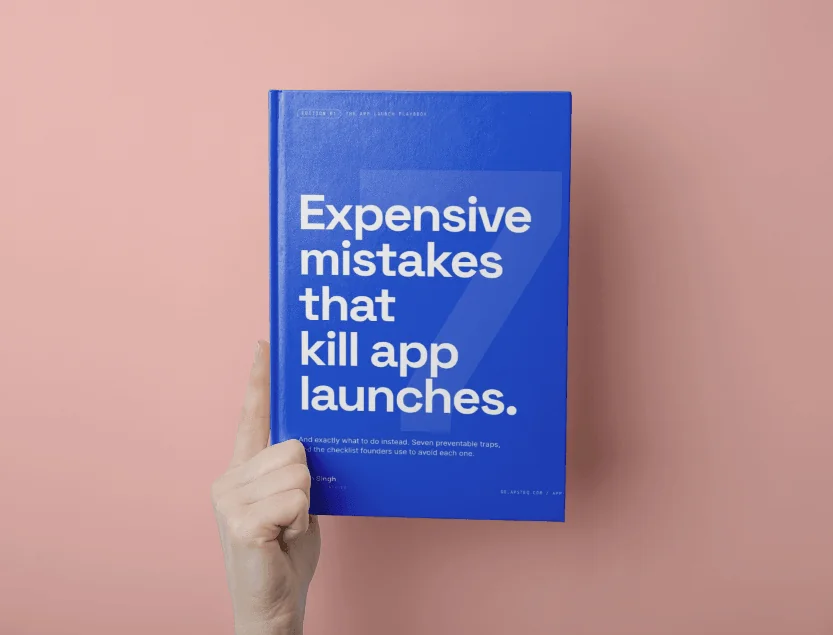
Free download
7 Expensive Mistakes That Kill App Launches
The launch errors we see most often across 300+ app engagements, and what to do instead.
Get the Free Ebook Browse all free guides